 Dwi Wanna
 Nana Wu
 Muslim
 Reynand Wu
 Ammar Sabilarrohman
 Pevita Pearce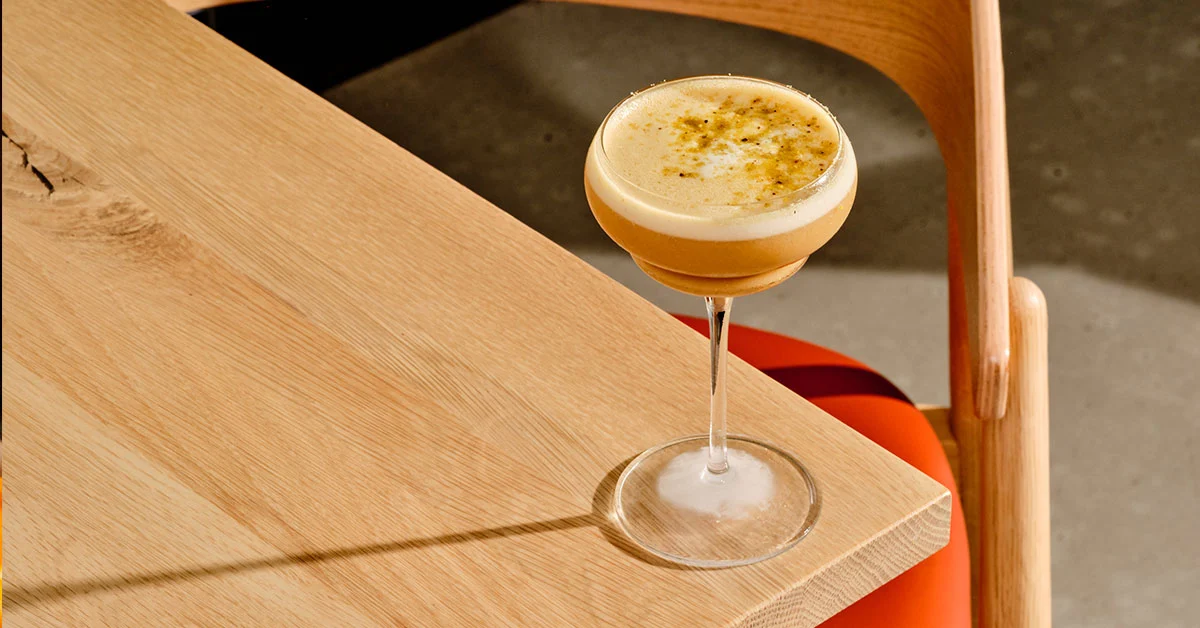
In the modern cocktail landscape, where clarity, carbonation, and low-ABV compositions often dominate the spotlight, the “Flip” stands as a defiant, velvety relic. Once the fuel of seafaring sailors and the centerpiece of 19th-century fireside taverns, the egg-based cocktail has largely been relegated to the seasonal ghetto of holiday eggnog.
However, at Tomat in Los Angeles, Miley Aryucharoen—recognized as one of Punch’s Best New Bartenders of 2026—is spearheading a renaissance. By deconstructing the historic Boston Flip and rebuilding it with modern culinary precision, Aryucharoen is proving that this opulent, protein-rich category belongs on the menu year-round.
The Evolution of a Classic: From Sea-Legs to Sophistication
To understand the magnitude of Aryucharoen’s project, one must first appreciate the lineage of the Flip. The drink’s etymology is rooted in the 17th century, where a mixture of beer, sugar, and spirit was “flipped” or agitated with a hot iron poker, resulting in a frothy, warmed-up restorative.
By the post-Civil War era, the drink had undergone a transformation, shedding its rustic beer base in favor of fortified wines and spirits. The Boston Flip, a specific iteration that emerged at the turn of the 20th century, codified this transition. The earliest documented recipe, found in Frank Newman’s 1904 American-Bar: Boissons Anglaises & Américaines, calls for a balanced trifecta: equal parts rye whiskey and Madeira, a touch of sugar, and a whole egg.
As the decades progressed, the recipe morphed. The Mr. Boston Deluxe Bartender’s Guide of the 1930s and 40s, alongside Hyman Gale and Gerald F. Marco’s The How and When, pivoted toward the use of egg yolks exclusively, emphasizing richness over the airy lift provided by the whites. It was a drink designed for slow sipping—a decadent, dessert-like indulgence that eventually fell out of favor as cocktail culture moved toward the crisp, sour profiles of the mid-20th century.
The Anatomy of Innovation: A Culinary Approach
Aryucharoen’s approach at Tomat is not a mere reproduction of a historical artifact; it is a masterclass in modern mixology. She maintains the soul of the Boston Flip—the whole egg—but achieves the texture through a proprietary, house-made “custard base.”
This base is the cornerstone of her innovation. Rather than cracking a raw egg into a shaker—a process that can sometimes result in inconsistent viscosity—Aryucharoen utilizes a blend of roasted pistachios, whole milk, heavy cream, sugar, spices, brandy, and dehydrated egg yolk powder. The latter is a ingenious “zero-waste” intervention: the restaurant produces an abundance of leftover egg yolks from their signature pavlova dessert, which the bar team dehydrates in-house to create a shelf-stable, protein-rich powder.
When a guest orders the drink, the bartender pulls the custard base and adds fresh egg whites to the tin separately. This two-part process ensures that the drink retains the signature, luxurious foam of a traditional Flip while achieving a flavor depth that raw ingredients alone could not provide.
Data and Ratios: The Spirit-Forward Shift
Perhaps the most radical departure in Aryucharoen’s recipe is the ratio. While the 1904 standard called for a 1:1 balance between spirit and modifier, Aryucharoen has shifted the profile to a 5:1 ratio.
She argues that in a drink of such richness, the base spirit must be allowed to anchor the experience. Her choice of spirit is equally deliberate: Rye & Sons. At nearly 100 proof, the rye possesses the requisite spicy backbone to cut through the heavy cream and pistachio custard.
“Usually, when people see rye, they don’t think that it has the capacity to be creamy and gentle,” Aryucharoen explains. By using a high-proof, spice-forward whiskey, she ensures that the cocktail remains a cocktail—not a milkshake. The strength of the spirit acts as a bridge, grounding the ethereal notes of the custard and preventing the drink from becoming cloying.
The Sherry Secret: Replacing Madeira
The traditional inclusion of Madeira in the Boston Flip is, in Aryucharoen’s view, a historical trap. She notes that the heating process inherent in the production of Madeira can often result in a flavor profile that veers into “caramel-soy sauce territory,” which she finds too heavy and aggressive for her delicate, custard-based version.
Instead, she reaches for Lustau’s East India Solera. This cream sherry—a blend of nutty, oxidized Oloroso and the rich, syrupy sweetness of Pedro Ximénez—provides the necessary oxidation and sweetness without the metallic or savory edges of Madeira. It is her “secret weapon,” a versatile ingredient that she believes brings a cohesive, rounded finish to the drink.
Changing the Narrative: The “Crème Brûlée” Appeal
One of the primary obstacles to the Flip’s mainstream success is a branding problem: the persistent, and often unflattering, association with holiday eggnog. When faced with a skeptical guest, Aryucharoen has learned to pivot away from traditional descriptions.
“Sometimes if you compare it to eggnog, it’s a turnoff for whatever reason,” she admits. Instead, she reframes the cocktail in the context of high-end pastry. By positioning the drink as a liquid crème brûlée, she taps into a culinary shorthand that promises texture, richness, and a sophisticated sweetness.
This strategy has proven effective. The drink is currently the best-selling item in her repertoire, and those who try it are often converted into repeat customers.
Seasonal Adaptability: A Year-Round Staple
To maintain the drink’s viability across the calendar, Aryucharoen has implemented a seasonal rotation. The Flip is no longer a winter-only fixture. In the warmer months, the cocktail is adorned with a delicate dusting of roasted pistachios and cinnamon sugar, highlighting the nutty, vibrant notes of the base. As the temperature drops, the profile shifts to incorporate pumpkin spice elements, finished with nutmeg and a heavier hand of cinnamon sugar.
This adaptability is key to her mission. By treating the Flip as a blank canvas, she invites guests to view it not as a seasonal novelty, but as a legitimate cocktail category capable of complex, evolving profiles.
Implications for the Industry
Miley Aryucharoen’s work at Tomat signals a broader shift in the craft cocktail world: the move toward the “Culinary Bartender.” As the industry continues to professionalize, the lines between the kitchen and the bar are blurring. The use of dehydrated yolks, house-made custards, and specific spirit-forward ratios indicates that the next generation of bartenders is looking to the pantry and the pastry station for inspiration rather than just the back-bar.
Her success with the Boston Flip also highlights an important lesson in menu development: classic drinks are not static. By identifying the intent of a classic—the desire for a rich, textured, satisfying drink—and updating the execution for the modern palate, bartenders can revitalize forgotten categories.
As Aryucharoen continues to iterate on her signature drink, she remains driven by a simple question: “Why don’t people get this more?” If her current success at Tomat is any indication, the answer is simple: they just needed someone to make it right. Through the lens of her pistachio-infused, spirit-forward, and seasonally adjusted Flip, the world of classic cocktails is looking a lot more like a dessert menu—and the industry is all the better for it.

 Iffa Jayyana