

 Dwi Wanna
 Nana Wu
 Muslim
 Reynand Wu
 Ammar Sabilarrohman
 Lina Irawan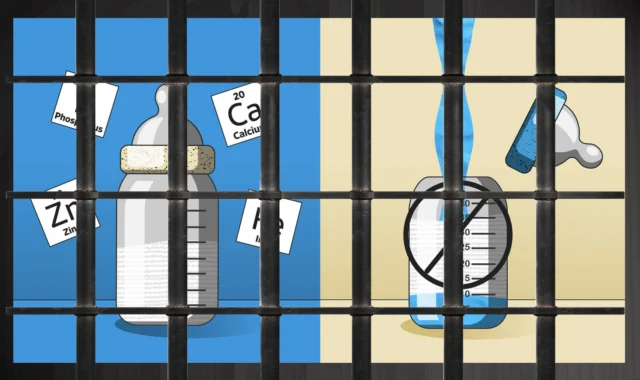
By Bill Marler
June 29, 2026
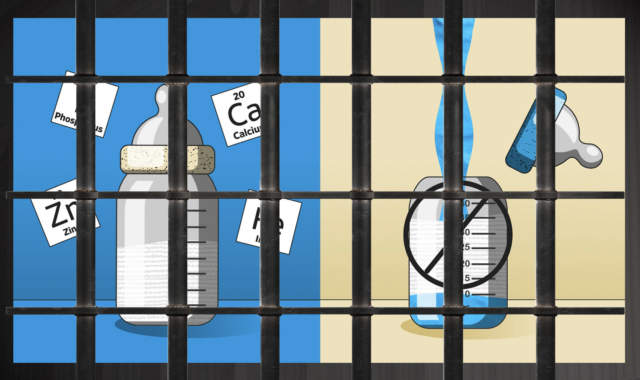
Four years ago, I penned two headlines that were as much a prediction as they were a demand for justice: “Mr. Abbott, you are going to face criminal sanctions” and, a few weeks earlier, “Mr. Abbott, you are going to jail for manufacturing tainted infant formula.”
At the time, the evidence seemed overwhelming. The Sturgis, Michigan plant operated by Abbott Laboratories had become ground zero for a national health crisis. Cronobacter sakazakii—a deadly pathogen—was discovered on production equipment. A former FDA official testified before Congress that the facility was “out of control,” citing the presence of five distinct strains of the bug. Four infants who consumed the formula fell violently ill; two of them died.
I was confident that the Department of Justice would pursue criminal charges. I was wrong. My error was not in my assessment of the facts, but in my estimation of the current Justice Department’s willingness to act upon them.
Last night, The Wall Street Journal confirmed what many in the food safety community had begun to fear: the DOJ, after years of building a robust criminal case against Abbott, simply walked away.
The Anatomy of a Dropped Case
According to the Journal’s reporting, the DOJ’s investigation was not a fishing expedition; it was a deep, evidence-backed probe. Prosecutors had compiled a mountain of documentation. Some within the department believed they had a "slam dunk" case, weighing charges that included a misdemeanor under the Federal Food, Drug, and Cosmetic Act (FDCA) and a separate count for misleading federal regulators. They were even considering targeting specific individuals for their roles in the oversight failures.
Instead of an indictment, Abbott Laboratories received a civil settlement—the terms of which remain shrouded in mystery. The company was essentially told to "claw back" some of the revenue it earned through federal nutrition programs.
When asked for comment, a DOJ spokesperson offered a chilling justification: the current administration, she explained, “does not believe in regulation by prosecution.”
The Shift in Philosophy: "Overcriminalization"
I have been quoted in the Journal noting that the White House’s May 2025 executive order on "overcriminalization" essentially signaled to corporate America that the era of aggressive regulatory enforcement was over. When that order was issued, I argued that it brought a sigh of relief to CEOs across the country—not because they were innocent, but because the threat of criminal exposure is precisely what keeps food manufacturers vigilant.
Deterrence is not a theoretical concept; it is the bedrock of the food safety system. Under Section 333(a)(1) of the FDCA, the law provides for strict-liability crimes. The government does not need to prove a "guilty mind" or malicious intent. If a food product is adulterated and enters interstate commerce, the crime is complete. Under the "responsible corporate officer" doctrine, executives with the authority to prevent such failures can be held personally accountable.
This is not a legal loophole; it is the social contract established by Congress in 1938. The founders of that legislation understood that when the product is infant formula, the margin for error is zero. Lives depend on the integrity of the manufacturing process. By taking the risk of criminal sanctions off the table, the government has effectively gutted the most potent tool in its arsenal for protecting public health.
The Disappearing Watchdogs
The Abbott non-prosecution is not an isolated event; it is part of a systemic retreat. Two specific details in the Journal’s reporting should alarm every parent and consumer in the United States.
First, the DOJ’s Consumer Protection Branch—the very office tasked with litigating high-stakes food safety cases, including the successful prosecution of the executives behind the Peanut Corporation of America salmonella outbreak—was disbanded as a "cost-cutting measure" in early 2025.
Second, the Journal revealed that one of Abbott’s defense attorneys, a former Deputy Attorney General, had actively lobbied the incoming administration to overhaul that same office and strip it of its authority to bring criminal cases. When you connect these dots, it becomes clear: the architects of deregulation are not just sitting on the sidelines; they are writing the rules.
We have seen this movie before, and it rarely ends well for the consumer. Consider the Boar’s Head Listeria outbreak, which claimed ten lives. A year and a half later, I am still asking why there has been no public accountability. The government’s refusal to release investigative records, citing "law-enforcement purposes," is a hollow gesture when that same law enforcement apparatus has effectively been neutered.
The Myth of "No Evidence"
Abbott Laboratories has consistently denied a direct link between their plant and the infant illnesses, noting that no unopened, distributed formula tested positive and that CDC sequencing did not perfectly match the facility’s strains.

However, this ignores the findings of the FDA, which maintains that the Sturgis plant was a high-risk environment. More importantly, the civil case brought by the government—joined by 31 states—alleged that Abbott knowingly fell short of manufacturing standards and operated a "culture of concealment" at the Sturgis facility.
"Knowingly." "Concealment." These are not the hallmarks of a clerical error or a harmless oversight. These are the elements of a criminal conspiracy. If the government’s own civil suit acknowledges this level of malfeasance, the decision to forgo criminal charges is not a legal judgment; it is a political one.
The Cost of Doing Business
I litigate the infant formula cases that land in the wake of such corporate negligence. My firm is currently representing families of babies hospitalized with botulism following the consumption of ByHeart and Nara formula. I have spent this spring writing to Secretary Kennedy, the FDA, and the Senate HELP Committee, begging Congress to put real teeth back into the regulatory framework.
The through-line is clear: when the threat of jail time vanishes, corporate accountability is reduced to a line item on a balance sheet. A civil settlement is merely a "cost of doing business." It is an expense that can be passed along to consumers, written off as a tax deduction, and forgotten by the next quarterly earnings call. It does not keep CEOs awake at night. It does not incentivize the kind of rigorous, expensive safety protocols that prevent babies from getting sick.
Conclusion: A Call to Action
I have long tried to maintain a neutral, analytical tone in my advocacy. But there is nothing political about asserting that a company whose plant processes food for the most vulnerable among us should answer to more than just its accountants.
The Wall Street Journal got the headline right: there was a "pile of evidence." What is missing is not the proof; it is the political will to use it.
We live in interesting times, but for the parents of the children who were sickened by tainted formula, these times are not just interesting—they are devastating. If we allow the criminal threat to be stripped away, we are telling every food manufacturer in the country that if they are caught, they won’t go to jail—they’ll just pay a fee.
When you treat food safety as a negotiation rather than a mandate, you are not protecting the public. You are merely waiting for the next outbreak to happen. It is time for Congress to act, to restore the power of the FDA and the DOJ, and to ensure that when a corporation prioritizes profits over the lives of infants, the price they pay is more than just a check.