Azzam Bilal Chamdy
 Neng Nana
 Nana Muazin
 Dwi Wanna
 Raul Delapena Setiawan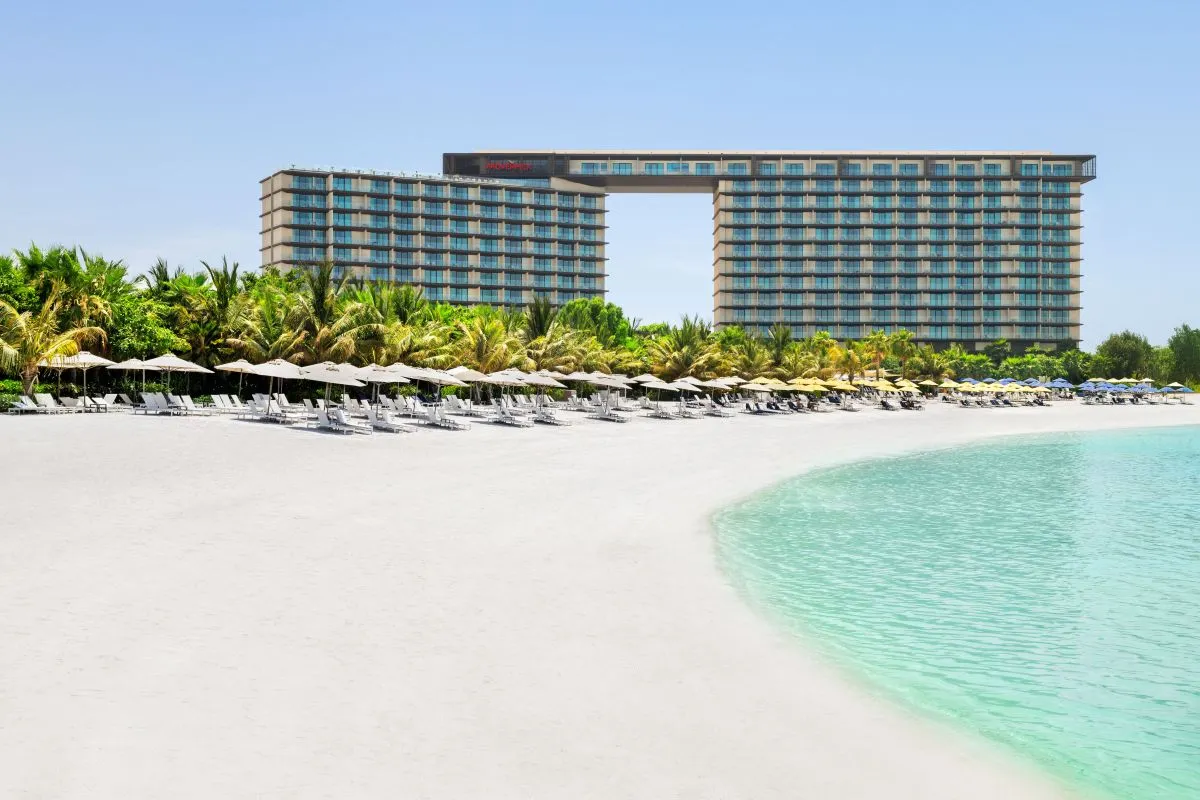
The hospitality landscape across the Gulf Cooperation Council (GCC) region is currently undergoing a structural transformation, defined by a stark divergence in performance between leisure-focused resorts and urban business hotels. As the repercussions of the ongoing U.S.-Iran conflict continue to ripple through the Middle East, the traditional correlation between city-center occupancy and coastal resort demand has severed.
According to data provided by Accor, the global hospitality giant, the Gulf hotel market is currently split into two distinct tiers. While high-end resorts—such as the Mövenpick Resort Al Marjan Island in Ras Al Khaimah—are commanding stronger room rates as leisure travelers return in force, urban hotels in major UAE hubs have been forced to implement aggressive discounting strategies. This pivot highlights a fundamental shift in travel sentiment: the safety-conscious leisure tourist is increasingly seeking the seclusion of the coast, while the corporate traveler remains hesitant, curbing business activity in metropolitan centers.
The Divergent Reality: City vs. Shore
The current market environment presents a paradox for hoteliers. In the United Arab Emirates, hotels situated in the heart of commercial districts faced significant headwinds throughout August and September. Duncan O’Rourke, CEO of Accor’s Premium, Midscale, and Economy brands for the Middle East, Africa, and Asia Pacific, confirmed that urban properties were forced to slash room rates by 15% to 20% just to maintain occupancy levels within 5% of their initial quarterly targets.
“It’s the city hotels where we’re down, and that’s just in the UAE,” O’Rourke noted in an exclusive interview with Skift. “In resorts in the Gulf, the rates are ahead.”
This "Great Bifurcation" is not limited to the UAE. A parallel trend is emerging in Saudi Arabia, where the hospitality sector, a cornerstone of the Kingdom’s Vision 2030, is experiencing a cooling period in major metropolitan centers. Properties in Jeddah and Riyadh are currently trailing their year-over-year performance metrics, a decline primarily attributed to the contraction in corporate travel demand.
A Chronology of Conflict and Contraction
The current state of the market is the culmination of months of geopolitical volatility. To understand the current economic environment, one must look at the timeline of events that have reshaped travel confidence in the region:
- Pre-Conflict Stability: Leading into the initial escalation, the Gulf hotel market was enjoying a post-pandemic boom, with both corporate and leisure segments hitting record-breaking Average Daily Rates (ADR).
- The Onset of Hostilities: Following the outbreak of the U.S.-Iran conflict, international travel insurance premiums spiked, and multinational corporations began implementing stricter "duty of care" policies.
- Q3 2026 Turbulence: As regional tensions persisted, the corporate sector began to tighten travel budgets. The uncertainty regarding airspace and regional stability led many firms to pivot to virtual meetings, directly impacting the bottom line of city-center hotels that rely on business travelers and MICE (Meetings, Incentives, Conferences, and Exhibitions) events.
- The Shift to Seclusion: Conversely, the leisure segment demonstrated unexpected resilience. High-net-worth individuals and international vacationers began favoring secluded resort destinations, viewing them as “bubbles” of stability away from the political anxieties associated with major urban centers.
Supporting Data: The Economics of the Gulf Split
The financial metrics provided by Accor provide a granular look at this shift. In the luxury and premium resort sectors, demand has remained inelastic. Because these properties offer a "destination experience," guests are less likely to cancel plans even during periods of geopolitical tension. The ability of resorts to maintain, and in some cases grow, their rates suggests that the "experience economy" in the Gulf is far more robust than the business travel economy.
In contrast, the urban hospitality sector is highly sensitive to the broader economic climate. When corporations reduce travel to save costs or mitigate risk, city hotels are the first to feel the impact. The 15% to 20% discount implemented by Accor in the UAE serves as a "demand-stimulation" tool, an attempt to capture domestic and short-haul travelers who might otherwise have bypassed the city for staycations elsewhere.
Saudi Arabia’s data serves as a bellwether for the region. As Riyadh and Jeddah continue their ambitious expansion into global business hubs, their dependence on corporate footfall makes them uniquely vulnerable to global political perceptions. When international consultants, diplomats, and corporate executives pull back, these hotels see an immediate cooling in RevPAR (Revenue Per Available Room).
Official Responses and Strategic Pivots
Industry leaders are not standing idle in the face of these challenges. Accor, along with other major operators like Marriott, Hilton, and IHG, is currently reevaluating its regional portfolio strategy.
"We are seeing a shift in where the capital is being deployed," says a regional industry analyst. "Hoteliers are pivoting away from pure-play business hotels and leaning into ‘bleisure’—properties that combine high-end business amenities with resort-style leisure facilities."
Duncan O’Rourke’s candid admission regarding the rate cuts indicates a shift toward tactical pricing. By lowering the barrier to entry for domestic travelers, city hotels are attempting to offset the loss of corporate revenue with volume. However, this strategy carries the long-term risk of brand dilution. If luxury properties become synonymous with discount pricing, regaining pricing power once the market stabilizes becomes an uphill battle.
Implications for the Future of Gulf Tourism
The current divide in the Gulf hospitality market holds long-term implications for investors, developers, and regional governments.
1. The Rise of the "Safe Haven" Resort
The success of resorts in places like Al Marjan Island, Oman, and the Red Sea Project suggests that investors will likely prioritize coastal, self-contained developments. The market is signaling that travelers are willing to pay a premium for perceived security and isolation, a trend that may lead to a slowdown in high-rise, city-center hotel development.
2. Digital Nomadism as a Hedge
To combat the loss of corporate travel, city hotels are increasingly looking toward the digital nomad and "work-from-anywhere" demographic. By repurposing rooms into long-stay executive suites with high-speed connectivity and co-working spaces, urban hotels hope to bridge the gap left by the absence of traditional corporate travelers.
3. Geopolitical Sensitivity in Marketing
Regional tourism boards are now tasked with a difficult communications challenge: separating the reality of the Gulf’s stability from the headlines generated by the U.S.-Iran conflict. Expect to see marketing campaigns that emphasize the "neutrality" and "safety" of the region, specifically targeting high-growth markets in Asia and the GCC itself, rather than relying solely on Western corporate traffic.
4. Revenue Management Evolution
The traditional revenue management models—which rely on historical data and predictable corporate travel cycles—are no longer fit for purpose. Moving forward, hotel revenue managers in the Gulf will need to integrate real-time geopolitical sentiment analysis into their pricing algorithms. The ability to predict shifts in demand based on regional security alerts will become a critical competitive advantage.
Conclusion
The Gulf hotel market is in a period of intense recalibration. The sharp division between the thriving resort sector and the struggling urban hotel market is a direct reflection of a world in transition. While the resilience of leisure travel provides a vital floor for the regional economy, the recovery of the corporate sector remains tied to a geopolitical resolution that is currently beyond the control of the hospitality industry.
For hoteliers in the region, the coming months will require a delicate balance. They must continue to offer the luxury and service levels that define the Gulf brand, while simultaneously navigating a pricing environment that demands extreme agility. As Accor and its peers continue to monitor the impact of the U.S.-Iran conflict, one thing remains certain: the days of relying on "business as usual" are over. The future of the Gulf hospitality sector will be built on flexibility, resilience, and the ability to adapt to a landscape where geography and politics are just as important as the amenities offered on-site.