

 Azzam Bilal Chamdy
 Neng Nana
 Nana Muazin
 Dwi Wanna
 Raul Delapena Setiawan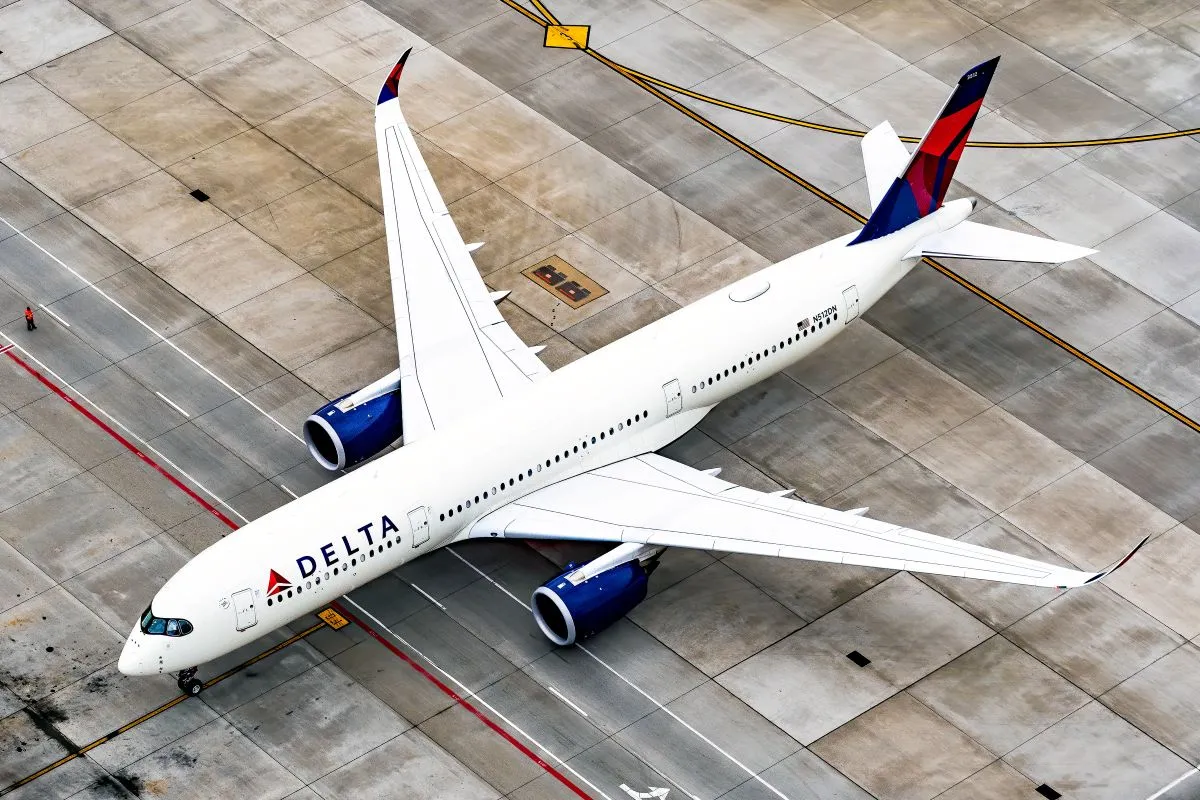
By Global Aviation Correspondent
Delta Air Lines has officially announced the postponement of its highly anticipated nonstop service between Hartsfield-Jackson Atlanta International Airport and King Khalid International Airport in Riyadh, Saudi Arabia. Originally slated to bridge a critical gap in the carrier’s Middle Eastern network, the route launch—now pushed to March 2027—has been sidelined as the airline grapples with an increasingly volatile security landscape in the region.
The decision follows a troubling series of reported security incidents targeting aviation infrastructure across Saudi Arabia. For Delta, which has historically prioritized a conservative growth strategy regarding its international long-haul expansion, the move signals a recalibration of risk management in an era of heightened geopolitical instability.
Main Facts: The Scope of the Delay
The postponement, confirmed by Delta leadership on Monday, creates a significant void in the airline’s upcoming summer schedule. The Atlanta-Riyadh route was intended to be a flagship addition to Delta’s global portfolio, leveraging the carrier’s massive domestic hub in Georgia to provide seamless connectivity for corporate travelers, government officials, and logistics partners.
- Original Launch Target: Q4 2026.
- Revised Launch Target: March 2027.
- Primary Justification: "Evolving developments in the region" and the prioritization of passenger and crew safety.
- Strategic Impact: The delay forces a re-evaluation of Delta’s footprint in the Middle East, a region where competitors such as Emirates, Qatar Airways, and Etihad have historically held a dominant market share.
While the airline has not provided a granular breakdown of the specific threats, industry analysts point to recent reports of drone and missile activity near regional airports as the primary catalyst for the decision. By pushing the launch into early 2027, Delta is effectively opting for a "wait-and-see" approach, hoping for a period of regional stabilization before committing expensive wide-body assets like the Airbus A350-900 to the route.
A Chronology of Escalation
The road to this postponement was paved with a series of geopolitical shifts that have made the Middle East an increasingly complex theater for commercial aviation.
The Planning Phase (2024–2025)
Delta’s interest in Riyadh was not merely commercial; it was part of a broader push to align with Saudi Arabia’s "Vision 2030," an ambitious economic diversification strategy that has spurred unprecedented tourism and business investment in the Kingdom. Delta saw an opportunity to act as the primary American conduit for this surge in traffic.
The Escalation (Early 2026)
Throughout the spring and summer of 2026, intelligence reports began to circulate regarding regional security vulnerabilities. While international flights into Riyadh had remained largely undisturbed, the frequency of security alerts involving peripheral infrastructure began to climb.
The Decision Point (October 2026)
The turning point came in mid-October 2026, when a series of coordinated attacks on secondary airports in the region necessitated a top-level security review at Delta’s corporate headquarters in Atlanta. Following consultations with U.S. government agencies, the Department of Transportation, and local aviation authorities in Saudi Arabia, Delta concluded that the risk profile for a new commercial operation had exceeded acceptable thresholds.
Supporting Data: Risk and Revenue
Operating a long-haul route is a multi-million-dollar commitment. Beyond the fuel and crew costs, an airline must consider insurance premiums, which skyrocket when a destination is deemed a "high-risk" zone.
The Economic Calculus
Industry data suggests that the Atlanta-Riyadh route was projected to be a high-yield service. The corporate traveler segment—particularly those associated with defense contractors, energy firms, and consulting groups—typically pays a premium for direct, nonstop access. However, the cost of securing such a route in a volatile environment involves:
- Increased Insurance Premiums: Aviation insurers often impose "war risk" surcharges for flights operating near conflict zones. These costs are often passed down to the consumer through higher ticket prices, which can dampen demand.
- Asset Allocation: Delta’s A350-900 fleet is highly versatile. By grounding the Riyadh service, the airline can pivot these aircraft to more stable, high-demand routes, such as trans-Atlantic corridors or trans-Pacific flights, ensuring that the fleet remains utilized rather than sitting idle.
Regional Aviation Traffic
Data from regional air traffic control centers indicates that while overall traffic into Saudi Arabia has grown by 12% annually, the "security premium" attached to these routes has caused a bifurcation in the market. Major carriers have had to invest heavily in enhanced radar surveillance and onboard security protocols, further complicating the operational logistics for new entrants like Delta.
Official Responses: Navigating Diplomacy
Delta’s statement was carefully crafted to balance commercial disappointment with a firm stance on security.
"The safety and security of our customers and employees always come first and continue to guide our operational decisions," a Delta spokesperson said in a statement released Monday. "We remain in close contact with relevant government and aviation partners, including Saudi authorities, as we monitor the situation."
The Government Perspective
From the perspective of the U.S. Department of State and the Federal Aviation Administration (FAA), the delay is viewed as a prudent operational move. The U.S. government has issued various travel advisories for the region, and while there is no blanket prohibition on commercial flights to Riyadh, the FAA often provides "Notices to Air Missions" (NOTAMs) that dictate flight paths and altitude requirements in sensitive zones.
The Saudi Stance
Saudi officials have expressed a desire for international carriers to maintain their presence in the Kingdom, emphasizing the robustness of their own air defense systems. However, they recognize that international airlines operate under the mandates of their respective home governments and strict internal corporate policies.
Implications: The Future of Middle Eastern Connectivity
The delay of the Atlanta-Riyadh route has broader implications for both the global aviation industry and the geopolitical standing of the region.
1. The "Risk Premium" of Global Expansion
Delta’s decision serves as a case study in how airlines balance the pursuit of new markets with the harsh realities of global conflict. It demonstrates that even when a route is economically viable on paper, the "social license" to operate—driven by employee safety concerns and potential brand damage—can override profit motives.
2. Competition and the "Big Three"
The delay grants a temporary reprieve to regional incumbents. With Delta out of the picture for another six months, existing carriers that provide connecting service to Riyadh will continue to dominate the market. For travelers, this means fewer options for nonstop service, potentially keeping ticket prices higher for longer.
3. Impact on Vision 2030
For Saudi Arabia, the delay is a minor, albeit symbolic, setback. The Kingdom’s goal of becoming a global aviation hub relies heavily on the participation of major U.S. carriers. Every delay in establishing a robust direct link to the U.S. southern hub in Atlanta represents a friction point in the Kingdom’s efforts to integrate further with Western capital and tourism markets.
4. A Template for Future Disruptions
This event may set a precedent for how U.S. airlines handle future geopolitical volatility. By moving the date to March 2027 rather than cancelling the route outright, Delta is signaling that it remains committed to the Saudi market but will not be rushed into operations that could jeopardize its personnel or its reputation. This "deferred launch" strategy may become the new standard for airlines navigating the unpredictable geopolitical map of the 21st century.
Conclusion
As the aviation industry watches, Delta Air Lines remains in a holding pattern—both literally and figuratively. The postponement of the Riyadh route is a stark reminder that in the modern world, the most critical factor in airline operations is not the strength of the economy, but the stability of the skies. Whether March 2027 proves to be a realistic window for the launch will depend entirely on the trajectory of regional security. For now, Delta has chosen the path of caution, prioritizing the security of its fleet and the well-being of its passengers above the immediate allure of a high-growth, high-risk market.



 Reynand Wu
