
 Rifan Muazin
 Layla Zulfa
 Nana
Nana
 Asro
Asro
The travel industry, an ecosystem historically built on rigid database queries and static booking funnels, is currently undergoing its most significant structural shift since the inception of the Online Travel Agency (OTA). The rise of "agentic booking"—where autonomous AI agents negotiate, plan, and execute complex itineraries on behalf of consumers—has moved from the realm of speculative science fiction to a tangible, disruptive reality.
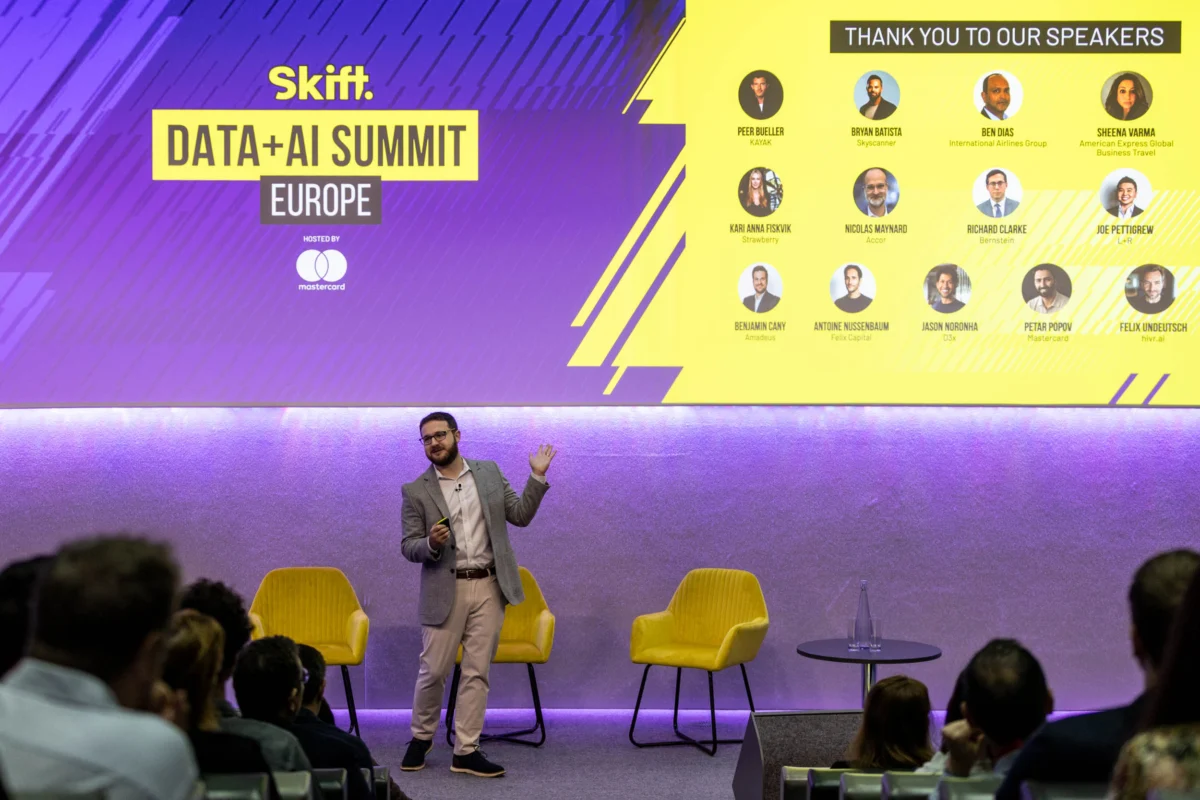
With the emergence of sophisticated platforms like Instinct and Muse, the friction of travel planning is evaporating. However, as these technologies gain traction, a profound chasm has opened between the rapid pace of innovation and the industry’s readiness to integrate it. As Seth Borko, Skift’s Head of Research, bluntly stated at the recent Skift Data + AI Summit Europe: “The agents are here. Almost no one in travel is ready for this world.”
The Core Transformation: From Search to Execution
To understand the shift, one must differentiate between the current paradigm and the agentic future. For two decades, the travel industry has optimized for "search and display." A user enters a destination and dates; the system returns a list of results. The user then assumes the cognitive load of filtering, comparing, and booking.
Agentic AI changes the fundamental unit of interaction. Instead of searching, a user provides an intent: “Plan a sustainable, mid-budget, five-day trip to Lisbon for a family of four that focuses on culinary experiences and avoids tourist traps.” An agentic system does not just return a list; it orchestrates the entire journey. It interacts with APIs, navigates loyalty programs, manages dynamic pricing negotiations, and executes the transaction.
This is the frontier of the "Actionable Web." The challenge for travel executives is that the infrastructure supporting these legacy booking funnels is largely incompatible with the autonomous, conversational, and multi-step requirements of agentic AI.
Chronology of the Agentic Shift
The journey toward agentic travel booking did not happen overnight. Its trajectory reflects the broader acceleration of Large Language Model (LLM) capabilities:
- 2022–2023: The Generative Phase: The industry focused on "chatbots on steroids." Travel brands integrated LLMs to provide better customer service and search interfaces. These systems were primarily informational, not transactional.
- Early 2024: The API Proliferation: Major travel aggregators began opening up specialized, high-functionality APIs, allowing AI models to access real-time inventory and pricing data more effectively.
- Mid-2024: The Rise of Specialized Agents: Startups like Instinct and Muse entered the market, focusing on specific "verticals" of travel. Unlike generic LLMs, these agents were trained on travel-specific constraints (e.g., airline baggage policies, hotel cancellation terms, and loyalty point optimization).
- Late 2024 – 2025: Integration and Friction: The current period is defined by a struggle for control. Travel brands are realizing that if an AI agent makes the booking, the brand’s ability to upsell, cross-sell, and maintain customer loyalty is significantly diminished.
- October 2026 (The Summit Point): During the Skift Data + AI Summit Europe in London, industry leaders collectively acknowledged that while consumer adoption is accelerating, the backend systems of the travel industry—GDS, CRS, and PMS—are struggling to handle the non-linear requests generated by AI agents.
Supporting Data: The Disconnect Between Innovation and Infrastructure
The current disconnect is supported by several data points regarding investment and technical readiness:
- AI Budget Allocation: According to internal industry surveys, while over 70% of major travel enterprises have an "AI strategy," less than 15% have moved beyond pilot programs into production-grade, agentic workflows.
- Latency and Performance: Agentic systems require low-latency API responses to function efficiently. Current legacy systems, burdened by technical debt, often struggle with the frequency of queries required by an AI agent that is cross-referencing multiple flight and hotel options in real-time.
- Consumer Sentiment: Early adopters are showing a high propensity to trust AI agents for "standard" trips. However, for complex, high-value itineraries, there is a clear "trust gap." Consumers are willing to let AI handle the heavy lifting, but they remain cautious about the final payment authorization, creating a "human-in-the-loop" bottleneck that designers are currently racing to solve.
Official Perspectives: The Executive Dilemma
During the Skift Data + AI Summit Europe, five key decisions were highlighted as the primary hurdles for travel executives. These decisions represent the tension between "wait and see" and "invest and disrupt."
1. The Build vs. Buy vs. Partner Dilemma
Executives are debating whether to develop proprietary AI agents or integrate with third-party platforms like Muse. The risk of proprietary development is high capital expenditure with an uncertain ROI. The risk of partnership is the loss of the "customer relationship" to the platform owner.
2. The Data Governance Hurdle
AI agents perform best when they have access to rich customer data. However, travel companies are inherently risk-averse regarding data privacy and GDPR compliance. Ensuring that an AI agent doesn’t "hallucinate" regarding pricing or personal data is a primary concern for legal and technical teams.
3. Inventory Control and Intermediation
As agents become the primary point of contact, how does a hotel chain or airline ensure its inventory is presented fairly? The shift toward agentic booking threatens to disintermediate the direct-to-consumer relationship that travel brands have spent years and billions of dollars to build.
4. The "Agent-to-Agent" Ecosystem
The future of travel may not be human-to-agent, but agent-to-agent. A user’s personal AI assistant might negotiate with a brand’s AI sales agent. Executives are now forced to consider whether their systems are capable of "machine-to-machine" commerce.
5. Talent and Cultural Shift
The final decision is organizational. The travel industry has historically been dominated by product managers and marketers. Today, the most valuable employees are AI architects and systems engineers. Transforming the internal culture to support this technical shift is arguably the most difficult decision of all.
Implications: The Future of the Travel Landscape
The implications of this shift are profound and far-reaching. We are likely looking at three distinct outcomes over the next three to five years:
The Commoditization of the Booking Flow
As agents become more autonomous, the actual process of booking will become a commodity. The competitive advantage will move away from "the best search interface" toward "the best loyalty ecosystem" and "the most exclusive inventory." If the agent can book anything, the brand that offers unique, non-commoditized experiences will win.
The Death of the Traditional Funnel
The marketing funnel—Awareness, Consideration, Conversion—is becoming obsolete. In an agentic world, the funnel is replaced by a "Preference Loop." The more an agent knows about a traveler’s preferences, the more accurate the next trip recommendation becomes. Travel companies that fail to feed their systems with this nuanced data will find themselves ignored by the agents.
The Regulatory Landscape
Governments are watching. As AI agents begin to make financial decisions on behalf of consumers, regulators will inevitably impose new transparency requirements. Who is responsible when an AI agent books a non-refundable, non-changeable ticket that doesn’t meet the user’s specific needs? The industry must establish ethical standards for agentic behavior before regulators impose them from the outside.
Conclusion: A Race Against Time
The message from the Skift Data + AI Summit Europe was clear: the technology is moving significantly faster than the industry’s ability to adapt. Seth Borko’s assessment that "almost no one is ready" is not an indictment of the industry’s intelligence, but rather a reflection of the sheer scale of the transformation required.
To thrive in the era of agentic booking, travel executives must stop viewing AI as a feature to be added to a website and start viewing it as the fundamental architecture of the future. The companies that succeed will be those that embrace the chaos of the transition, invest in robust and flexible data infrastructure, and prioritize the development of AI agents that truly serve the traveler’s intent rather than just the company’s conversion metrics.
The agents are here. The question is no longer whether they will change the travel industry, but whether the industry can evolve fast enough to stay relevant in the age of the autonomous traveler.


 Nila Kartika Wati
 Laily UPN