
 Rifan Muazin
 Layla Zulfa
 Nana
Nana
 Asro
Asro
By the Food Safety Magazine Editorial Team
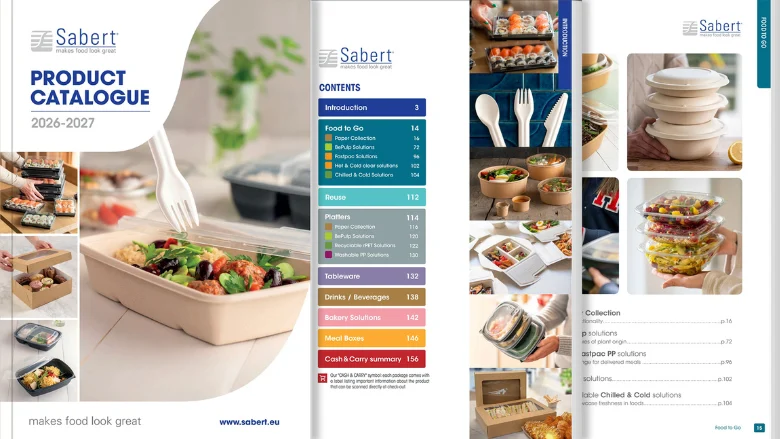
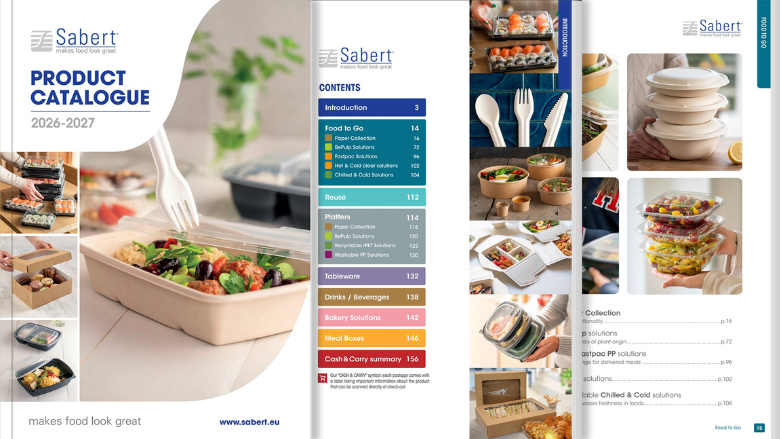
Sabert Corporation Europe, a global leader in innovative and sustainable food packaging solutions, has officially unveiled its most extensive product catalogue to date. The newly released publication features an expansive array of over 800 stock-keeping units (SKUs), marking a significant milestone in the company’s growth trajectory. This release arrives in the wake of Sabert’s successful integration of the UK-based packaging specialist, Colpac Limited, a move that has significantly bolstered the company’s manufacturing capabilities and market reach across the European continent.
Available in both digital and physical formats, the catalogue is published in English, French, and German—the three primary languages of Sabert’s core European markets. The publication is designed as a comprehensive resource for a diverse range of stakeholders, including foodservice operators, major retailers, food processors, and the rapidly evolving food-to-go sector.
The Strategic Expansion: A Chronology of Growth
The publication of this catalogue is the culmination of a deliberate, long-term strategy focused on diversifying the company’s material expertise and deepening its footprint in the European market.
- Pre-2025 Foundation: Sabert Europe had already established a robust reputation for its high-performance plastic and pulp-based packaging, catering to the increasing demand for sustainable, food-safe containers.
- July 2025 – The Acquisition: A pivotal moment in the company’s history occurred in July 2025, when Sabert Corporation finalized the acquisition of Colpac Limited. Colpac, a UK-based manufacturer, brought to the table decades of expertise in paperboard packaging. This move was viewed by industry analysts as a strategic "perfect match," allowing Sabert to bridge the gap between high-end plastic/pulp innovation and the growing consumer preference for paper-based, recyclable food-to-go packaging.
- Late 2025 – Integration: Following the acquisition, Sabert management focused on the complex task of integrating supply chains, manufacturing processes, and R&D pipelines. The new catalogue serves as the public-facing evidence of this successful integration, harmonizing two distinct product portfolios into a single, cohesive brand offering.
- Early 2026 – The New Catalogue Release: The release of the 800+ SKU catalogue marks the transition into a new operational phase where Sabert positions itself as a "one-stop-shop" for virtually every category of food packaging, from industrial MAP (Modified Atmosphere Packaging) to bespoke consumer-facing containers.
A Unified Portfolio: Pulp, Plastic, and Paperboard
The new catalogue represents a significant shift in how Sabert categorizes its offerings. By consolidating its disparate lines into a single document, the company aims to simplify the procurement process for its clients. The portfolio is now categorized into three main material pillars, each tailored to specific food safety and preservation requirements.
1. The Pulp Ultra Range
At the heart of the catalogue is the "Pulp Ultra" fiber-based packaging range. This line represents Sabert’s commitment to sustainability and the circular economy. Engineered from high-quality molded fiber, these products are designed to withstand moisture and heat, making them an ideal replacement for legacy plastic containers in high-volume foodservice environments.
2. Paperboard Solutions
The integration of Colpac has significantly enhanced this segment. Paperboard packaging is currently the industry’s most sought-after material due to its recyclability and brand-friendly aesthetic. The catalogue features a wide array of paperboard solutions, including:
- Standard food-to-go sleeves and boxes.
- Grease-resistant liners for high-fat food items.
- Custom-printed solutions that allow retailers to integrate their branding directly onto the packaging, enhancing consumer engagement.
3. High-Performance Plastics and MAP
Recognizing that sustainability does not mean abandoning performance, Sabert continues to offer high-grade, recyclable plastic solutions. Crucially, the catalogue includes specialized packaging for industrial food applications using Modified Atmosphere Packaging (MAP). MAP is vital for food safety, as it allows for the precise control of the atmospheric gases surrounding a food product, significantly extending shelf life and reducing food waste—a critical objective for modern food safety regulations.
Supporting Data: Addressing Market Demands
The release of this catalogue is not merely a marketing exercise; it is a direct response to data-driven shifts in the global food packaging market. According to recent industry reports, the European food packaging sector is undergoing a massive transformation driven by three primary factors:
- Legislative Pressure: With the EU’s emphasis on the Circular Economy Action Plan and the reduction of single-use plastics, businesses are under intense pressure to switch to certified recyclable or compostable materials. Sabert’s focus on fiber and paperboard directly addresses these regulatory requirements.
- The Rise of "Food-to-Go": The post-pandemic shift in consumer behavior, which favors convenient, mobile dining, has caused a surge in demand for packaging that is both leak-proof and easy to carry. The 800+ SKUs in the new catalogue reflect a specific focus on ergonomics and structural integrity for mobile food consumption.
- Shelf-Life Extension: As food inflation remains a concern, retailers and processors are prioritizing packaging that prevents spoilage. The inclusion of MAP-ready packaging in the catalogue provides a solution to the "waste-cost" cycle, allowing manufacturers to maintain food quality over longer logistics chains.
Official Perspectives and Industry Implications
While specific quotes from the executive leadership regarding this specific catalogue launch remain internal, the broader industry reaction to Sabert’s expansion has been overwhelmingly positive. Industry analysts have noted that the merger of Sabert and Colpac is emblematic of a broader trend: consolidation within the packaging sector as companies seek to offer "end-to-end" solutions rather than niche products.
The primary implication for the industry is the increased competition for quality and supply chain reliability. By providing a multi-lingual, multi-material catalogue, Sabert is setting a new standard for accessibility in the European market.
Furthermore, the integration of "Ask FSM"—the new AI-driven search tool—within the broader ecosystem of industry information serves as a testament to how stakeholders are now accessing information about these products. Operators are no longer just looking for a container; they are looking for a solution that complies with safety certifications, material regulations, and environmental standards. Sabert’s catalogue is designed to bridge the gap between the product and the technical specifications required by safety officers.
Implications for Food Safety and Quality Assurance
From a food safety standpoint, the expansion of Sabert’s portfolio has significant implications. Standardizing packaging across a large operation—from the industrial producer using MAP to the local café using pulp containers—reduces the risk of cross-contamination and ensures that packaging materials are consistently sourced from a supplier that adheres to strict manufacturing standards.
Ensuring Compliance
Each product listed in the new catalogue is vetted for its material composition. As food safety regulations in the UK and the European Union continue to tighten, especially concerning food-contact materials (FCMs), the transparency provided by a consolidated, professional catalogue is vital. Sabert’s documentation provides food safety managers with the necessary traceability data, ensuring that every container or sleeve meets regional safety criteria, such as BRCGS or ISO certifications.
Sustainability as a Safety Metric
Modern food safety is no longer just about preventing pathogens; it is also about preventing chemical migration. By focusing on fiber and high-quality, food-grade materials, Sabert is addressing the increasing scrutiny surrounding "forever chemicals" (PFAS) in food packaging. The shift toward more sustainable materials in the new catalogue is, in effect, a shift toward safer, more transparent material science.
Looking Forward: The Future of Packaging
The publication of this catalogue is not the end of the road for Sabert Corporation Europe. Instead, it serves as a baseline. The company has signaled that as it continues to integrate its operations, further innovations in "smart packaging"—packaging that can indicate freshness or temperature changes—may be on the horizon.
For the foodservice operator or the large-scale processor, the message from Sabert is clear: the era of fragmented supply chains is ending. By consolidating its expertise, Sabert is positioning itself to be a pivotal partner in the food safety ecosystem. Whether a client is looking for a simple paperboard box for a sandwich or complex, atmospheric-controlled packaging for industrial meat production, the new 800-SKU catalogue provides the necessary technical specifications and product variety to meet the demands of the modern market.
In conclusion, Sabert Corporation Europe’s latest catalogue is more than just a list of products. It is a strategic document that reflects the current state of the European food industry: a landscape that demands high-speed innovation, rigid adherence to safety standards, and an unwavering commitment to sustainable, circular packaging solutions. As the industry continues to evolve, the integration of Colpac into the Sabert portfolio provides the necessary scale and technical depth to navigate the complexities of 21st-century food logistics.