Layla Zulfa
 Laily UPN
 Neng Nana
 Sagoh
Sagoh
 Raul Delapena Setiawan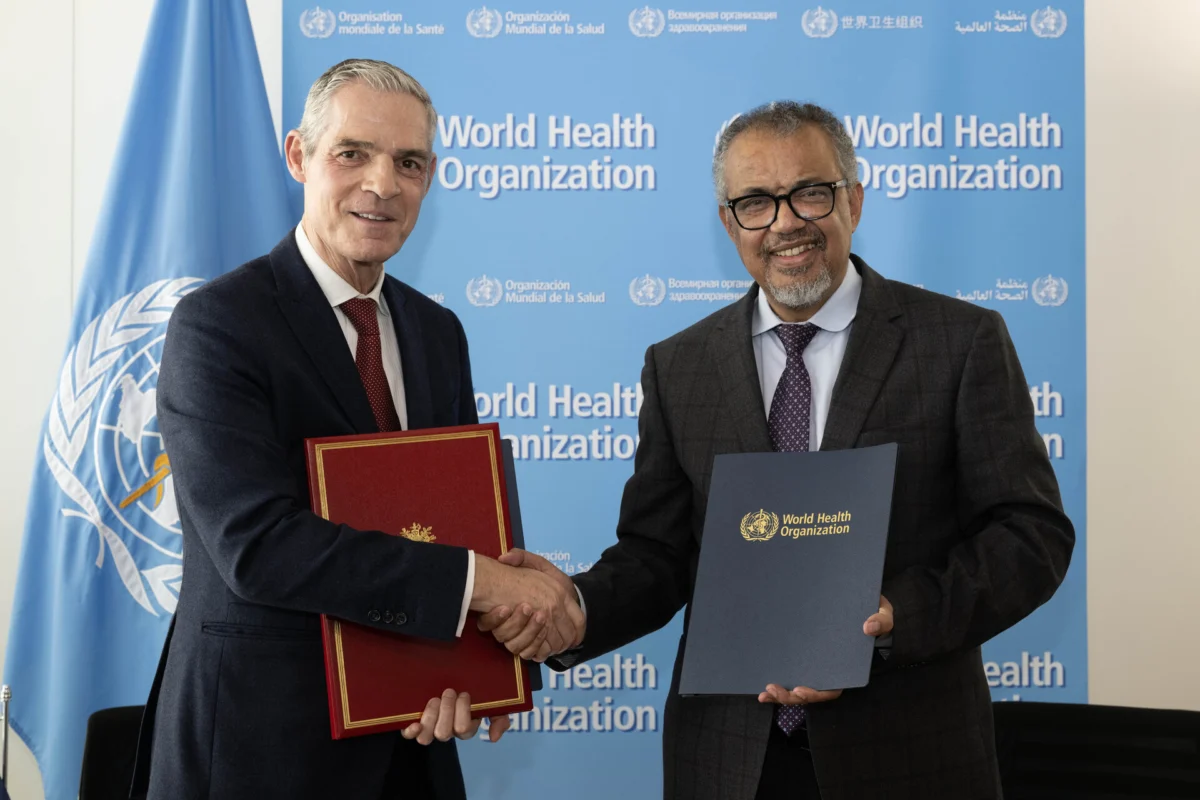
GENEVA, 17 October 2024 — In a significant consolidation of international health diplomacy, the French Republic and the World Health Organization (WHO) have formalized a new chapter in their long-standing partnership. During a high-level ceremony at the WHO headquarters in Geneva, His Excellency Mr. Jérôme Bonnafont, Permanent Representative of France to the United Nations, and WHO Director-General Dr. Tedros Adhanom Ghebreyesus signed seven landmark contribution agreements totaling €24 million.
This financial injection, channeled through the French Ministry of Europe and Foreign Affairs, serves as a cornerstone for the ongoing 2020–2025 France-WHO Framework Agreement. The funding is designed not merely as a transactional grant, but as a strategic mechanism to operationalize the WHO’s ambitious Fourteenth General Programme of Work (2025–2028).
The Core Facts: A Strategic Injection of Capital
The €24 million commitment is multifaceted, designed to provide the WHO with the fiscal agility required to operate in an increasingly volatile global landscape. A standout component of this package is the €4.5 million allocation to the Core Voluntary Contributions Account (CVCA). Unlike "earmarked" funds, which are restricted to specific projects, the CVCA provides fully flexible capital, allowing Dr. Tedros and his team to deploy resources rapidly to the world’s most neglected or sudden-onset health crises.
The remaining €19.5 million is strategically partitioned to address a spectrum of global health imperatives:
- Emergency Response: Sustained support for the WHO Contingency Fund for Emergencies (CFE).
- The Lyon Hub: Continued investment in the WHO emergencies centre in Lyon, a critical node for global epidemic preparedness and diagnostic excellence.
- Targeted Crisis Intervention: Specific funding for the WHO’s humanitarian response in Gaza, urgent cholera mitigation strategies, and mental health support services in Ukraine.
- Structural Health Initiatives: Targeted funding for the "One Health" approach, non-communicable disease (NCD) prevention, and the development of urban health laboratories.
Chronology: A History of Collaborative Governance
The signing ceremony on October 17 is the latest in a series of strategic milestones that have defined the France-WHO relationship over the last five years.
2020: The Framework Foundation
The relationship was formalized through the 2020–2025 Framework Agreement. Recognizing that global health threats—such as the emerging COVID-19 pandemic—could not be managed by nations in isolation, France sought to move beyond sporadic donations toward a structured, predictable financial model. This framework provided the legal and administrative infrastructure that allows today’s multi-agreement signing to occur with such efficiency.
2022–2023: Institutionalizing Preparedness
During the post-pandemic recovery phase, the collaboration focused heavily on institutionalizing the lessons learned from the COVID-19 crisis. France increased its reliance on the Lyon centre, recognizing it as a vital logistical and scientific nerve center for the WHO’s health emergencies program.

2024: The Investment Round
Throughout 2024, France has emerged as a vocal proponent of the WHO’s new "Investment Round." This initiative, approved by the World Health Assembly, aims to move the WHO away from a model of fragmented, unpredictable funding toward a "fully and flexibly financed" organization. France’s role as a co-host of this round signifies its commitment to the Fourteenth General Programme of Work, setting the stage for the funding agreements signed this afternoon.
Supporting Data: Why Flexible Funding Matters
The global health landscape is characterized by what experts call "volatility in funding." Historically, a large percentage of the WHO’s budget has been strictly earmarked by donors for specific diseases or regions. While this ensures that donors’ priorities are met, it often leaves the organization’s core functions—such as emergency preparedness, health systems strengthening, and administrative oversight—underfunded.
The Impact of the CVCA
The €4.5 million in fully flexible funds is particularly vital. When a new cholera outbreak emerges or a sudden conflict disrupts health infrastructure, the WHO requires "seed money" to initiate a response while waiting for international donor pledges to materialize. The CVCA acts as a financial shock absorber, enabling the WHO to maintain its neutrality and operational speed.
Addressing NCDs and "One Health"
Beyond crisis management, France’s investment in non-communicable diseases (NCDs) is a response to the quiet epidemic of diabetes, cardiovascular disease, and cancer that now accounts for the majority of global mortality. Furthermore, the investment in "One Health"—the interdisciplinary approach recognizing that human health is inextricably linked to animal health and the environment—demonstrates a forward-looking strategy to prevent future zoonotic pandemics.
Official Responses: A Shared Vision
The discourse surrounding the signing ceremony emphasized a shared philosophy of global solidarity.
Ambassador Jérôme Bonnafont articulated France’s strategic stance: "France remains deeply committed to supporting the World Health Organization in its efforts to tackle critical global health challenges. These agreements reflect our shared priorities of promoting health equity, responding to emergencies, and strengthening healthcare systems worldwide. We believe that a robust, well-funded WHO is the only way to ensure the security of our own citizens in an interconnected world."
Dr. Tedros Adhanom Ghebreyesus responded with a message of institutional appreciation: "We are immensely grateful to the French Government for its steadfast support to WHO, continued partnership, and leadership in global health. This contribution will enable us to address key health threats, from non-communicable diseases to emergency response, helping to save lives and protect the most vulnerable populations. France has consistently stood on the right side of history when it comes to multilateral health cooperation."

Implications: A Blueprint for the Future
The implications of this agreement extend far beyond the €24 million figure. By acting as a co-host of the Investment Round and pushing for increased assessed contributions, France is attempting to change the "culture of financing" within the United Nations system.
Strengthening Multilateralism
In an era where multilateralism is often challenged by nationalist policies, the France-WHO partnership serves as a counter-narrative. It signals to the international community that sovereign nations view the WHO not as a secondary body, but as the primary architect of global health security.
Operationalizing the 2025–2028 Agenda
The funding is specifically aligned with the Fourteenth General Programme of Work (GPW 14). This programme is the WHO’s blueprint for the next four years, focusing on:
- Protecting: Strengthening the global architecture for health emergencies.
- Promoting: Addressing the root causes of disease through environmental and social determinants.
- Providing: Supporting countries in their journey toward Universal Health Coverage (UHC).
By front-loading its support, France provides the WHO with the fiscal runway to initiate these systemic changes. The inclusion of mental health support for Ukraine and emergency response for Gaza underscores that this partnership is as much about humanitarian intervention as it is about long-term institutional stability.
The Role of the Lyon Hub
The continued investment in the Lyon centre highlights a strategic realization: regional hubs are essential for decentralized response. By bolstering the capacity of the Lyon office, the WHO ensures that its emergency response teams are closer to the field, equipped with better diagnostic tools, and capable of faster deployment.
Conclusion: A Model for Sustained Engagement
The signing ceremony at the WHO headquarters is more than a administrative formality; it is a signal of continuity in an unpredictable world. As the international community grapples with the climate crisis, the threat of new pandemics, and the rise of chronic illnesses, the partnership between France and the World Health Organization offers a template for how major donors can engage effectively with global institutions.
By balancing flexible funding with targeted support, France is not merely funding the status quo; it is actively shaping the future of global health. As the WHO moves into the 2025–2028 cycle, this €24 million commitment stands as a testament to the power of structured, long-term, and trust-based cooperation in the pursuit of a healthier, safer world for all.

 Nana
Nana
 Asro
Asro