Dwi Wanna
 Nana Wu
 Muslim
 Reynand Wu
 Ammar Sabilarrohman
 Suro Senen
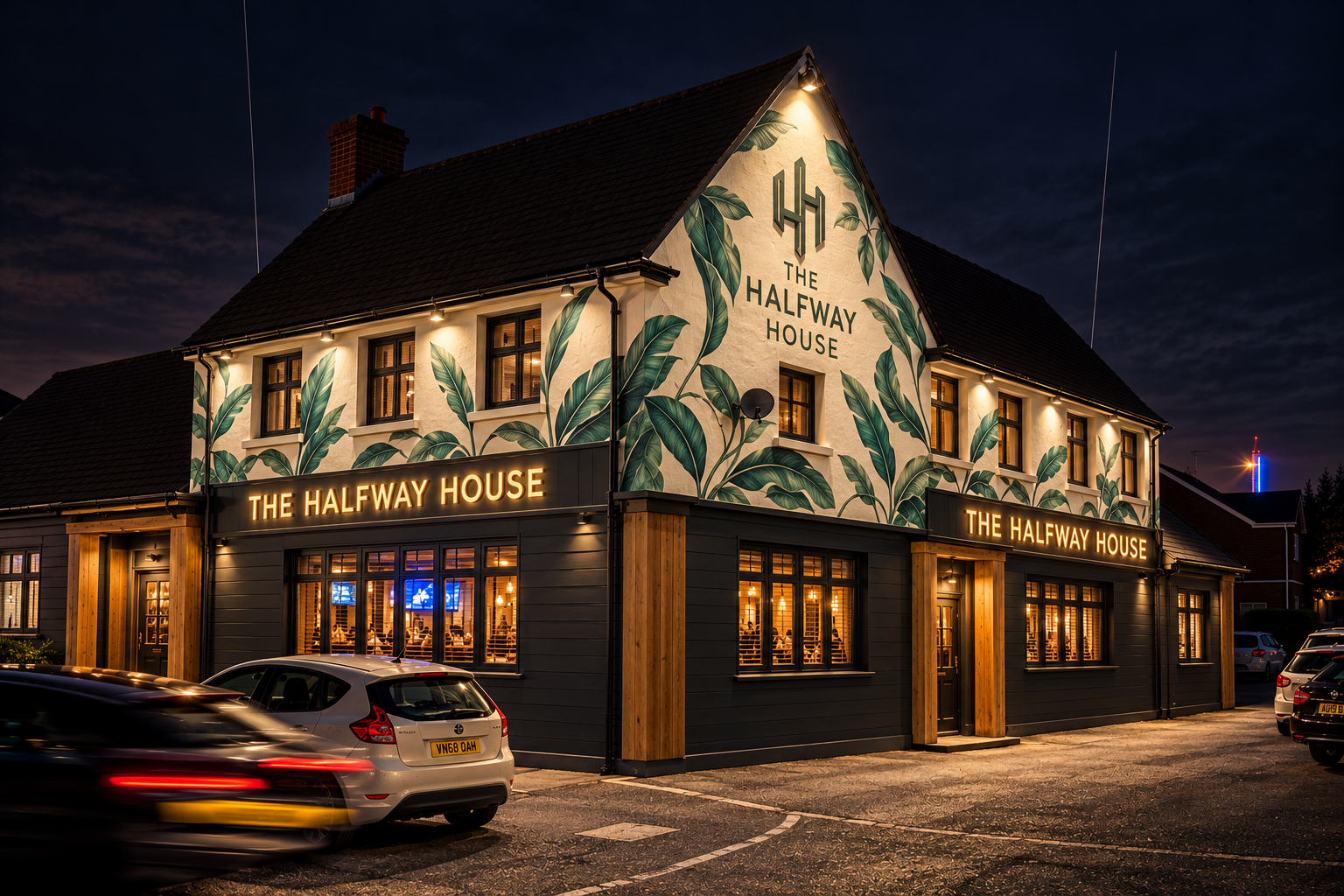
RUNCORN, CHESHIRE – The hospitality landscape in Runcorn is poised for a significant elevation as one of its most storied local landmarks, the Halfway House on Halton Road, prepares to unveil a comprehensive £150,000 refurbishment. The project, funded by the Chorley-based independent operator Blind Tiger Inns, represents a major vote of confidence in the local economy and the enduring appeal of the "great British local."
Managed by the seasoned mother-and-daughter partnership of Mandy Schon and Gemma Conway, the venue has served as a cornerstone of the Halton Road community for nearly a decade. The scheduled reopening on Friday, October 16, 2026, at 6:00 PM, marks the culmination of weeks of intensive labor aimed at bridging the gap between traditional pub values and contemporary leisure expectations.
Main Facts: A Strategic Reinvestment in Community Socializing
The Halfway House is not merely undergoing a cosmetic "lick of paint"; the £150,000 capital expenditure has been directed toward a total structural and aesthetic overhaul. The renovation aims to optimize the venue’s footprint to accommodate a broader demographic, ranging from daytime social groups to weekend evening crowds seeking high-quality entertainment.
Key pillars of the transformation include:
- Total Interior Redesign: A complete modernization of the bar area, seating arrangements, and décor to create a "vibrant social hub" atmosphere.
- Exterior Enhancements: Significant investment in "kerb appeal" to ensure the pub remains an inviting landmark for both residents and visitors to the Runcorn area.
- Job Creation: The expansion of services and expected increase in footfall have necessitated the hiring of eight new staff members, providing a direct boost to local employment.
- Diversified Entertainment: A commitment to a robust schedule of live music and events, positioning the venue as a primary destination for nightlife in the Halton district.
The Halfway House is a flagship property within the Blind Tiger Inns portfolio, a group that has gained a reputation for revitalizing community pubs across the North West. This latest project is part of a broader strategy by the firm to ensure their "wet-led" (drink-focused) venues remain competitive in a market that increasingly demands high-quality environments and experiential offerings.
Chronology: A Nine-Year Legacy Leads to a New Chapter
To understand the significance of this reopening, one must look at the tenure of Mandy Schon and Gemma Conway. Having steered the Halfway House through the various economic shifts of the past nine years, the duo has become synonymous with the venue’s identity.
- 2017–2025: Under Schon and Conway’s management, the pub established itself as a reliable community fixture. During this period, the venue weathered the challenges of the post-pandemic recovery and the subsequent cost-of-living fluctuations that impacted the UK hospitality sector.
- Mid-2026: Recognizing the need to modernize to meet the evolving tastes of a younger demographic while retaining their loyal "regulars," Blind Tiger Inns greenlit the £150,000 investment plan.
- Late Summer/Early Autumn 2026: The pub closed its doors for the "transformation phase." This period involved extensive interior demolition, rewiring, the installation of new bespoke fixtures, and a reimagining of the outdoor space.
- October 16, 2026: The scheduled "Grand Reveal." The doors are set to open at 6:00 PM, featuring live entertainment designed to showcase the venue’s upgraded acoustics and social layout.
Supporting Data: The Economics of the Local Pub
The £150,000 investment in the Halfway House reflects a larger trend in the UK pub industry where independent groups are outperforming larger, more rigid corporate chains by focusing on "hyper-local" appeal.
The Blind Tiger Inns Factor
Blind Tiger Inns, led by Managing Director Chris Tulloch, currently operates 23 pubs and bars. Their business model focuses on:
- Independent Identity: Allowing each pub to maintain a unique name and local character rather than a "cookie-cutter" brand.
- Strategic Capital Expenditure (CapEx): Regularly reinvesting profits back into the physical infrastructure of their sites to prevent "venue fatigue."
- Employment Stability: By adding eight new roles to the Halfway House, the group contributes to a total workforce that supports hundreds of families across the North West.
Local Impact
Runcorn, part of the Borough of Halton, has seen a steady demand for quality social spaces following the redevelopment of various local infrastructure projects. The creation of eight new jobs is particularly significant in the current economic climate, where hospitality remains one of the largest private-sector employers in the region. Furthermore, the use of local contractors for the renovation ensures that a portion of the £150,000 investment circulated immediately back into the local Cheshire and Lancashire construction economies.
Official Responses: Leadership on the Front Lines
The reopening has been met with enthusiasm from both the operational team and the executive leadership of Blind Tiger Inns.
Mandy Schon, the long-standing manager of the Halfway House, emphasized the emotional and social weight of the project:
“We’re excited to welcome everyone back to the Halfway House. We’ve been part of this community for nine years, and this investment lets us update the pub while keeping its friendly, welcoming atmosphere. We can’t wait for everyone to see the changes on Friday.”
Her sentiment reflects the delicate balance required in pub renovations: the need to modernize without alienating the core customer base that provides the "soul" of the establishment.
From a corporate perspective, Chris Tulloch, Founder and Managing Director of Blind Tiger Inns, highlighted the broader economic and social objectives of the investment:
“This investment supports hospitality in Runcorn and creates new local jobs. We’ve updated the pub inside and out and added new entertainment, giving people more ways to meet and spend quality time together.”
Tulloch’s comments underscore a proactive vision for the hospitality industry—viewing the pub not just as a place to consume beverages, but as a vital piece of social infrastructure that combats isolation and fosters community cohesion.
Implications: The Future of the "Community Hub" Model
The transformation of the Halfway House serves as a case study for the survival of the British pub in the late 2020s. As the industry faces pressures from changing consumer habits and rising operational costs, several key implications emerge from this Runcorn development.
1. The Rise of the "Premium Local"
The £150,000 spend suggests that "standard" is no longer enough. Consumers are increasingly discerning; they expect the comfort of a local pub but with the aesthetic standards of a city-center cocktail bar. By investing in high-end finishes and modern lighting, the Halfway House is positioning itself to capture the "stay-at-home" generation that is now looking for reasons to return to physical social spaces.
2. Hospitality as an Employment Engine
The addition of eight jobs highlights the role of the service sector in regional regeneration. These roles often provide flexible entry-level opportunities as well as career paths into management, as evidenced by the long-term success of the Schon-Conway team.
3. The "Experience Economy"
By integrating a dedicated live entertainment schedule into the reopening strategy, Blind Tiger Inns is acknowledging that modern pubs must be multi-functional. The Halfway House is no longer just a "drinking hole"; it is a performance venue, a social lounge, and a community meeting point. This diversification is essential for resilience against economic downturns.
4. Strengthening Local Identity
In an era of digital disconnection, the physical "hub" remains irreplaceable. The Halfway House’s location on Halton Road places it at the heart of a residential artery. A successful, vibrant pub can increase local property desirability and encourage further small-business investment in the immediate vicinity.
Conclusion
As the clock ticks toward 6:00 PM on October 16, the anticipation in Runcorn continues to build. The Halfway House stands as a testament to the power of local partnership and the necessity of reinvestment. With a fresh look, a bolstered team, and the experienced hands of Mandy Schon and Gemma Conway at the helm, the venue is well-positioned to remain a Runcorn icon for the next decade and beyond. For the residents of Halton Road, the reopening isn’t just about a new bar—it’s about the return of their community’s living room.

 Pevita Pearce