 Dwi Wanna
 Nana Wu
 Muslim
 Reynand Wu
 Ammar Sabilarrohman
 Layla Zulfa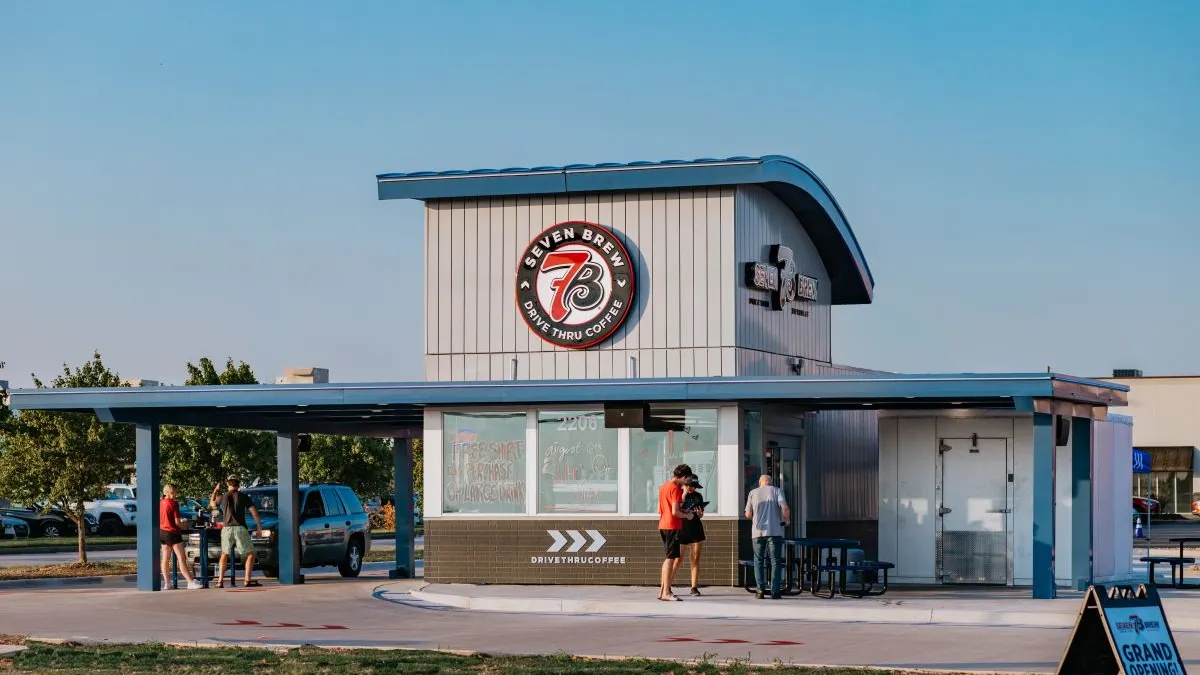
By Julie Littman | June 12, 2026
The specialty coffee landscape in the United States is undergoing a seismic shift, and at the center of this transformation is 7 Brew. The drive-thru-only coffee powerhouse officially reached a significant operational milestone this week, opening its 777th unit in San Antonio, Texas. This achievement is not merely a numerical marker; it serves as a powerful symbol of the brand’s meteoric rise and its intent to challenge the established hierarchy of the domestic coffee industry.
As the company celebrates this "Lucky 777" achievement, analysts are looking beyond the excitement of the milestone to examine the broader implications of 7 Brew’s rapid expansion. With over 250 additional stores currently in the development pipeline and a trajectory that points toward a 1,000-unit fleet by the end of 2026, 7 Brew has firmly positioned itself as a primary contender against industry giant Dutch Bros.
A Chronology of Hyper-Growth
To understand the scale of 7 Brew’s ascent, one must examine the timeline of its expansion. At the start of 2022, the brand was a boutique operation with just 40 locations. In the span of roughly four and a half years, the company has executed one of the most aggressive growth strategies in the history of the quick-service restaurant (QSR) sector, launching 562 new coffeehouses during that period.
The acceleration has been particularly pronounced over the last 18 months. After concluding 2025 with an already impressive footprint of over 600 locations, the brand has opened approximately 177 new units in the first half of 2026 alone. This pace of development is supported by a robust franchise model that has attracted significant capital from private equity firms and some of the most influential multi-unit operators in the country.
The company’s roadmap for the remainder of the year is equally ambitious. With 437 franchised outlets projected to open before the end of the calendar year, 7 Brew is operating at a velocity that few competitors can match. If these projections hold, the company will have effectively transformed from a regional player into a national behemoth in less than five years.
Comparative Market Analysis: 7 Brew vs. Dutch Bros
The primary rival in 7 Brew’s crosshairs is Dutch Bros, which has long been the gold standard for the drive-thru-centric coffee model. As of the first quarter of 2026, Dutch Bros reported a total of 1,177 units. While Dutch Bros maintains a lead in total store count, the gap is narrowing at an unprecedented rate.
However, the competition is not defined by store count alone; it is defined by economic efficiency. One of the most compelling narratives surrounding 7 Brew’s growth is its performance in Average Unit Volumes (AUV). 7 Brew reported an AUV exceeding $2.6 million for the 2025 fiscal year. When contrasted with the $2.2 million systemwide AUV reported by Dutch Bros in Q1 2026, it becomes clear why institutional investors are so bullish on the brand.
For franchisees, this revenue disparity is a powerful incentive. High-volume, small-footprint models allow for faster return on investment and lower overhead compared to traditional sit-down coffee houses. This financial efficiency has drawn the attention of major industry players, most notably the Flynn Group, which committed to a 160-unit development deal last year. Furthermore, the strategic acquisition of a majority stake in 7 Crew—the brand’s second-largest franchisee—by Franchise Equity Partners underscores a high degree of confidence from the private equity sector in 7 Brew’s long-term viability.
The Strategy Behind the Speed
The "7 Brew" brand identity is built on a foundation of high-energy customer service, a simplified menu, and, crucially, a design optimized for high-throughput drive-thru traffic. By stripping away the complexities of dining rooms and focusing entirely on speed and consistency, the company has created a model that is inherently scalable.

"Reaching 777 stands is more than a milestone; it’s a reflection of the incredible momentum behind 7 Brew and the people and communities that continue to fuel our growth across the country," said Chris Dawson, president of 7 Brew, in a statement following the San Antonio opening.
This momentum is being funneled into a series of strategic community activations. To celebrate the 777th unit, the company has announced a "Lucky 777" campaign. Starting June 15, the San Antonio location will host exclusive events, including merchandise giveaways and promotional drink offers. From June 16 to 19, the brand will offer windows of free drink distribution, culminating on June 20 with a promotion offering free T-shirts to guests who purchase a large beverage. Such grassroots marketing tactics are designed to cement brand loyalty in new markets, a critical component for any brand growing as rapidly as 7 Brew.
Implications for the Coffee Industry
The aggressive expansion of 7 Brew has several profound implications for the broader QSR market:
1. The Death of the Traditional Coffee House Model
The success of 7 Brew and Dutch Bros signals a permanent shift in consumer behavior. The modern coffee consumer prioritizes speed, convenience, and mobile-friendly access over the "third place" concept championed by brands like Starbucks in the early 2000s. As real estate prices rise, the small-footprint, drive-thru-only model is becoming the preferred vehicle for growth for both emerging and established brands.
2. Private Equity’s Tightening Grip
The entry of large-scale investment groups like Franchise Equity Partners into the 7 Brew ecosystem demonstrates a professionalization of the franchise model. When private equity takes a majority stake in a large franchisee, it often leads to more disciplined operations, better technology integration, and faster site acquisition. This trend suggests that the "coffee wars" of the next decade will be won by those with the most efficient access to capital.

3. Supply Chain and Labor Challenges
While the growth numbers are impressive, scaling from 40 to 1,000 units in under five years presents significant operational risks. Maintaining consistent product quality and service standards across 1,000+ units requires a robust supply chain and a highly repeatable labor model. 7 Brew’s ability to navigate the complexities of staffing and logistics in a tightening labor market will be the ultimate test of its leadership team.
4. Market Saturation and Cannibalization
As 7 Brew and Dutch Bros expand into the same geographic territories, the risk of market saturation increases. While the drive-thru model is resilient, there is a finite amount of demand for specialty coffee in any given municipality. The coming years will likely see these two giants competing directly for the same suburban real estate, potentially leading to a deceleration in AUV as the market becomes crowded.
Looking Toward the 1,000-Unit Horizon
As 7 Brew looks toward the horizon of 1,000 units, the company stands at a crossroads. It has successfully moved past the "emerging brand" phase and is now firmly established as a national powerhouse. The transition from a challenger brand to a market leader requires a shift in focus from pure growth to operational sustainability.
Investors, franchisees, and competitors alike will be watching the next six months closely. If 7 Brew successfully hits its 1,000-unit goal by the end of 2026, it will have solidified its position as a dominant force that can no longer be ignored by the industry’s legacy players. The "Lucky 777" milestone is a testament to the brand’s current strength, but the true test will be its ability to maintain this pace without sacrificing the operational excellence that propelled its initial success.
In an industry where the stakes are measured in seconds and cents, 7 Brew has proven that it has the right formula for the current era. Whether it can maintain its lead in the face of increased competition and the inevitable friction of massive scale remains the most compelling question in the restaurant sector today. For now, however, the brand is enjoying its moment, proving that in the world of coffee, speed is the ultimate currency.


 Pevita Pearce
 Azzam Bilal Chamdy