

 Dwi Wanna
 Nana Wu
 Muslim
 Reynand Wu
 Ammar Sabilarrohman
 Raul Delapena Setiawan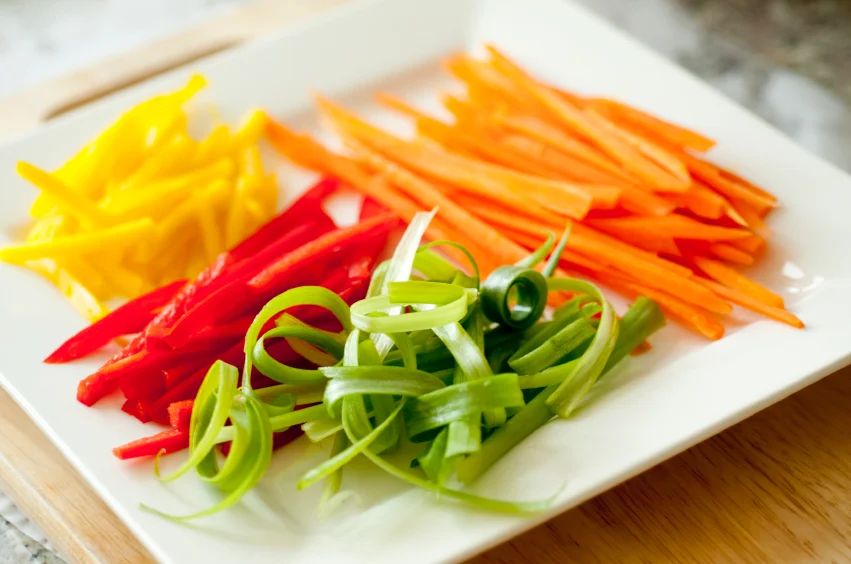
Main Facts: The Foundation of Flavor and Form
In the bustling world of professional kitchens and the increasingly sophisticated realm of home cooking, the humble kitchen knife stands as the most vital tool. Far from being merely an instrument for crude division, a knife, in the hands of a skilled practitioner, transforms into an extension of the chef’s will, capable of artistry and efficiency. For beginning cooks, the distinction between seemingly similar techniques like mincing, dicing, and chopping can be a mystery, yet these are the foundational competencies upon which all culinary endeavors are built. Mastering these essential knife skills is not merely about speed or aesthetics; it is about ensuring consistent cooking, maximizing flavor extraction, enhancing presentation, and, critically, maintaining safety in the kitchen.
The journey from novice to adept knife handler is one of practice and precision. While the basics can be grasped relatively quickly, true mastery – the ability to execute each cut with effortless consistency and speed – is a craft honed over years, often decades, in professional culinary environments. This article delves into the core knife skills, demystifying their application and emphasizing their importance in achieving culinary excellence.
Chronology: A Progression Through Fundamental Techniques
The evolution of culinary techniques has always been intertwined with the development of tools. From rudimentary stone blades to the sophisticated alloys of modern chef knives, the ability to process ingredients efficiently has driven gastronomic progress. While specific knife skills might not have a strict historical "chronology" of invention in the same way as, say, baking, their teaching often follows a logical progression, moving from broader, more forgiving cuts to those demanding greater precision and finesse. This article will explore a sequence of these skills, building from basic preparation to more refined techniques.
Before diving into specific cuts, it is paramount to establish the universal principles of knife handling. A truly sharp knife is not only more efficient but also significantly safer, requiring less force and reducing the risk of slippage. The proper grip, typically a "pinch grip" where the thumb and forefinger pinch the blade just above the handle, provides superior control. A stable cutting board, often secured with a damp cloth underneath, is non-negotiable. And perhaps most importantly, the "claw hand" technique, where fingertips are curled under to protect them from the blade, is the bedrock of injury prevention. These overarching principles underpin every specific technique discussed below.
Mincing: Unlocking Potent Aromas and Flavors
Supporting Data: The Science of Small Cuts
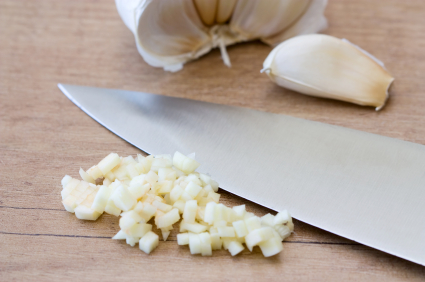
Mincing is a technique designed to produce the finest possible cuts of an ingredient, transforming items like garlic, ginger, shallots, and herbs into almost paste-like textures. The primary purpose of mincing is to maximize the surface area of the ingredient, which in turn accelerates cooking, ensures even distribution throughout a dish, and, most importantly, facilitates the release of volatile oils and intense flavors. This makes minced ingredients ideal for aromatic bases, marinades, sauces, and dressings where their essence needs to permeate the entire preparation.
While the general goal remains consistent, the precise technique for mincing can vary slightly depending on the ingredient’s fibrous nature or shape. For instance, mincing garlic often involves a slightly different initial approach than mincing an onion, though both culminate in extremely fine pieces.
Official Responses: The Garlic Mince Technique
Culinary experts frequently cite garlic as the quintessential ingredient for demonstrating proper mincing. As outlined by resources like The Splendid Table, the process for mincing garlic typically involves:
- Preparation: Peel the garlic cloves and, for optimal stability, trim the root end but leave the head end intact initially, as it helps hold the clove together.
- Initial Slicing: Using a sharp knife with a thin blade, carefully slice the garlic clove lengthwise into thin strips, moving from the head towards the root. The thinner these initial strips, the finer the final mince will be.
- Cross-Cutting: Rotate the garlic strips 90 degrees. Now, cut across the strips into very small pieces.
- Finishing: Gather the finely cut pieces into a small mound. Place the non-dominant hand flat on the spine (dull side) of the knife, providing stability and pressure. Rock the knife blade back and forth over the garlic, pivoting from the tip or heel, until the desired fineness is achieved. For an even finer mince or paste, a pinch of salt can be added during this stage, as the abrasive crystals help break down the garlic fibers further.
The resulting tiny, uniform pieces ensure that the garlic flavor is evenly distributed without encountering large, overpowering chunks. This technique is invaluable for dishes where garlic is meant to be a background note rather than a prominent texture.
Implications: Consistency in Flavor and Texture
The implication of mastering mincing extends beyond mere convenience. In professional cooking, a consistent mince ensures that every bite of a sauce or stir-fry delivers the intended flavor profile. In home cooking, it elevates dishes, preventing the unpleasant surprise of biting into a large, raw piece of garlic in an otherwise delicate sauce. It also significantly reduces cooking time for ingredients like onions, which benefit from rapid caramelization.
Chopping: Versatility for Varied Textures
Supporting Data: The Broadest Category
Chopping represents a broad category of knife skills characterized by its versatility and less stringent requirement for uniformity compared to mincing or dicing. It involves cutting ingredients into pieces of varying sizes – large, medium, or small – without necessarily striving for perfect cubes or uniform strips. This technique is often employed when the exact shape or size is less critical than simply breaking down an ingredient, or when a rustic texture is desired.
Chopping is effectively performed with robust knives such as a chef’s knife or a cleaver. The choice of tool often depends on the ingredient’s size and hardness. A heavy-duty cleaver excels at breaking down larger, tougher vegetables like squash or even bone, while a chef’s knife offers more agility for general chopping tasks.
Official Responses: Cleaver Control and Chef’s Knife Agility
For those using a cleaver, proper handling is key to both efficiency and safety. As Better Homes & Gardens suggests, the technique often involves:
- Secure Grip: Hold the cleaver’s handle firmly with your dominant hand.
- Guided Pressure: For larger, tougher ingredients, the non-dominant hand can be placed gently on the top, dull side (spine) of the blade. This provides additional downward pressure and control, guiding the cleaver through resistant foods like root vegetables or even small bones. This technique allows for powerful, deliberate cuts, yielding large or medium chop sizes suitable for stews, stocks, or hearty vegetable preparations.
With a chef’s knife, chopping typically involves a continuous rocking motion, where the tip of the blade remains in contact with the cutting board while the heel lifts and falls. This motion allows for rapid and efficient processing of ingredients like herbs, onions, or other vegetables into desired chop sizes. The size of the chop is determined by the spacing of the cuts and the subsequent aggregation of the pieces. A "coarse chop" might involve pieces up to an inch or more, suitable for stocks or slow-cooked dishes where ingredients will soften significantly. A "medium chop" is more common for general cooking, while a "fine chop" bridges the gap towards dicing or mincing, offering smaller, more manageable pieces.
Implications: Adaptability in Culinary Preparations
The primary implication of mastering chopping is the ability to adapt to a wide range of culinary needs. It’s the go-to technique for preparing ingredients for soups, stews, casseroles, and anything where ingredients are meant to meld together rather than stand out individually in precise forms. It allows for quick initial breakdown of ingredients, setting the stage for more refined cuts if needed, or simply preparing them for bulk cooking. It underscores the importance of understanding when precision is necessary and when efficiency is paramount.
Dicing: The Art of Uniformity and Consistency
Supporting Data: Precision for Even Cooking and Presentation
Dicing is a refinement of the chopping technique, elevating it to an art form of precision and uniformity. The defining characteristic of dicing is the creation of small, consistently sized cubic pieces. This consistency is crucial for several reasons: it ensures even cooking, allowing all pieces of an ingredient to reach the desired doneness simultaneously; it contributes significantly to the visual appeal of a dish, presenting a professional and deliberate aesthetic; and it offers a pleasant, consistent texture in every bite.
While professional chefs often wield their primary chef’s knives for dicing, smaller, more agile knives might be preferred by some, especially for delicate or smaller ingredients. Regardless of the knife choice, the presence of a Granton edge – a series of indentations or scallops along the blade – can be particularly beneficial for dicing. As Oregon Live notes, these indentations create air pockets that prevent food from sticking to the blade, facilitating smoother, cleaner, and more efficient cuts, especially when dealing with starchy vegetables like potatoes or moist ingredients.
Official Responses: The Claw Hand and Brunoise Mastery
The technique for dicing is a multi-step process that demands focus and control. It begins with squaring off the ingredient to create a stable, flat base. For example, dicing an onion involves first halving it, then making horizontal cuts (parallel to the cutting board) and vertical cuts (perpendicular to the board) before finally slicing down to create cubes.
Crucially, when holding the ingredient during dicing, the "claw hand" technique is absolutely essential. As highlighted by Alla Cucina, this method involves:
- Curled Fingers: Curling the fingertips of the non-dominant hand inward, creating a protective "claw" shape.
- Knuckle Guidance: The flat part of the knuckles then guides the knife blade, keeping the fingers safely out of the cutting path. The blade rests against the knuckles, allowing the chef to precisely control the cut while minimizing the risk of injury. This technique is not just for beginners; it’s a fundamental safety practice for all levels of culinary expertise.
Dicing comes in various standard sizes, each with its specific application:
- Large Dice (Carré): Approximately ¾ to 1 inch cubes. Used for hearty stews, roasts, or when ingredients need to maintain a significant presence.
- Medium Dice (Parmentier): Approximately ½ inch cubes. A common general-purpose dice for many dishes, including roasted vegetables or salads.
- Small Dice (Macedoine): Approximately ¼ inch cubes. Ideal for soups, garnishes, or when ingredients need to cook quickly and blend seamlessly.
- Brunoise: The smallest dice, approximately ⅛ inch cubes. Often used for delicate garnishes, fine mirepoix, or when ingredients need to melt into a sauce, releasing maximum flavor. Mastering the brunoise is often seen as a benchmark of a chef’s knife skills.
Implications: Elevated Presentation and Culinary Control
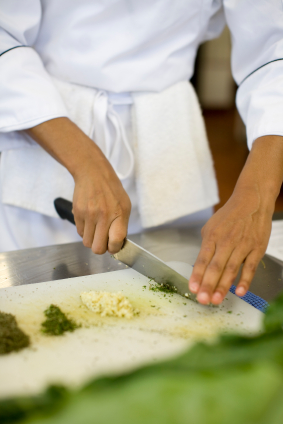
The implications of proficient dicing are profound. In fine dining, perfectly diced vegetables or fruits are a hallmark of meticulous preparation and attention to detail. In everyday cooking, it means that a vegetable medley will cook uniformly, preventing some pieces from being undercooked while others are mushy. It also significantly impacts the mouthfeel and texture of a dish, contributing to a more refined and enjoyable eating experience. Dicing is a testament to the fact that precision in preparation translates directly to quality in the final product.
Julienning: Crafting Elegant Strips
Supporting Data: Aesthetic Appeal and Rapid Cooking
Julienning is a knife skill focused on creating long, slender, matchstick-like strips of ingredients. This technique is most famously associated with vegetables, producing delicate strands of carrots, celery, or potatoes, but its principles can be elegantly translated to other ingredients such as fish, meat, or cheese for specific preparations. The primary benefits of julienning are twofold: it offers a highly attractive presentation, adding a touch of elegance and visual interest to dishes, and it allows for rapid, even cooking due to the increased surface area and reduced thickness of the ingredient.
Official Responses: The Precision Grip and Rocking Motion
Executing a proper julienne requires a specific knife grip and cutting motion to ensure uniformity and safety. As described by sources like Le Taste of France, the recommended grip for precision cuts like julienning involves:
- Blade Control: The middle, ring, and pinkie fingers grasp the top of the chef’s knife handle securely.
- Index Finger Guidance: The forefinger rests on one side of the blade, near the heel.
- Thumb Support: The thumb provides opposing support from the other side of the blade. This "chef’s grip" or "pinch grip" offers superior control over the blade’s angle and movement, which is critical for consistent cuts.
The julienning process typically begins with preparing the ingredient to create a stable, rectangular block:
- Squaring Off: Use the knife to carefully trim off all four sides of the ingredient (e.g., a carrot or potato). This creates a uniform, flat-sided block that is much easier and safer to work with, ensuring consistent strip lengths.
- Slicing into Planks: From this block, cut uniform, lengthwise sections or "planks." The thickness of these planks will determine the thickness of the final julienned strips.
- Stacking and Cutting: Stack the planks neatly on top of each other. Now, cut across these stacked planks again, using the same precise, controlled motion, to create the long, slender strips.
- The Rocking Motion: For these cuts, avoid simply "chopping" straight down. Instead, employ a smooth rocking motion that allows the knife’s blade to move easily and cleanly through the vegetable or other ingredient. The tip of the blade typically initiates the cut, followed by a downward and forward motion through the rest of the blade, finishing at the heel. This motion prevents crushing and ensures clean, even strips.
A standard julienne typically measures about ⅛ inch by ⅛ inch by 1 to 2 inches long. Variations exist, such as the "allumette," which refers to slightly thicker matchstick cuts, often for potatoes that are then fried.
Implications: Elevating Presentation and Texture
Julienning has significant implications for both the visual appeal and the textural experience of a dish. It’s indispensable for garnishes, elegant salads, stir-fries where quick cooking is desired, and spring rolls. The consistent thinness ensures that every piece cooks rapidly and evenly, and the delicate texture adds a sophisticated mouthfeel. For aspiring chefs, the ability to produce a perfect julienne is a clear indicator of their precision and control, making it a critical skill to master for any culinarian aiming for high standards.
Chiffonade: The Delicate Ribbon Cut for Herbs
Supporting Data: Preserving Freshness and Enhancing Aroma
The term "chiffonade" is a French word meaning "made of rags," a poetic description for the delicate, ribbon-like shreds it produces, primarily from leafy green herbs or vegetables. This specialized technique is most commonly employed for tender, broad-leaf herbs such as basil, mint, spinach, or sorrel. The chiffonade cut is designed to release the herbs’ aromatic oils gently without bruising them, preserving their vibrant color, fresh flavor, and delicate texture. It results in elegant, fine shreds that are perfect for garnishing, mixing into salads, or incorporating into sauces just before serving.
Official Responses: The Roll and Rock Method
The technique for achieving a perfect chiffonade is relatively simple but requires a very sharp knife to avoid crushing the delicate leaves. As The Pioneer Woman demonstrates with basil, the process involves:
- Stacking: Gather several clean, dry leaves of the chosen herb and stack them neatly on top of each other. The number of leaves depends on their size and desired yield.
- Rolling: Carefully roll the stacked leaves tightly into a compact cylinder, resembling a small, green cigar. This rolling action allows for multiple leaves to be cut simultaneously and prevents them from shifting.
- Slicing: Using an extremely sharp knife – a critical detail, as a dull knife will tear and bruise the leaves, leading to discoloration and loss of flavor – make thin, perpendicular slices across the rolled cylinder.
- Rocking Motion: Employ the same gentle rocking motion described for julienning. The tip of the blade should initiate the cut, followed by a smooth, controlled downward and forward stroke through the entire length of the blade. This ensures clean, uniform shreds.
The result is a collection of beautiful, fine ribbons of herb, which can be gently separated and sprinkled over dishes. The visual impact is striking, and the aromatic release is immediate and fresh.
Implications: Aesthetic Finesse and Flavor Preservation
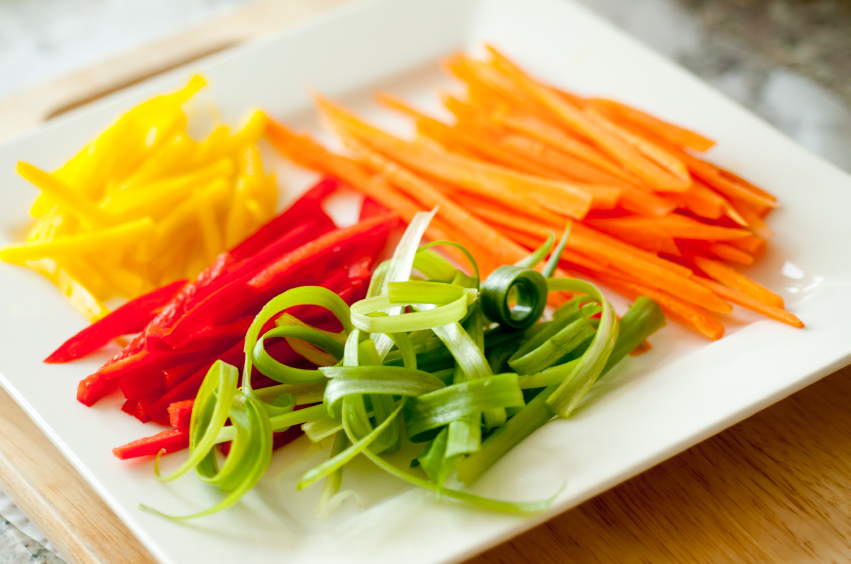
The implications of mastering the chiffonade are primarily aesthetic and sensory. It transforms a simple herb garnish into an elegant flourish, indicative of thoughtful preparation. More importantly, by preventing bruising, it ensures that the full, vibrant flavor and aroma of the fresh herbs are preserved, enhancing the overall sensory experience of the dish. This technique is invaluable for finishing dishes, adding a burst of freshness and color just before serving, making it a staple in both professional and ambitious home kitchens.
Beyond the Basics: The Journey to Culinary Mastery
Supporting Data: The Interplay of Skill, Safety, and Equipment
While mincing, chopping, dicing, julienning, and chiffonade form the bedrock of knife skills, they represent just the beginning of a chef’s journey. Beyond these foundational cuts lie numerous other techniques, such as tourne (barrel-shaped vegetables), oblique cuts, and more specialized butchery skills. The common thread woven through all these is the interplay of precise technique, unwavering safety protocols, and the understanding of one’s equipment.
A well-maintained knife is not a luxury but a necessity. Regular sharpening and honing are crucial for both performance and safety. As The Huffington Post emphasizes, a sharp knife requires less force, reducing the chance of it slipping and causing injury. Beyond the physical tools, the mental aspects of knife work – focus, patience, and adaptability – are equally important. Learning to "read" an ingredient, understanding its texture and resistance, allows a chef to adjust their technique on the fly, ensuring optimal results.
Official Responses: The Mentorship and Practice Imperative
Culinary education, from professional schools to online tutorials, consistently stresses that knife skills are not innate but acquired through deliberate practice. Chefs spend years, sometimes a lifetime, perfecting their hand-eye coordination, muscle memory, and speed. This continuous refinement is often guided by experienced mentors who provide critical feedback on grip, posture, and technique. The "official response" from the culinary world is unequivocal: there are no shortcuts to mastery; only consistent, mindful practice.
Implications: Efficiency, Creativity, and Professional Growth
The implications of mastering these and other advanced knife skills are far-reaching. For aspiring professional chefs, proficient knife work is a non-negotiable entry requirement. It speaks volumes about their discipline, attention to detail, and understanding of fundamental kitchen operations. Efficient knife skills directly translate to faster prep times, reducing labor costs and increasing kitchen productivity.
For the home cook, the benefits are equally transformative. Beyond the obvious safety advantages, a confident command of knife skills opens up a world of culinary creativity. It allows for experimentation with new recipes, effortless preparation of fresh ingredients, and the sheer joy of creating beautiful, delicious food with ease. The ability to precisely prepare ingredients ensures that every component contributes optimally to the final dish, leading to a more consistent and satisfying dining experience. It empowers individuals to cook more healthily, efficiently, and with greater pleasure, making the kitchen a place of creation rather than a chore.
Conclusion: The Unseen Art of Culinary Foundations
The mastery of basic knife skills – mincing, chopping, dicing, julienning, and chiffonade – is more than just a set of techniques; it is the unseen art that underpins all successful cooking. These skills are the bedrock upon which flavor is built, presentation is perfected, and efficiency is achieved. They teach discipline, demand precision, and, crucially, instill a profound respect for ingredients.
From the home cook preparing a weeknight meal to the seasoned chef orchestrating a Michelin-star plate, the ability to wield a knife with confidence and expertise is an essential step on the path to culinary excellence. It is a journey of continuous learning, practice, and refinement, where every cut brings one closer to becoming a true artisan of the kitchen. Embracing these skills not only makes cooking easier and safer but fundamentally transforms the way we interact with our food, turning simple ingredients into extraordinary culinary experiences.


 Iffa Jayyana
 Ali Ikhwan