

 Dwi Wanna
 Nana Wu
 Muslim
 Reynand Wu
 Ammar Sabilarrohman
 Nila Kartika Wati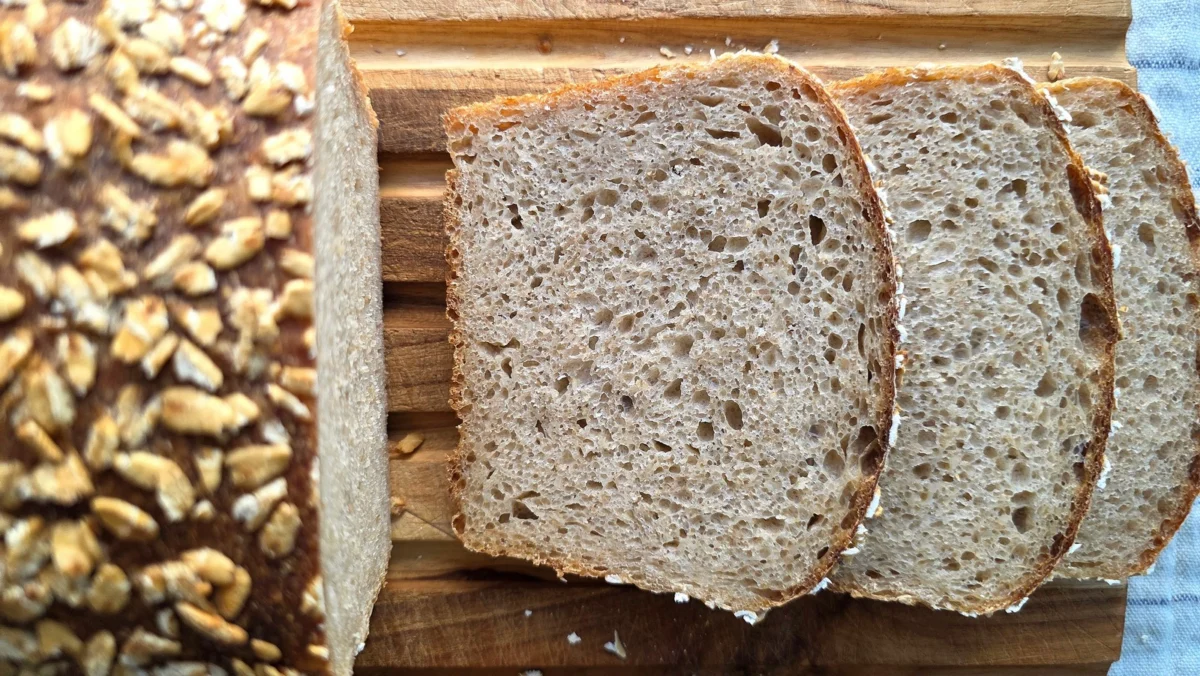
In the world of artisan baking, inspiration often strikes in the most unassuming of places. For many, a weekend getaway is defined by sightseeing or relaxation, but for the dedicated baker, the true souvenir is often a memorable meal—specifically, a slice of bread that lingers in the memory long after the trip has concluded. This was the catalyst for a recent culinary project: the development of a "Light Wheat Oatmeal Bread," a loaf that bridges the gap between traditional German haferflockenbrot and the modern, chewy sandwich loaf preferred by home bakers.
By balancing the robust, earthy profile of red fife flour with the creamy, delicate texture of fresh-flaked oats, this recipe represents a masterclass in texture and hydration. The result is a versatile, nutrient-dense loaf that transitions seamlessly from a sturdy base for savory deli meats to a delicate vessel for sweet, morning-time spreads like dulce de leche.
Main Facts: The Anatomy of a Perfect Loaf
At its core, this recipe is a study in hydration and grain synergy. The bread relies on a calculated blend of bread flour—to provide the necessary structure and "chew"—and red fife whole wheat flour, which imparts a subtle, cinnamon-like aromatic profile.
The secret, however, lies in the preparation of the oats. Rather than using store-bought instant oats, this recipe emphasizes the use of a grain flaker to process whole oat groats. These freshly flaked oats are then treated with a boiling water soak. This "soaking" technique is critical; it softens the outer hull of the oats, ensuring they integrate into the dough without absorbing moisture away from the flour, which keeps the crumb tender and moist.
Key Components:
- The Oat Soak: Comprising 17% of the total formula, these oats are hydrated with 40% boiling water, allowing them to release their natural starches and create a creamy, porridge-like inclusion.
- The Flour Blend: A 75/25 split between bread flour and red fife flour creates the ideal protein structure to support the weight of the heavy oats while maintaining a light, airy crumb.
- The Enrichment: A touch of honey and oil provides a tender crumb and helps the bread stay fresh for several days, making it ideal for meal-prepped sandwiches.
Chronology: From Concept to Crust
The development of this recipe followed a rigorous testing process, mirroring the careful steps required for a successful sourdough bake.
Phase 1: Inspiration and Sourcing (Weekend 1)
The process began with an analysis of German haferflockenbrot (oat flake bread). The goal was to recreate the high-hydration, chewy mouthfeel of these European classics while adapting them for a standard 9" x 5" North American loaf pan.

Phase 2: The Soak (Day 1 of Baking)
Preparation begins with the oat soak. By flaking the oats fresh, the volatile oils remain intact, providing a superior flavor compared to pre-packaged flakes. The oats are combined with boiling water and allowed to cool, creating a gel that contributes to the bread’s eventual shelf life.
Phase 3: Mixing and Fermentation (Day 2)
The dough is mixed to a specific consistency—notably elastic and slightly tacky. As demonstrated in the instructional video, achieving the correct dough tension at the 0:57 mark is essential. The dough undergoes a bulk fermentation, followed by shaping and a final proof in the loaf pan, where the sourdough starter works to develop complex organic acids.
Phase 4: The Bake
The loaf is baked in a medium-sized USA pan. The thermal conductivity of the pan ensures a uniform crust, while the internal crumb remains soft and creamy, protected by the moisture locked in during the oat-soak phase.
Supporting Data: Baker’s Percentages
For the professional or serious home baker, precision is the difference between a good loaf and a great one. The following baker’s percentages serve as the blueprint for this recipe, allowing for consistent results regardless of the batch size.
| Ingredient | Percentage |
|---|---|
| Oatmeal (Total) | 57% |
| Rolled/Flaked Oats | 17% |
| Boiling Water | 40% |
| Dough | |
| Bread Flour | 75% |
| Red Fife Whole Wheat | 25% |
| Water (Dough) | 63% |
| Sourdough Starter | 26% |
| Oil | 4.2% |
| Honey | 4.2% |
| Salt | 2% |
These percentages highlight a high-hydration dough that requires careful handling. The inclusion of 26% sourdough starter ensures a steady rise and the characteristic tang that balances the sweetness of the honey and the earthiness of the oats.
Official Recommendations: Scaling and Conversion
A common challenge for home bakers is the variance in pan sizes. The recipe provided is explicitly scaled for a 9" x 5" x 2.75" USA pan. For bakers using different equipment, the golden rule of scaling is to calculate the volume of your pan and adjust the total dough weight accordingly.

Conversion to Yeast
While the recipe is designed for a sourdough leaven, the flexibility of the formula allows for yeast conversion. Bakers looking to shorten the process can substitute the sourdough starter with a standard commercial instant dry yeast. However, it is recommended to adjust the total water content slightly if removing the starter, as the sourdough starter itself contributes both water and flour to the final dough.
Scaling Tips:
- Pan Volume: If your pan is smaller, reduce the total dough weight by 10–15% to avoid overflow.
- Temperature Control: Because this is a high-hydration, enriched dough, ensure your kitchen environment is between 70°F and 75°F to prevent the fermentation from accelerating too quickly.
Implications: The Future of Home-Baked Multigrain
The shift toward incorporating fresh-flaked grains into bread is more than just a passing trend; it is a movement toward higher nutritional bioavailability and superior flavor profiles. By utilizing a flaker, the home baker gains access to the "germ" of the grain—the most nutrient-dense part of the oat—which is often lost in commercial processing.
This recipe serves as a template for further exploration. The "Light Wheat Oatmeal Bread" acts as a foundational architecture. From here, bakers might consider experimenting with different whole grains—such as spelt, rye, or even sprouted wheat—to further refine the flavor.
Furthermore, the versatility of this bread is a significant departure from the specialized, crusty artisan boules that have dominated the sourdough movement for the past decade. It signals a return to "utility baking"—bread that is designed to be consumed daily, toasted for breakfast, and packed into lunch boxes.
As we look toward the future of home baking, the integration of technology—like the Mockmill Flaker—and traditional techniques, such as the boiling-water soak, proves that the most innovative loaves are often those that look back to historical grain preparations. Whether you are a novice looking to master your first sandwich loaf or an experienced baker seeking a reliable, high-performing recipe, this oat-forward bread offers a perfect balance of texture, flavor, and reliability.
For those looking to expand their repertoire, the breadth of oat-containing recipes—ranging from naturally leavened rye-oat loaves to simple, comforting oatmeal chocolate chip cookies—suggests that the humble oat is the most underrated ingredient in the modern pantry. By mastering this light wheat oatmeal bread, you are not just baking a loaf; you are acquiring the skills to incorporate fresh, wholesome grains into every aspect of your culinary life.


 Nana Muazin
 Evan Lee Salim