
 Raul Delapena Setiawan
 Ammar Sabilarrohman
 Lina Irawan
 Suro Senen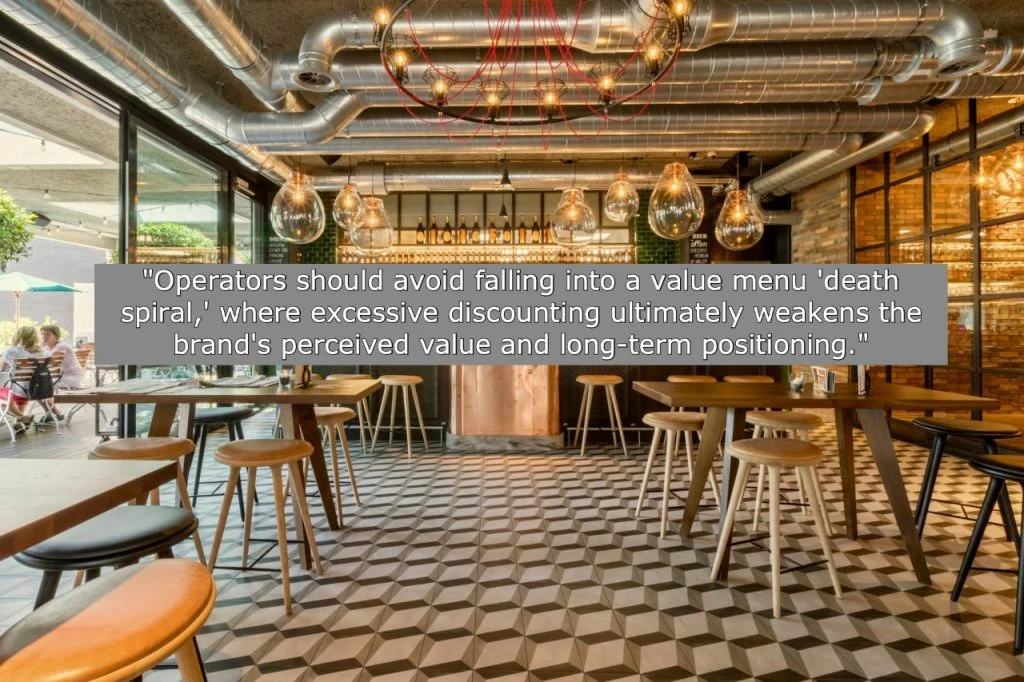
The restaurant industry enters the latter half of 2026 facing a “perfect storm” of economic pressures. As operators grapple with the dual burden of persistent food cost volatility and elevated labor expenses, the traditional playbook for profitability is undergoing a radical rewrite. According to Mark Wasilefsky, Head of Restaurant and Franchise Finance at TD Bank, the path forward requires a surgical approach to operations, a departure from indiscriminate price hikes, and a sophisticated understanding of how modern health trends and supply chain risks are reshaping the dining experience.
The Value Paradox: Moving Beyond Price
For years, the industry’s primary lever for combating inflation was the menu price increase. However, that strategy has reached a point of diminishing returns. Consumers, feeling the sting of cumulative inflation, have become hyper-sensitive to the price-to-quality ratio.
Wasilefsky warns that many operators are teetering on the edge of a “value menu death spiral.” In this scenario, brands attempt to lure back foot traffic through excessive discounting, which erodes brand equity and narrows profit margins to unsustainable levels.
“Maintaining a strong value perception is becoming more difficult after several rounds of menu price increases,” says Wasilefsky. “Operators must pivot. Value is no longer just about the dollar amount on the receipt; it is about flexibility, customization, and the perceived quality of the portion.”
Instead of broad, across-the-board hikes that shock the consumer, top-tier operators are shifting toward “surgical pricing.” This involves applying price increases to high-margin, value-added items—such as premium add-ons, bundles, or specialized bowls—while keeping core menu staples stable. This methodology protects the brand’s image while shielding the P&L from the most volatile commodity costs.
Chronology of a Shifting Marketplace
The current industry challenges are the culmination of several distinct phases that have evolved since the start of 2026:
- Q1 2026: Initial focus centered on labor retention as minimum wage adjustments and competitive hiring environments pushed operational costs to record highs.
- Q2 2026: Commodity volatility, particularly in produce and protein, forced a re-evaluation of supply chain dependencies.
- Mid-2026: The widespread adoption of GLP-1 medications began to manifest in observable consumer behavior, with a noticeable shift toward protein-dense, smaller-portion, and nutrient-focused dining.
- Present Day: The industry is now in a "consolidation and optimization" phase, where the reliance on digital infrastructure and hyper-efficient supply chain management has become the definitive marker between thriving franchises and those struggling to stay afloat.
Supporting Data: The New Consumer Demographics
The rise of GLP-1 users—a demographic increasingly prioritized by Millennials and Gen Z—has forced a redesign of the traditional menu. These diners are not necessarily spending less; rather, they are demanding higher quality, higher protein, and smaller portions.
Research indicates that the dining experience remains a priority for these cohorts, even if their consumption volume has decreased. Operators who provide "frictionless" customization options—such as the ability to swap proteins or greens without requiring extensive staff retraining—are seeing higher customer retention.
Furthermore, the data suggests that reliance on a single revenue channel is a high-risk strategy. While digital and third-party delivery services are now non-negotiable components of the P&L, operators who tether their entire model to these platforms remain vulnerable to market fluctuations and high commission fees. The most successful operators are those who balance dine-in, digital, and off-premise channels to create a resilient revenue mix.
Official Perspectives on Operational Excellence
Mark Wasilefsky emphasizes that in the current climate, waste is not just an inconvenience—it is a critical P&L line item that requires the same scrutiny as labor or rent.
"Waste should be treated with the same level of attention as any other major operating expense," Wasilefsky notes. "By building menus around overlapping ingredients that are used across multiple dishes, operators can simultaneously reduce food waste and insulate themselves from price spikes in specific commodities."
This focus on operational efficiency extends to the human element. With turnover remaining a primary threat to consistency, Wasilefsky advocates for clear pathways to advancement. Standard Operating Procedures (SOPs) are not merely administrative hurdles; they are tools to reduce decision fatigue for frontline managers, ensuring that the brand experience remains consistent across diverse locations.
Implications: The Supply Chain and Food Safety
One of the most pressing challenges of 2026 has been the resurgence of food safety concerns, particularly regarding fresh produce. The recent spike in Cyclospora infections has highlighted a systemic vulnerability: raw ingredients are significantly more difficult to manage than proteins, which are effectively sanitized through the cooking process.
The Multi-Supplier Mandate
For larger franchise systems, the era of the single-distributor reliance is ending. Diversification is now a mandatory strategy for supply chain resilience. Whether dealing with tariff-related disruptions in the coffee supply or contamination issues in leafy greens, brands with multiple sourcing partners are better positioned to weather the storm.
Best Practices for Risk Mitigation:
- Strict Receiving Protocols: Operators must reject shipments that do not meet rigorous temperature and quality standards.
- Dedicated Infrastructure: Facilities should utilize separate preparation areas and dedicated sinks for produce versus proteins to minimize cross-contamination.
- Communication Readiness: Establish pre-written crisis communication plans. As Wasilefsky notes, “Responding quickly is more important than achieving perfection. It is better to temporarily run out of an item than to risk a food safety incident.”
- Menu Flexibility: Design menus that allow for the immediate removal of high-risk items (like raw greens) without compromising the entire dish.
Leveraging Technology to Future-Proof
While the human touch remains the heart of the restaurant experience, AI and data analytics are the brain. The industry’s leaders, including major players like McDonald’s, are aggressively integrating digital tools to personalize the customer experience.
AI is no longer a luxury; it is a tool for survival. Operators are leveraging predictive analytics to:
- Optimize Scheduling: Aligning labor hours precisely with traffic patterns to manage costs.
- Inventory Management: Reducing over-ordering through demand forecasting.
- Personalization: Using data to offer custom promotions that resonate with individual dining habits.
Conclusion: A Roadmap for the Remainder of 2026
The remainder of 2026 will be defined by the ability of operators to remain agile. The “one-size-fits-all” approach to menu pricing and supply chain management has effectively been rendered obsolete.
Success now rests on a three-pronged approach:
- Financial Discipline: Moving away from broad price hikes toward strategic, value-based pricing.
- Operational Flexibility: Creating modular, ingredient-heavy menus that adapt to both consumer preferences (GLP-1 health trends) and supply chain volatility.
- Strategic Technology: Implementing AI-driven insights to manage labor and inventory with precision.
As the industry continues to evolve, the brands that thrive will be those that view every challenge—from a rise in food costs to a shift in consumer dietary habits—as an opportunity to optimize their business model. By treating their staff with consistency, their supply chains with diversity, and their customers with personalized flexibility, restaurant operators can navigate the current volatility and emerge more resilient than ever.