 Dwi Wanna
 Nana Wu
 Muslim
 Reynand Wu
 Ammar Sabilarrohman
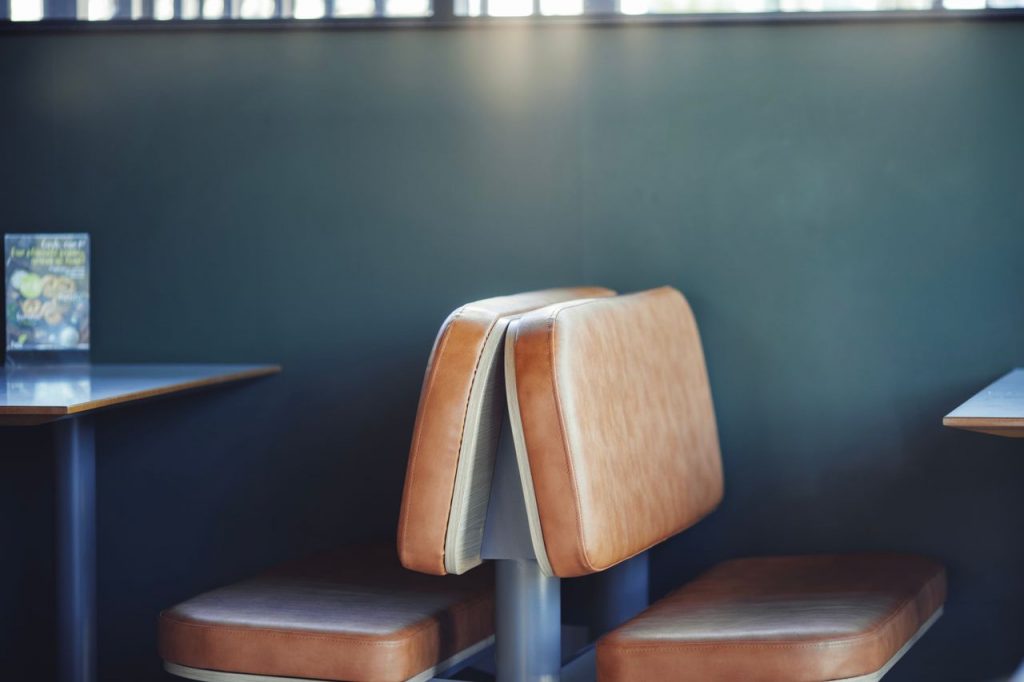
Ten years ago, the dream for any ambitious restaurateur was a "blank canvas"—a pristine, empty shell where every wall, pipe, and ventilation duct could be placed with surgical precision to serve a singular vision. Today, that aspiration has been replaced by a pragmatic, data-driven hunt for what the industry calls "second-generation space."
As construction costs soar, interest rates remain stubbornly elevated, and profit margins tighten, the industry has undergone a fundamental shift. Existing restaurant infrastructure—previously viewed as a "Plan B" or a compromise—has evolved into the preferred strategy for savvy operators. By skipping the ground-up build, today’s restaurant owners are prioritizing speed, capital preservation, and risk mitigation over the vanity of a custom-designed shell.
The Financial Reality of the Modern Build
To understand why the industry is shifting, one must first look at the invisible expenses of a restaurant. A customer walking into a dining room sees the ambiance, the menu, and the staff. They do not see the hundreds of thousands of dollars buried behind the drywall: the heavy-duty hood systems, the grease traps, the commercial-grade refrigeration, and the high-capacity electrical and HVAC systems.
These infrastructure requirements are non-negotiable, yet they represent a "sunk cost" that does not directly influence the guest’s perception of meal quality. A diner will not pay $30 for a steak just because the kitchen spent an extra $500,000 on high-efficiency grease interceptors.
By acquiring a second-generation space, an operator inherits this foundational infrastructure at a fraction of its replacement cost. This allows the restaurateur to pivot their capital away from the "bones" of the building and toward the "soul" of the business: branding, high-quality inventory, aggressive marketing, and top-tier staffing—the areas where consumers actually notice the value.
Chronology of a Shift: From "New" to "Proven"
The evolution of this preference follows a clear timeline over the last decade:
- 2014–2019: The Era of Customization. Low interest rates and relatively stable construction costs fueled a boom in new retail developments. Operators favored custom layouts to optimize flow and brand identity.
- 2020–2022: The Supply Chain Crisis. The pandemic and subsequent global supply chain disruptions made sourcing kitchen equipment and construction materials both expensive and unpredictable. Delays became the norm.
- 2023–2024: The Cost-of-Capital Crunch. As the Federal Reserve maintained higher interest rates, financing a ground-up build became prohibitively expensive. Construction inflation hit a 30% increase relative to 2020 levels, according to the Turner Building Cost Index.
- 2025 and Beyond: The Strategic Pivot. Second-generation space has transitioned from an alternative to the primary strategy. Operators now prioritize "plug-and-play" locations to secure market share before their competitors can even finish their permitting process.
Supporting Data: The Rising Cost of Entry
The economic argument for second-generation space is bolstered by raw data. When a quick-service restaurant (QSR) that cost $750,000 to build in 2020 now approaches the $1 million mark in construction costs alone, the math becomes binary.
The "Impact Fee" Hurdle
Beyond raw materials, local governments are increasingly using "utility impact fees" to bridge revenue gaps. These fees—charged for connecting to municipal water and sewer lines—are often calculated based on projected usage. Restaurants are the primary targets for these hikes.
For instance, the Charleston Water System’s move to raise sewer impact fees by 91% between 2024 and 2027 represents a massive, often unexpected capital expenditure for new developments. In Florida, a legislative scramble to enact fee increases before a January 2026 cap took effect forced many developers to pass those costs directly to the tenant. A second-generation buyer, however, effectively inherits the impact fees paid by the previous occupant, bypassing these municipal levies entirely.
Time as a Commodity
In the restaurant business, time is quite literally money. A ground-up build requires a labyrinthine process: site design, engineering, zoning permits, health department inspections, and utility hookups. It is not unusual for this process to span 9 to 18 months.
During this period, the operator is burning cash on rent, utilities, and debt service while generating zero revenue. By contrast, a second-generation space often requires only cosmetic updates—a fresh coat of paint, new signage, and perhaps a layout tweak. This reduction in the "pre-opening" window allows the business to begin generating cash flow nearly a year earlier, drastically improving the internal rate of return (IRR) on the project.
Reducing Risk Through "Hindsight"
One of the most compelling arguments for second-generation space is the ability to leverage existing market intelligence. Developers of new retail centers often rely on projections: "estimated" traffic counts, "expected" population growth, and "predicted" nearby development. These are hypotheses, not facts.
Existing restaurant spaces offer a history. An operator can analyze:
- Actual Traffic Patterns: Does the location have natural ingress and egress that actually captures drive-by customers?
- Operational History: By studying why the previous tenant failed, a new buyer can determine if the failure was due to the location itself or simply poor management.
- Neighborhood Synergy: Is the location a "destination" for local residents?
If a previous restaurant closed due to undercapitalization or a weak menu, that is an opportunity for a stronger operator. If the restaurant closed because the parking lot was inaccessible, that is a fatal flaw that no amount of branding can fix. This "hindsight" provides a level of certainty that no marketing brochure from a new development can match.
Implications for Future Growth
The shift toward existing infrastructure is having profound implications for how restaurant brands scale.
1. Increased Focus on "Right-Sizing"
Operators are no longer settling for oversized kitchens or inefficient dining rooms. They are looking for spaces that match their specific throughput requirements, reducing overhead and maximizing the revenue per square foot.
2. The Competitive Edge for Capital
Lenders are increasingly favorable toward second-generation projects. With lower upfront capital requirements and a shorter path to profitability, the loan-to-value (LTV) ratios are often more favorable for the operator. This creates a "capital cushion" that allows the restaurant to survive the volatile first six months of operation.
3. The Role of the Broker
As the market for second-generation space heats up, the role of specialized business brokers has become critical. According to Robin Gagnon, CEO of We Sell Restaurants, the ability to identify a location that is "a diamond in the rough" is a distinct skill set. Brokers now provide more than just real estate services; they provide operational due diligence, helping buyers separate the "location failure" from the "operator failure."
A Fundamental Shift in Strategy
The restaurant industry has matured. The era of the "ego-driven" build-out is fading, replaced by a sophisticated, capital-efficient model that respects the thin margins of the business.
While not every second-generation space is a winner—and due diligence remains the bedrock of success—the strategic advantages are impossible to ignore. By repurposing proven infrastructure, operators are not just saving money; they are insulating their businesses against the volatility of construction costs and the uncertainty of new retail developments.
As we look toward the future, the most successful brands will likely be those that master the art of the "rebrand"—taking an existing footprint and transforming it into a modern, high-performing venue. The "blank canvas" of 2014 has been replaced by the "perfect opportunity" of 2025: a space that is already built, already permitted, and waiting for the right operator to bring it back to life.