

 Azzam Bilal Chamdy
 Neng Nana
 Nana Muazin
 Dwi Wanna
 Raul Delapena Setiawan
 Layla Zulfa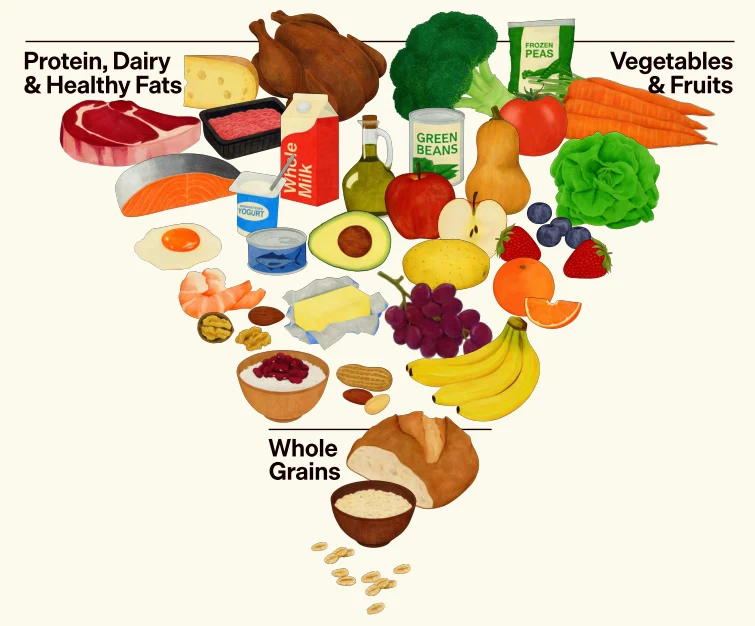
The release of the 2025–2030 Dietary Guidelines for Americans (DGAs) was met with immediate anticipation and, shortly thereafter, significant scrutiny from the scientific community. While the federal government’s latest roadmap for public health arrives with the catchy, consumer-focused slogan "eat real food," the document has ignited a firestorm of debate. At its core, the new guidelines attempt to curb the nation’s reliance on ultra-processed commodities and added sugars, yet critics argue that the accompanying visual aids—specifically a revamped, inverted food pyramid—promote a dietary pattern that contradicts the very health goals the guidelines aim to achieve.
Main Facts: A Shift in Tone and Strategy
The 2025–2030 iteration of the DGAs represents a departure from the dense, policy-heavy manuals of the past. By prioritizing shorter text, interactive digital resources, and simplified graphics, the USDA and the Department of Health and Human Services (HHS) are clearly aiming for broader public engagement.
The most commendable aspect of the new guidelines is the explicit, long-overdue focus on "highly processed foods." For the first time, federal guidance moves beyond broad warnings about sodium and sugar to discourage the consumption of the modern, ultra-processed diet—including sugar-sweetened beverages, refined carbohydrates, and packaged snacks.
However, this progress is visually undermined by the "New Food Pyramid." Unlike its predecessors, this graphic is flipped on its head. It places nutrient-dense produce at the base but provides startling prominence to animal products such as steak, butter, and full-fat dairy. This visual hierarchy creates a dissonance that experts fear will confuse the average consumer, potentially leading them to believe that the established scientific consensus on saturated fat—which remains capped at 10% of daily caloric intake—has been discarded.
Chronology: From Scientific Rigor to Political Contention
The development of the DGAs is a multi-year, rigorous process. Typically, an independent Dietary Guidelines Advisory Committee (DGAC), comprised of distinguished nutrition scientists, spends two years synthesizing existing research to draft a comprehensive Scientific Report. This process is designed to be transparent, evidence-based, and shielded from industry influence.
In the current cycle, however, the process took a detour that has left many in the public health sphere alarmed. After the independent committee submitted its findings, the current administration chose to reject the core of their report. Instead, they commissioned a "supplemental scientific analysis" conducted by a panel of individuals selected through a federal contracting process.
This shift in authorship has drawn sharp criticism regarding transparency. Deirdre Tobias, an assistant professor in the Department of Nutrition at the Harvard T.H. Chan School of Public Health and a member of the original 2025–2030 Advisory Committee, noted that the methodology employed in the final document lacks the rigor and replicability of the HHS-developed standards. Furthermore, investigative reporting has highlighted that several reviewers involved in the supplemental analysis held disclosed financial ties to the beef and dairy industries—a fact that critics argue explains the puzzling, elevated status of red meat and full-fat dairy in the final graphics.
Supporting Data: The Math of Saturated Fat
To understand why nutritionists are concerned, one must look at the "saturated fat math." The guidelines officially maintain that saturated fat should account for no more than 10% of daily calories—roughly 22 grams for a 2,000-calorie diet.
Consider a standard day based on the new recommendations. If an individual consumes the suggested three servings of dairy—a cup of whole milk, a serving of full-fat Greek yogurt, and an ounce of cheddar cheese—they have already consumed 17 grams of saturated fat. Should that person cook their dinner using a tablespoon of butter or beef tallow—both of which are prominently featured in the new pyramid—they immediately exceed the 10% limit before accounting for any other fats consumed throughout the day, such as those found in proteins or cooking oils.
Dr. Frank Hu, chair of the Department of Nutrition at Harvard, emphasizes that while the guidelines correctly identify the need to cut refined grains, the "mixed messages" regarding saturated fats could inadvertently drive up LDL cholesterol levels across the population. Moreover, while the guidelines mention olive oil, they fail to adequately differentiate between the health benefits of monounsaturated fats found in olive oil versus the saturated fats found in animal products, often grouping them into a vague "healthy fat" category that leaves consumers guessing.
Official Responses and Scientific Critique
The government maintains that the new DGAs are designed to be practical and flexible. By broadening the range of acceptable protein intakes—now suggested at 1.2 to 1.6 grams per kilogram of body weight—the agencies argue they are responding to modern nutritional science. However, critics point out that this is a 50–100% increase over previous minimum recommendations.
Dr. Hu notes that "substantially raising overall protein intake without distinguishing between different protein sources may have unintended long-term health implications." The "protein package"—the combination of fats, fiber, and sodium that comes with the protein—is what ultimately dictates health outcomes. Yet, the new DGAs remain silent on the superior health outcomes associated with plant-based proteins and fish compared to red meat, failing to provide the guidance necessary for Americans to make informed choices.
Regarding alcohol, the guidelines offer the advice to "consume less," a directive so vague that it provides no actionable target for consumers, effectively stalling the conversation on the health risks associated with alcohol consumption.
Environmental and Socioeconomic Implications
A glaring omission in the 2025–2030 DGAs is the total lack of consideration for environmental sustainability. Food production is a leading driver of climate change, and the scientific community has long urged the inclusion of environmental impact data in dietary policy. By ignoring the nexus between the "plate and the planet," the U.S. government remains an outlier among global health organizations.
Furthermore, the guidelines do not adequately address the socioeconomic barriers to healthy eating. For millions of Americans living in food deserts or facing economic instability, "eating real food" is not merely a choice but a logistical and financial hurdle. By failing to integrate these structural realities, the guidelines risk becoming an aspirational document for the affluent rather than a public health tool for the nation.
Implications for Public Health
The ultimate test of any dietary guideline is whether it influences behavior and improves outcomes. Historically, data from the CDC indicates that the vast majority of Americans do not follow the dietary guidelines. With the introduction of conflicting messaging—such as recommending a reduction in processed foods while simultaneously elevating the status of butter and steak—there is a significant risk that the 2025–2030 edition will further erode public trust in nutritional science.
When official federal documents send mixed signals, the burden of clarification falls on healthcare providers and dietitians. However, the confusion caused by the new pyramid may persist in the public consciousness, as images are significantly more memorable than the nuanced, often contradictory text that follows.
For those navigating the current landscape of nutrition, the consensus among independent experts remains: prioritize whole, plant-based foods, minimize added sugars and refined grains, and be cautious of industry-driven advice that minimizes the impact of saturated fats. As the nation grapples with high rates of cardiovascular disease and metabolic syndrome, the need for clear, evidence-based, and transparent dietary guidance has never been greater. Until such time as federal policy aligns more closely with independent, peer-reviewed science, consumers are encouraged to look toward reliable, evidence-based resources—such as the Healthy Eating Plate—for a balanced approach to long-term health.


 Nila Kartika Wati
 Iffa Jayyana
