

 Azzam Bilal Chamdy
 Neng Nana
 Nana Muazin
 Dwi Wanna
 Raul Delapena Setiawan
 Lina Hope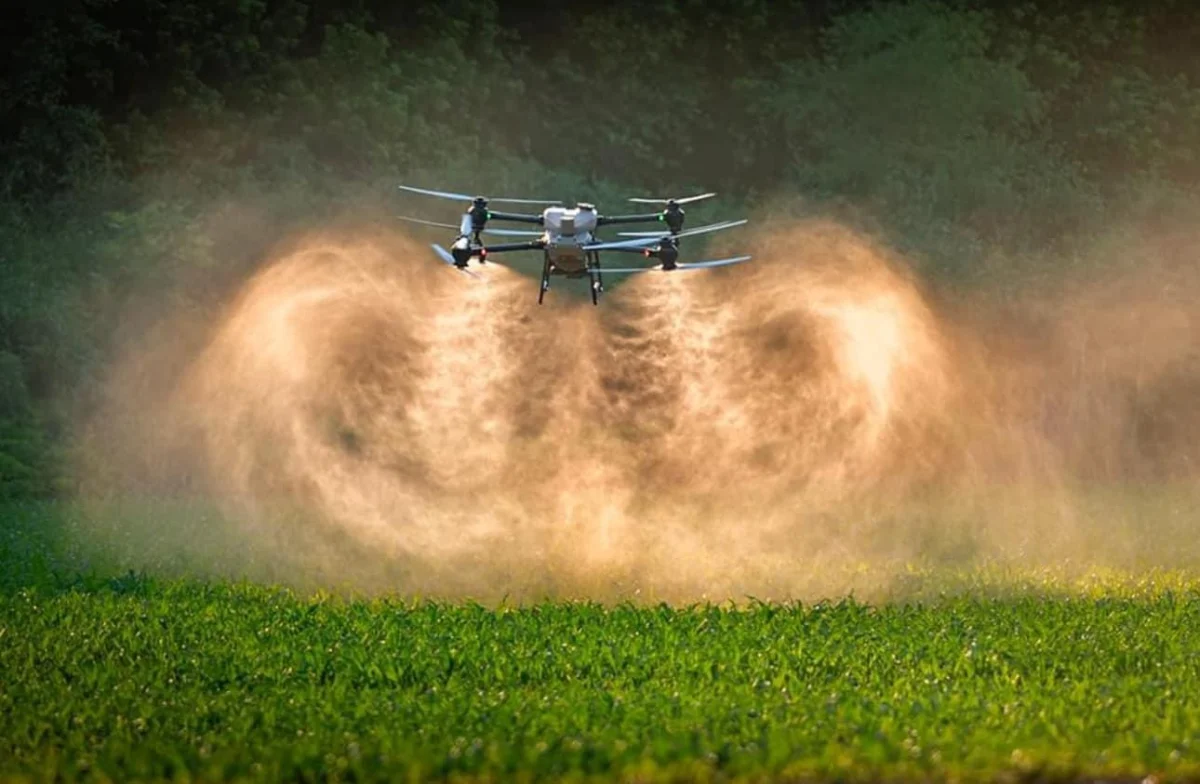
The American agricultural landscape is currently witnessing a high-stakes collision between national security imperatives and the pragmatic needs of modern farming. Over the past year, the U.S. market for agricultural spray drones—a technology that has rapidly become essential for precision herbicide and pesticide application—has been thrown into a state of profound uncertainty.
Driven by shifting geopolitical tensions and aggressive regulatory maneuvering by the Federal Communications Commission (FCC) and U.S. Customs and Border Protection (CBP), the industry is grappling with a 60% collapse in new drone sales. As farmers, manufacturers, and regulators navigate this shifting terrain, the question remains: Can the United States build a domestic drone industry capable of feeding the nation, or will regulatory overreach leave American farmers trailing behind their global competitors?
The Regulatory Squeeze: A Chronology of Conflict
To understand the current "flux" described by the American Spray Drone Coalition (ASDC), one must examine the timeline of escalating restrictions that have hampered the industry.
- 2023–2024 (The Import Chill): The friction began with intermittent blockades at U.S. ports. U.S. Customs and Border Protection (CBP) began detaining shipments from DJI, the market-dominant Chinese manufacturer, citing concerns over potential forced labor practices in the company’s supply chain. DJI has consistently and "categorically" denied these allegations, yet the operational impact was immediate: critical supply chains were disrupted, and inventory became scarce.
- Late 2024 (The FCC Bombshell): The situation escalated when the FCC announced a landmark decision to restrict the sale of new models of foreign-made drones and critical components within the U.S. The move, intended to shore up domestic security, effectively locked out many of the most popular, cost-effective models used by American farmers.
- July 2025 (The Proposed Expansion): In a move that sent shockwaves through the agricultural sector, the FCC introduced a proposal to broaden its crackdown. This new directive aimed at "military-grade" drones—a definition that, in its current draft, encompasses almost any agricultural drone capable of carrying significant payloads or using advanced sensing technology like LiDAR.
- 2025 (The Market Correction): Sales data from 2025 confirmed the severity of the intervention. The industry saw a precipitous drop from 8,950 units sold in 2024 to just 3,711 in 2025. This was not a failure of demand, but a catastrophic failure of supply.
The Data: A Paradox of Plummeting Sales and Rising Utility
Perhaps the most confusing aspect of the current market is the disparity between sales figures and field utilization. While new sales plummeted by 60% in 2025, official registration data from the FAA suggests that the total "active fleet" is still growing, and the impact on the ground is greater than ever.
According to an ASDC report, registrations of ag spray drones rose by 45.6% in 2025. Furthermore, the total acreage treated by drones in the U.S. surged by 58.7%, reaching 16.4 million acres. This apparent contradiction is explained by a "lag effect." Because registrations are tied to equipment already in the field or purchased shortly before the regulatory hammer fell, the 2025 registration data reflects the tail end of the pre-restriction era.
The industry is also seeing a shift in market share. DJI’s dominance—which accounted for 83.8% of registrations in 2023—has eroded to 52.4% by 2025. In the power vacuum left by DJI’s import struggles, competitors such as XAG, EAVision, and Talos have gained significant ground. However, these companies face the same regulatory scrutiny as DJI, creating a fragile ecosystem where no single manufacturer can guarantee long-term availability to the American farmer.
Implications for the American Farmer
For a farmer like Russell Hedrick, whose operations utilize advanced drone technology to maximize yield while minimizing chemical waste, the current environment is untenable. The primary concern is not just the cost of hardware, but the reliability of the tools they depend on for their livelihoods.
The Cost of "Made in America"
The push for domestic manufacturing is theoretically popular, but the economic reality is daunting. Components like batteries, motors, and LiDAR sensors sourced domestically are "orders of magnitude" more expensive than their Chinese counterparts. For the average American farmer, who operates on thin margins, these price premiums are often prohibitive.
ASDC President Eric Ringer notes that 49% of agricultural operators have stated they are unwilling to pay a premium for US-manufactured hardware. Without a coordinated federal strategy to bridge this price gap—such as utilizing drone import tariff revenues to fund buyer rebates—domestic manufacturers are struggling to achieve the economies of scale necessary to compete.
The Risk of Global Obsolescence
Perhaps the most alarming implication is the risk of falling behind the international curve. While U.S. regulators are busy tightening the noose on foreign drone imports, countries like Brazil are rapidly accelerating their adoption of these technologies. If U.S. farmers are forced to rely on aging, underpowered, or overpriced domestic hardware, they risk losing their competitive edge in the global agricultural market. The drone is no longer a luxury; it is a vital tool for precision agriculture, and the U.S. is effectively tying one hand behind the backs of its producers.
Official Responses and the Call for a "Managed Transition"
The ASDC is not opposing the need for national security; rather, it is pleading for a realistic approach to implementation. In their formal comments to the FCC, the coalition has advocated for several key policy shifts:
- Exclusion for Part 137 Drones: The ASDC is requesting that the FCC explicitly exclude FAA Part 137 agricultural spray drones from the "military-grade" prohibition. They argue that these tools are fundamentally agricultural, not weapons, and that equating them to surveillance equipment is a regulatory overreach that threatens food security.
- Structured Off-Ramps: Rather than an immediate, disruptive ban, the coalition is calling for a multi-year transition period. This would allow domestic manufacturers the time required to build out their supply chains and scale production without leaving farmers in a "drone-less" void.
- Incentivizing the Transition: To address the price disparity, the coalition proposes that the government repurpose tariff revenue from foreign drone imports into a direct-buyer rebate program. This would lower the entry barrier for farmers looking to purchase compliant, US-made technology, thereby stimulating domestic demand and helping manufacturers reach the scale they need to become price-competitive.
Future Outlook: Navigating the Flux
As the industry looks toward 2026, the sentiment remains one of cautious anxiety. The "flux" is likely to persist until the FCC provides definitive, long-term clarity on what constitutes an acceptable drone configuration.
For many manufacturers, the current process is a trial-and-error cycle of seeking conditional approvals for specific components. Decisions regarding whether to invest in a specific LiDAR system or a particular battery chemistry are fraught with risk, as a manufacturer might receive approval today only to find their components banned tomorrow.
"We need to make sure that US farmers can remain globally competitive," Ringer emphasized. "We agree that we need to establish our own US-made drone capability for national security reasons… but we disagree with the approach."
The coming year will be a litmus test for both the U.S. government and the domestic drone industry. If the FCC continues on its current path of aggressive restriction without offering a viable path for domestic replacement, the agricultural sector may face a period of stagnation that benefits neither the economy nor national security. If, however, the government chooses to partner with the industry to foster a realistic, subsidized, and phased transition, the U.S. may yet develop a robust, secure, and competitive agricultural drone sector capable of leading the next generation of global farming.
Until that clarity arrives, the American farmer remains in a state of suspended animation, waiting to see if their next tool for efficiency will come from a domestic innovator or if they will be forced to wait out the regulatory storm while their international counterparts continue to innovate and expand.


 Laily UPN
 Rifan Muazin
