

 Azzam Bilal Chamdy
 Neng Nana
 Nana Muazin
 Dwi Wanna
 Raul Delapena Setiawan
 Evan Lee Salim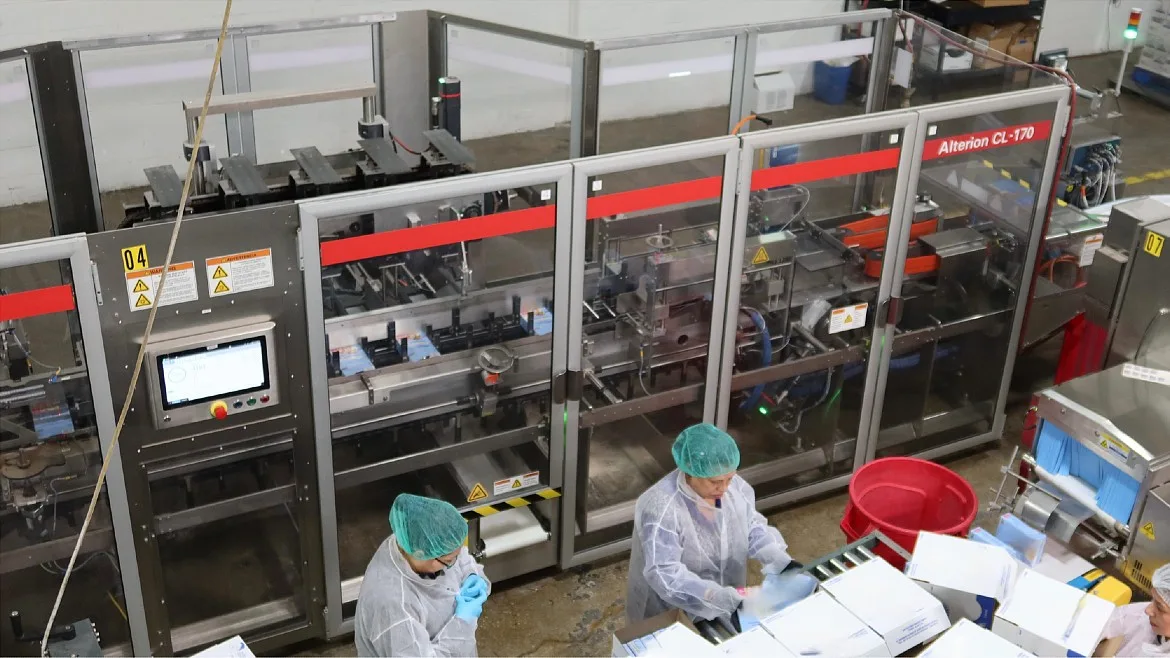
For over half a century, Batavia, Illinois-based GreenSeed External Manufacturing has operated as the invisible engine behind some of the most recognizable brands in the food and nutraceutical sectors. As a contract packaging powerhouse, the company specializes in the delicate, high-precision work of packaging dry foods, pet nutrition, and health supplements. However, in the fast-paced world of consumer packaged goods (CPG), longevity is not merely about history—it is about the agility to evolve when a major client pivots its strategy overnight.
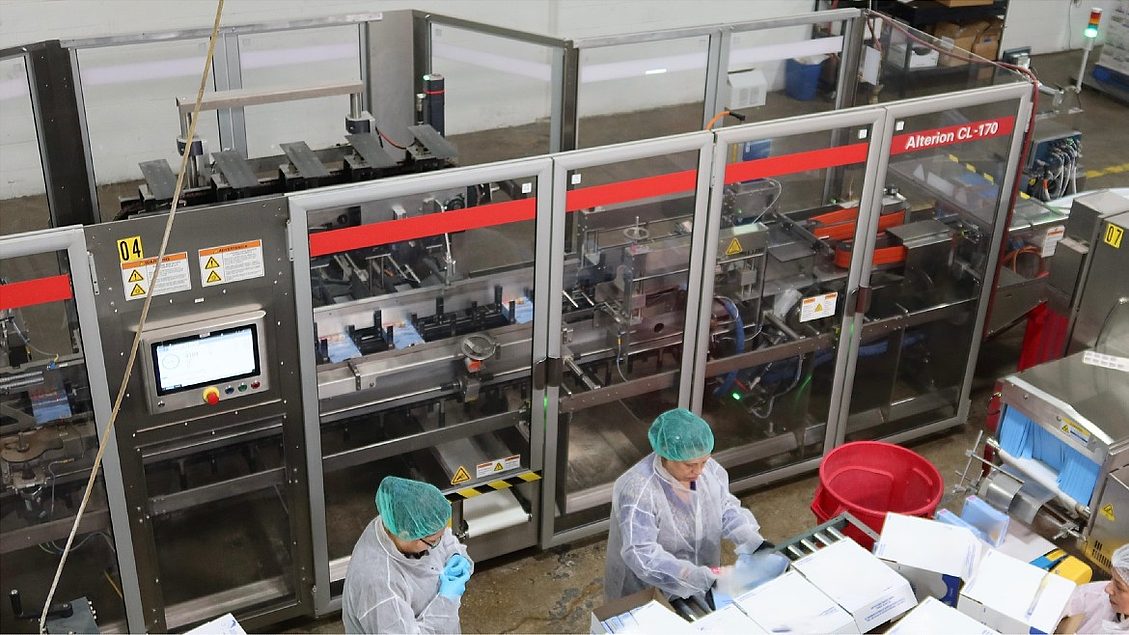
When a long-standing, global CPG partner approached GreenSeed with an urgent request to transition a flagship product line from legacy plastic canisters to a more sustainable, recyclable bag-in-box format, the contract packager faced a critical crossroads. To meet the aggressive retail launch date, GreenSeed needed to modernize its cartoning infrastructure immediately. By partnering with R.A. Jones and integrating the new Alterion CL-170 cartoner, GreenSeed not only met the deadline but established a new benchmark for operational efficiency and production flexibility.
The Challenge: A Major Shift in Packaging Strategy
The catalyst for this upgrade was a significant shift in the supply chain of one of GreenSeed’s largest customers. For two decades, this global food brand had relied on a proprietary plastic canister to house its dry flake product. In a move reflecting the broader industry push toward sustainable packaging, the client decided to phase out the rigid plastic in favor of a bag-in-box format.
For GreenSeed, the technical requirements were daunting. The project necessitated filling dry product into PET pouches across two high-speed vertical form, fill, and seal (VFFS) lines, which then needed to be carton-packed for retail distribution. While GreenSeed’s existing infrastructure was robust enough to handle the pouching volume, the secondary packaging—the cartoning—was the bottleneck.
"Our older machine at the Batavia plant could form and present cartons for smaller runs, but it required operators to manually load each pouch," explains Scott Robinson, GreenSeed’s senior vice president of sales and business development. "It was inefficient, labor-intensive, and prone to error, running at a 3.5% to 4% carton scrap rate. We simply didn’t have the precision, speed, or reliability to meet the volume demands of this new launch."
With a firm retail launch date looming in February, the company had to act fast. Conventional OEM lead times of 8 to 12 months were an impossibility, forcing the leadership team to seek a partner capable of delivering a high-performance solution under extreme time constraints.
Chronology of an Urgent Integration
The transformation of GreenSeed’s cartoning line was a testament to the power of strategic partnerships and rapid industrial deployment.
Phase 1: The Search for Agility
Recognizing that their manual cartoning process was a liability, GreenSeed leadership began scouting for a solution that could bridge the gap between operator-assisted loading and fully automated cartoning. They required a machine with a small enough footprint to fit their existing facility but enough power to sustain 170 cycles per minute (cpm) if future demand spiked.
Phase 2: The R.A. Jones Partnership
GreenSeed turned to R.A. Jones, a long-time partner and a global leader in packaging technology. The timing proved fortuitous. R.A. Jones was in the process of finalizing the Alterion CL-170, a next-generation cartoner designed specifically for the needs of contract packagers and regional brands that require high-end, heavy-duty reliability within a mid-speed, compact footprint.
Phase 3: Accelerated Implementation
Because of the established relationship between the two companies, R.A. Jones was able to prioritize the delivery of the Alterion CL-170. The installation process was remarkably smooth, occurring in late December. According to Robinson, the transition was virtually seamless: "We were literally running bags into boxes the same day R.A. Jones installed the new cartoner at our plant."
Technical Sophistication and Supporting Data
The integration of the Alterion CL-170 was not just a capacity upgrade; it was a qualitative leap in production standards. The machine’s architecture, characterized by servo-driven barrel loaders and adjustable U-shaped buckets, allows for a high degree of precision when loading pouches into various carton sizes.
Key Performance Metrics Post-Installation:
- Operational Downtime: The system has experienced virtually zero operational downtime since its December commissioning.
- Overall Equipment Effectiveness (OEE): GreenSeed reported a significant 5% to 7% increase in OEE, a vital metric in the high-volume contract manufacturing space.
- Waste Reduction: Carton scrap rates plummeted from the previous 3.5–4% range to less than 1%.
- Throughput: The line currently operates at an optimized gross speed of 120 cpm, delivering an attainment rate consistently above 97%.
- Changeover Efficiency: By utilizing single-point handwheel adjustments, GreenSeed has halved its changeover times, allowing for greater versatility between different SKU runs.
"The Alterion gave us the technical sophistication and superior OEE we needed to run two lines into a single cartoner," says Robinson. "It allowed us to hit our customer’s deadline on schedule, which was the primary objective."
Official Perspective: The Role of the Contract Manufacturer
For GreenSeed, the mission is to be an "indispensable partner." In the eyes of Robinson, this means acting as a seamless extension of the brand owner’s business. By offloading the complexity of secondary packaging, GreenSeed allows its clients to focus on what they do best: marketing, brand building, and sales growth.
When asked about the philosophy behind their focus on healthy products and packaging, Robinson emphasizes the alignment between the company’s capabilities and current consumer trends. "Our mission is simple: to be an indispensable partner in our customers’ success," Robinson states. "By specializing in comprehensive external manufacturing services, we provide the infrastructure that allows brands to scale without the capital-intensive burden of owning and maintaining their own massive packaging lines."

The automation of the cartoning process also solved a critical labor challenge. By removing the need for manual pouch loading, GreenSeed was able to reallocate its skilled operators to higher-value roles on the factory floor, specifically targeting lines that remain labor-intensive. This human-centric approach to automation is a cornerstone of the company’s long-term workforce strategy.
Future Implications: A Blueprint for Automation
The success of the Alterion CL-170 project has provided GreenSeed with more than just a immediate solution to a capacity crunch; it has provided a strategic blueprint for the future.
Scalability and Growth
The machine is currently running at 120 cpm, but it has a design capacity of 170 cpm. This provides GreenSeed with a significant "growth buffer." As Robinson notes, "Knowing that we have the capability to dial it up to 170 cpm gives us the option of adding a third VFFS line into the feed down the road. Having this flexibility is not only comforting for our team but the customer’s planning team as well."
Long-term Asset Management
Beyond the immediate three-year contract for the bag-in-box project, GreenSeed views the Alterion as a versatile, long-term asset. The machine’s wide carton range means it can be repurposed for a variety of future products, making it a sustainable investment for the company’s portfolio.
The Path to Full Automation
The experience with R.A. Jones has shifted the perspective of GreenSeed’s leadership regarding manual versus automated production. The company is now actively looking at its remaining manual lines with an eye toward similar upgrades. The Alterion has effectively demystified the process of integrating high-end robotics into a mid-sized facility, proving that footprint constraints are no longer a barrier to top-tier performance.
"Seeing how R.A. Jones solved chronic industry challenges like footprint constraints and labor allocation on this line has given us a clear blueprint as we look to automate our remaining manual production lines," says Robinson.
As the industry continues to consolidate and the demand for high-quality, sustainable, and reliable packaging grows, GreenSeed’s recent investment serves as a case study in how contract manufacturers can thrive. By prioritizing strategic partnerships and embracing the right technology at the right time, they have not only secured their current contract but positioned themselves as a leader in the next generation of food packaging excellence.


 Laily UPN
 Rifan Muazin
