

 Azzam Bilal Chamdy
 Neng Nana
 Nana Muazin
 Dwi Wanna
 Raul Delapena Setiawan
 Muslim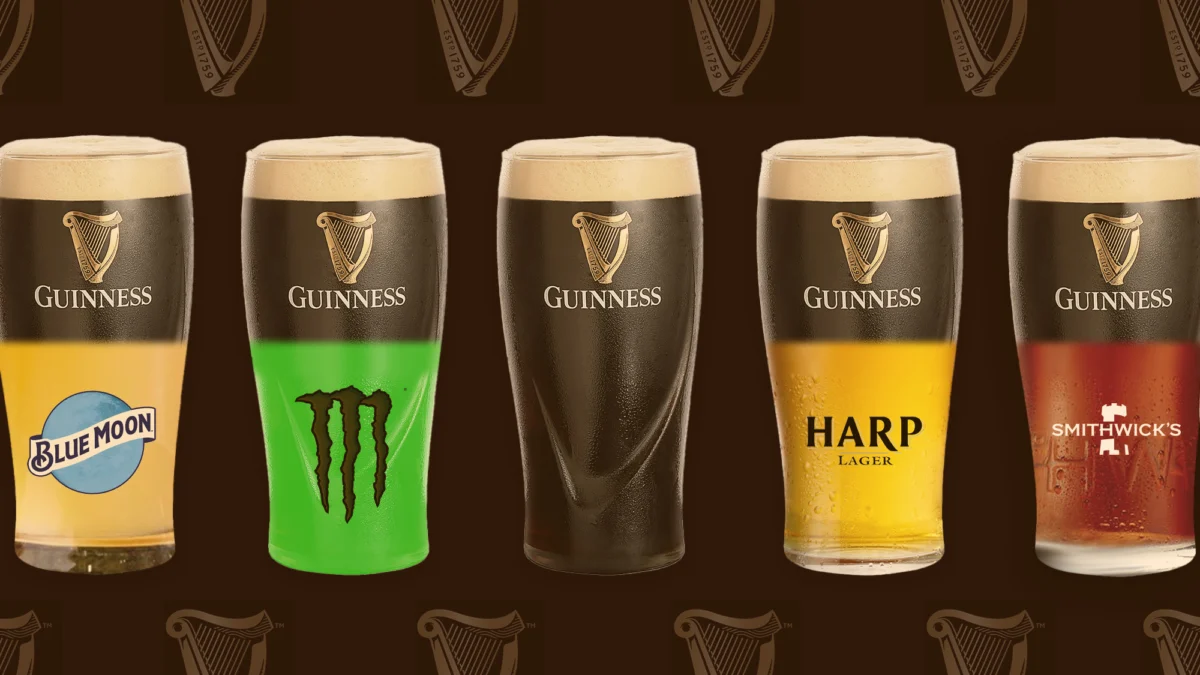
For centuries, the iconic silhouette of a Guinness pint—the cascading surge of nitrogen bubbles, the deep obsidian hue, and the ivory-colored foam head—has been the gold standard of the Irish pub experience. To the purist, the "two-part pour" is not merely a service ritual; it is a sacred process that borders on alchemy. Yet, in the digital age, this timeless institution is undergoing a radical metamorphosis.
Guinness is currently experiencing a profound cultural renaissance. Driven by a surge in popularity among younger demographics and the relentless influence of social media, the pint has become a canvas for experimentation. From the rhythmic satisfaction of "splitting the G" to the polarizing spectacle of the "Gonster," the humble stout is being reinvented. While critics argue that tampering with perfection is sacrilegious, history suggests that Guinness has always been a versatile foundation for innovation.
The Chronology of the Beer Cocktail
The practice of mixing stouts with other beverages is far from a modern invention. In the 18th century, English publicans frequently combined dark stouts with pale ales or lagers. This was not initially a trend, but a necessity born of customer preference; patrons wanted to personalize their drinks to balance the heavy, roasted profile of the stout with the crisp, refreshing bite of lighter beers.
By 1889, the Oxford English Dictionary recorded the first mention of the "Black and Tan"—a mixture of dark stout and pale ale. Though the name has since become culturally contentious—particularly in Ireland due to its association with the British paramilitary force during the Irish War of Independence—the concept of the layered beer cocktail remained a staple of pub culture.
Throughout the 20th century, Guinness itself leaned into this versatility. The brand’s marketing departments historically promoted the use of stout in cocktails, recognizing that the beer’s texture and distinct flavor profile provided a structural integrity that few other beers could match. Today, that history has collided with the internet’s obsession with "content-worthy" drinks, leading to a new wave of viral combinations that range from the sophisticated to the downright bizarre.
Supporting Data: The Anatomy of a Guinness Combo
The modern Guinness drinker is looking for depth and contrast. Whether it is through the addition of fruit-forward cordials or the juxtaposition of acidic energy drinks, the goal remains the same: to zhuzh up the standard pint. Below are the most prominent variations currently circulating in the global bar scene.
1. The Blacksmith
A union of two Irish stalwarts, the Blacksmith mixes Guinness with Smithwicks, an Irish Red Ale. The result is a study in harmony. Smithwicks, defined by its caramel malts, provides a toffee-like sweetness that cuts through the roasty bitterness of the Guinness, while its fruit-forward crispness adds a layer of complexity to the stout’s creaminess.
2. The Black and Blue
Representing the "New World" approach to the pint, the Black and Blue combines Guinness with Blue Moon, a Belgian-style wheat beer. The profile here is radically different; the citrus notes of the wheat beer offer a bright, acidic contrast to the heavy stout. It is a polarizing choice, but when garnished with an orange wheel, it becomes a refreshing, albeit unconventional, summer pint.
3. The Black Velvet
Stepping outside the pint glass entirely, the Black Velvet is the most refined of the bunch. By blending Guinness with sparkling wine—typically Champagne—in a flute, the drinker achieves a drink that is both sophisticated and texturally superior. The carbonation of the wine elevates the nitro-stout, creating a velvety, effervescent mouthfeel that feels more like a cocktail than a beer.
4. The Black Castle
For those who find the fruity combinations too jarring, the Black Castle offers a doubling-down on maltiness. By pairing Guinness with Newcastle Brown Ale, the drink emphasizes notes of roasted chocolate, nuts, and caramel. It is a heavy, indulgent experience, ideal for colder months.
5. The Guinness and Black
Also known as a "Black and Black," this is a pint of stout finished with a dash of blackcurrant cordial. The syrup rounds out the stout’s sharper edges, creating a dessert-like, fruity finish. It is a classic example of how a small amount of sugar can fundamentally shift the sensory experience of a drink.
6. The Black and Gold (Snakebite)
Equal parts hard cider and Guinness, this drink is a visual marvel. When poured correctly, the less-dense Guinness sits atop the cider, creating a striking visual contrast. The tart, apple-forward profile of the cider cuts through the thickness of the stout, making it a highly drinkable, if deceptive, combination.
7. The Half and Half
Considered the modern, more palatable successor to the Black and Tan, the Half and Half pairs Guinness with a crisp lager or pale ale—often Harp. It is the quintessential entry-level Guinness cocktail, diluting the intensity of the stout with the light, wheat-forward profile of a standard lager.
8. The Gonster (The "Billie Irish")
The most notorious of the modern experiments, the Gonster mixes Guinness with Monster Energy Nitro. This is a trend that truly reflects the chaos of the internet. The drink is an aggressive marriage of the familiar roasted stout flavor and a jarring surge of sugary, citric acid from the energy drink. It is a drink that exists purely for the sake of the experiment—an "approach with caution" experience that has taken TikTok by storm.
Official Responses and Industry Perspectives
Industry professionals remain divided on the rise of these mixtures. On one hand, traditionalists argue that a pint of Guinness is a masterpiece of brewing science that requires no modification. The specific gas mix (nitrogen and carbon dioxide) and the precise temperature at which it is served are designed to create the iconic "surge and settle." Introducing external liquids, especially those with high sugar content or different carbonation levels, disrupts the structural integrity of the beer.
However, brand advocates and modern mixologists see it differently. From a marketing perspective, these trends keep the brand relevant in an era where consumers are increasingly seeking novelty. By allowing Guinness to become a "base spirit" of sorts, the company maintains its presence in social media conversations, ensuring that a new generation of drinkers views the brand as adaptable and fun rather than stagnant and old-fashioned.
Implications for Pub Culture
The "Guinness Renaissance" signals a shift in how we perceive traditional beverage consumption. We are moving away from the rigid "rules" of drinking and toward a more fluid, experiential model. While the "two-part pour" will likely remain the gold standard, the existence of the "Gonster" or the "Black Velvet" shows that drinkers are no longer content with a passive experience.
For the modern pub, this creates a challenge: how to balance the demands of the purist who wants their pint exactly as it was served in 1950, and the younger patron who wants to document their unique, experimental pour for their followers. Ultimately, the survival of the pub depends on this balance. By embracing these trends, the industry acknowledges that tradition is not a static object to be preserved behind glass, but a living, breathing culture that must evolve to survive.
Whether one views these combinations as a culinary tragedy or a bold act of creativity, one thing is certain: Guinness has successfully transcended its status as "just a beer." It has become a cultural icon, capable of holding its own in a flute of Champagne or a can of energy drink, proving that even after centuries, the world’s most famous stout still has the power to surprise.


 Layla Zulfa
 Evan Lee Salim