Azzam Bilal Chamdy
 Neng Nana
 Nana Muazin
 Dwi Wanna
 Raul Delapena Setiawan
 Evan Lee Salim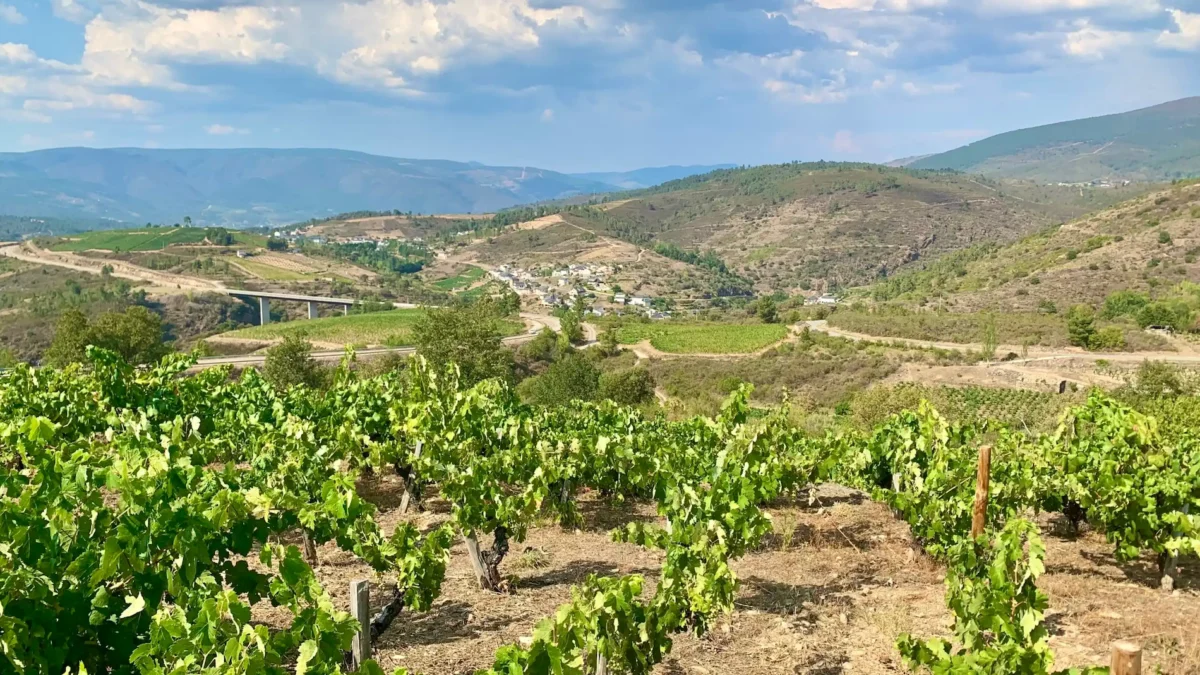
Tucked away in the rugged, northwestern folds of Galicia, the comarca of Valdeorras sits like a hidden kingdom. While the rest of the Spanish wine world has long been enamored with the coastal acidity of Rías Baixas and its ubiquitous Albariño, a quiet revolution has been brewing in the southeastern corner of the region. Here, in a land of slate-strewn slopes and ancient river valleys, the Godello grape is staging one of the most remarkable viticultural comebacks in modern history. Valdeorras is no longer just a remote transit point for pilgrims heading to Santiago de Compostela; it has emerged as the definitive home of Spain’s most sophisticated white wine.
Main Facts: A Region Defined by Granite and Godello
Valdeorras—often mistakenly linked to the term "valley of gold"—actually draws its name from a linguistic evolution of the ancient Gigurri people who once inhabited these hills. Despite the persistent myth that Romans named the region for the gold they extracted from the Sil River, or for the shimmering golden hues of autumnal vine leaves, the etymology is rooted in the pre-Roman history of the region.
The modern identity of the region, however, is inseparable from the Godello grape. Unlike its coastal cousin Albariño, which is defined by zesty, saline brightness, Godello offers a textural depth, aromatic complexity, and structural integrity that wine critics frequently compare to the finest expressions of Burgundy’s Côte d’Or. The region’s terroir—characterized by high-altitude plots, slate and granite soils, and a unique microclimate shielded by mountain ranges—provides the perfect cradle for this once-near-extinct variety.
A Chronological Odyssey: From Roman Roads to Modern Eminence
The viticultural history of Valdeorras is as deep as its river valleys.
- 10th Century: The first formal records of winemaking emerge. A document dated 953 from the San Salvador de Celanova monastery explicitly mentions the presence of vines in the village of Petín, signaling that winemaking was already an established monastic tradition.
- 1804: A critical inflection point occurs with the publication of Lucas Labrada’s Descripción del Reino de Galicia. In this seminal work, local farmers began moving vineyards from low-lying, frost-prone river banks to higher altitude terraces, a practice that defines the region’s quality today.
- 1882: The catastrophic arrival of phylloxera via Portugal. The region’s viticulture was decimated, leading to the loss of indigenous varieties and the subsequent, unfortunate over-planting of high-yield but lower-quality grapes like Palomino (Jerez).
- 1945: Valdeorras is formally established as a Denominación de Origen (DO), one of the oldest in Spain.
- 1976–1977: The birth of the REVIVAL project (Reestructuración de los Viñedos de Valdeorras). Led by visionaries like Horacio Fernández Presa, this initiative began the arduous task of identifying which grapes truly belonged in the region’s soil. Trials on Godello began in 1975, sparking a resurgence for a variety that had dwindled to just 0.5% of regional holdings.
- 2004: Rafael Palacios, a scion of a legendary Rioja winemaking family, arrived in Valdeorras. His focus on single-vineyard expressions and high-altitude viticulture propelled the region into the global spotlight.
Supporting Data: The Ascendancy of Godello
The transformation of Valdeorras is best viewed through the lens of its harvest statistics. By the year 2000, 90% of the white grapes planted in the region were Palomino, a variety favored for its productivity but rarely for its character. Today, the landscape is radically different.
According to 2023 harvest data, the region produced 7.8 million kilograms of grapes, with white varieties accounting for roughly 76% of the total—a figure that often climbs to 80% in standard years. Most strikingly, 96% of those white grapes are now Godello. The transition is not merely statistical; it is a structural shift. Small-scale producers and larger estates alike are actively regrafting older, less desirable varieties like Alicante Bouschet over to Godello, effectively betting the future of the region on a single, noble cultivar.
Official Responses and the "Talent Magnet" Effect
The rise of Valdeorras has not gone unnoticed by the industry’s elite. The region has become a "talent magnet," drawing in some of Spain’s most respected winemakers who are eager to work with the unique slate-and-granite terroir.
Names like Telmo Rodríguez and Raúl Pérez—figures who have defined the modern Spanish wine movement—have established significant projects in the area, joining the 41 existing registered wineries. This influx of expertise has fostered a culture of experimentation. Modern producers are moving away from heavy oak influence, instead utilizing cement tanks and massive Austrian foudres (such as those used by Palacios) to allow the minerality of the terroir to shine through.
When asked about the shift, local producers emphasize that the market is finally catching up to the quality. The economic demand for Godello has reached a point where entry-level wines are becoming increasingly scarce, as growers prioritize fruit quality over sheer volume. Rafael Palacios’s decision to declassify 35% of his 2022 harvest because it didn’t meet his rigorous standards is a testament to the region’s new "quality-first" philosophy.
Implications: The Future of the "Golden" Valley
As Valdeorras moves into the next decade, it faces the challenges of success. The primary concern is whether the region can sustain its identity as it grows in popularity. There is a palpable tension between the desire for expansion and the need to maintain the "singularity" that attracted connoisseurs in the first place.
1. The Red Wine Crisis
The global downturn in red wine consumption has inadvertently provided a tailwind for Valdeorras. As consumers pivot toward crisp, expressive white wines, producers are finding that Godello offers a compelling alternative to Chardonnay and Sauvignon Blanc. This shift is stabilizing the regional economy, allowing growers to invest in long-term sustainability.
2. Market Recognition
Godello is not yet a household name in the same vein as Albariño, but the trajectory is clear. As the wines of Valdeorras continue to receive perfect scores from international critics—with O Soro’s 2020 vintage marking the first 100-point score for a Galician white—the demand is broadening from niche collectors to the wider market.
3. Sustainability and Terroir
The future of Valdeorras lies in the meticulous management of its high-altitude vineyards. Unlike the Mediterranean regions of Spain, where climate change is pushing winemakers toward cooler, higher-altitude sites to combat heat, Valdeorras is already positioned to take advantage of these conditions. The elevation, paired with the region’s natural protection from Atlantic storms by the surrounding mountain ranges, creates a consistent, reliable environment for high-quality viticulture.
Conclusion
The revival of Valdeorras is more than a story of a grape; it is a story of a region that chose to reject the path of industrial, high-yield agriculture in favor of honoring its history. From the forgotten monastery records of the 10th century to the modern, world-class wines of the Bibei River valley, Valdeorras has successfully rebranded itself. It is no longer a peripheral region of the Iberian Peninsula, but a focal point for the future of Spanish white wine.
As the industry continues to monitor the "Godello phenomenon," one thing remains certain: the "gold" of Valdeorras is no longer a myth of the Roman past. It is found in the bottle, in the glass, and in the resilience of a people who turned a dying industry into the most exciting white wine frontier in Europe. The valley may be remote, but the world is now firmly looking in its direction.


 Layla Zulfa