

 Dwi Wanna
 Nana Wu
 Muslim
 Reynand Wu
 Ammar Sabilarrohman
 Laily UPN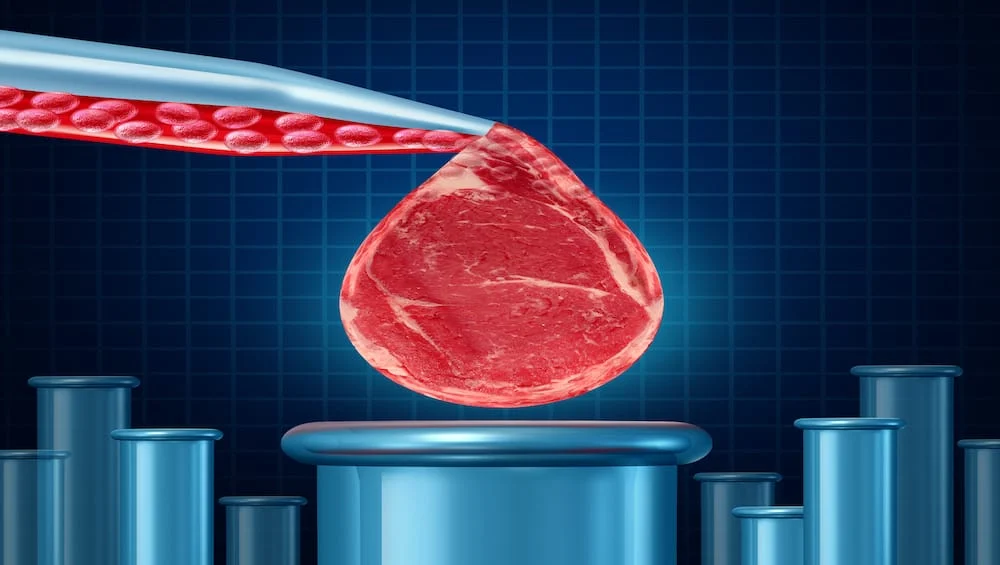
For a brief, heady period between 2021 and 2023, the future of protein seemed to be fermenting in a steel bioreactor. Venture capitalists, flush with liquidity and visions of a post-slaughter world, poured over $2.5 billion into the nascent cultivated meat sector. The promise was seductive: the ability to harvest cells from living animals and grow them into meat, effectively bypassing the ethical, environmental, and logistical complexities of industrial animal agriculture.
Yet, as of 2025, that vision has hit a wall of economic reality. Once heralded as the inevitable successor to traditional livestock, the industry is now grappling with a wave of closures, liquidity crises, and a cooling investor climate. What was once a sprint toward a consumer-ready product has turned into a marathon with no clear finish line.
The Vision: Churchill’s Prophecy and the Biotech Boom
The conceptual roots of cultivated meat stretch back nearly a century. In 1931, while navigating a period of financial hardship, Sir Winston Churchill published an essay titled "Fifty Years Hence." In it, he offered a remarkably prescient forecast: "We shall escape the absurdity of growing a whole chicken in order to eat the breast or wing, by growing these parts separately under a suitable medium."
By the early 2020s, the venture capital world believed the "Churchillian" era had arrived. Major firms, sovereign wealth funds, and even traditional meat giants like Tyson Foods and JBS poured capital into startups like Upside Foods, Believer Meats, and Mosa Meat. The technology—harvesting stem cells and proliferating them in nutrient-rich media within large-scale bioreactors—was proven at a lab scale. The mission was to achieve price parity with conventional meat and scale production to feed a growing global population.
Chronology of a Crisis: 2025’s Wave of Closures
The optimism of 2021 proved to be a peak, followed by a precipitous decline. By 2025, the economic friction of biomanufacturing—high energy costs, expensive growth media, and the sheer difficulty of scaling—began to bankrupt even the most promising players.
The most jarring casualty was Believer Meats. Having invested in a massive, 200,000-square-foot facility near Raleigh, North Carolina, the company was poised to become the global flagship for lab-grown chicken. With state-of-the-art centrifuges and bioreactors, it was hailed as a symbol of economic growth. Yet, in a testament to the volatility of the sector, the company folded in late 2025 after losing a major backer and failing to secure emergency funding. The facility, once intended to be a hub of innovation, now sits empty—a monument to the "valley of death" between venture funding and commercial profitability.
The carnage was widespread:
- Meatable: The Dutch startup, which had attempted to diversify into lamb and chicken by acquiring Uncommon Bio’s platform, ceased operations in late 2025.
- CellRev: A UK-based developer of proprietary media additives for cell manufacturing, CellRev shuttered when it failed to meet the commercial milestones necessary to unlock further investment.
- Upstream Foods: The Netherlands-based startup focused on lab-grown fish fats, specifically salmon, folded after being unable to bridge the gap to a Series B funding round.
By the Numbers: A Shift in Market Sentiment
The financial data paints a stark picture of the sector’s contraction. In 2021, venture funding for cultivated meat hit a high-water mark of $989 million. By 2025, that figure had plummeted to roughly $36 million.
| Metric | Data/Trend |
|---|---|
| Global Companies | Approx. 20 active players |
| 2021 VC Funding | $989 Million |
| 2025 VC Funding | $36 Million |
| Projected Market Leader | Estimated 15% market share for top firm |
| Primary Product Focus | 48% Poultry, 38.5% Burgers/Patties |
| Distribution Channel | 52.5% expected through Food Service |
| Geographic Dominance | 41% of market held by North America |
These numbers indicate a consolidation phase. Investors, who traditionally look for 5-to-7-year return cycles, have grown weary of the "long game" required for biological manufacturing. Market viability, once promised for the near future, is now estimated to be at least a decade away.
Official Responses and Regulatory Landscape
Despite the industry’s financial woes, the regulatory environment in the United States has been surprisingly permissive. The FDA and the USDA’s Food Safety and Inspection Service (FSIS) have cleared several products for production and sale, including cultured offerings from GOOD Meat, UPSIDE Foods, Wildtype, and Mission Barns.
The FDA has been transparent about the delay, noting that the hurdle is no longer regulatory, but industrial. In a statement, the agency noted: "Manufacturers are generally working on scaling up their processes to consistently produce amounts large enough to be competitively priced."
However, this regulatory "green light" at the federal level is being challenged by a "red light" at the state level. Currently, eight U.S. states have enacted laws either banning or heavily restricting the sale and distribution of cultivated meat. Over 20 states have introduced or passed strict labeling requirements, intended to protect traditional livestock ranchers from what they perceive as unfair competition and to address consumer confusion.
While these states argue they are protecting their agricultural heritage and ensuring transparency, proponents of the technology argue that these laws are protectionist maneuvers that stifle innovation and violate the principles of interstate commerce.
Implications: The Road Ahead
What does the current malaise mean for the future of protein? First, it suggests that the "disruptive" narrative—that lab-grown meat would replace conventional farming overnight—was fundamentally flawed. The infrastructure required to produce meat at a global scale requires energy and nutrient inputs that are currently prohibitively expensive.
Furthermore, the industry is suffering from a "visibility gap." Thirteen years after the first cultivated burger was unveiled by Professor Mark Post, the product remains largely a novelty. Aside from limited promotional sales in high-end restaurants in Singapore or select U.S. cities, the average consumer has no access to the product. As the novelty fades, so does public interest.
The implications for the industry are clear: those that survive the current "winter" will need to pivot away from high-burn, high-speed growth strategies. Success will likely depend on:
- Cost Reduction: Developing cheaper, non-pharmaceutical-grade growth media.
- Strategic Partnerships: Integrating with traditional meat companies rather than fighting them.
- Regulatory Navigation: Successfully managing the patchwork of state-level restrictions that threaten to fragment the U.S. market.
The dream of the "absurdity of growing a whole chicken" being solved in a laboratory is not dead, but it has certainly been deferred. The next decade will not be defined by the hype of Silicon Valley, but by the grueling work of chemical engineering and supply chain stabilization. Whether cultivated meat becomes a staple of the global diet or remains a niche luxury item will depend on whether these companies can move beyond the prototype phase and prove that they can, quite literally, deliver the goods at a price that the average household can afford.
For now, the bioreactors sit quiet, and the investment community has moved on to other frontiers. The cultivated meat industry has entered its "purgatory"—a space between the initial spark of innovation and the cold reality of industrial scaling. It is a cautionary tale of how the most promising technologies often struggle to bridge the chasm between the lab bench and the dinner table.


