

 Dwi Wanna
 Nana Wu
 Muslim
 Reynand Wu
 Ammar Sabilarrohman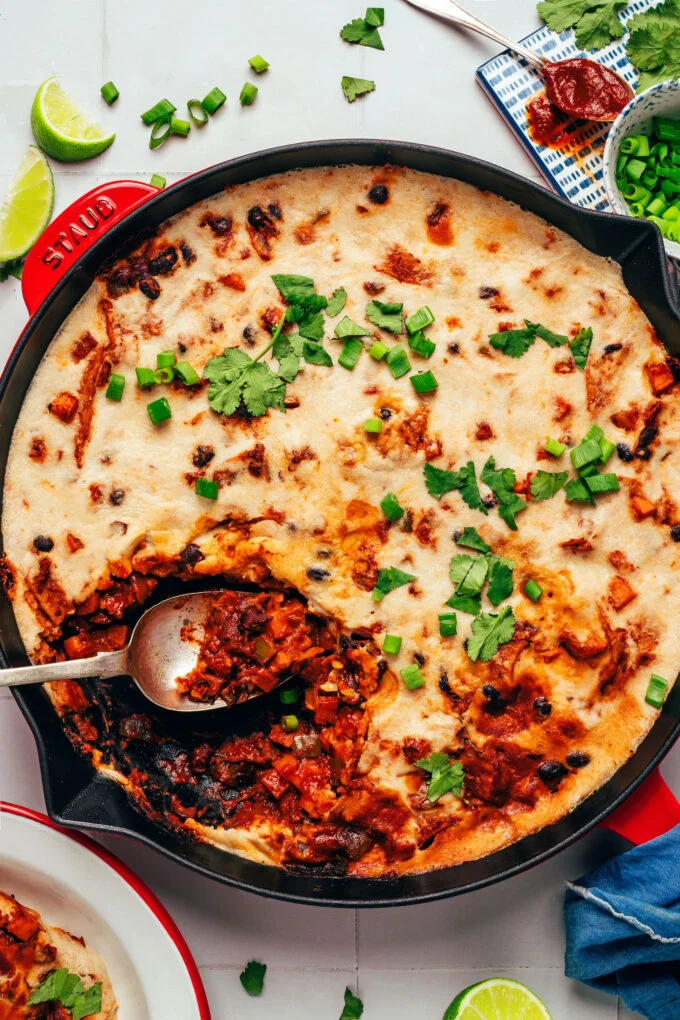
In the modern culinary landscape, the intersection of efficiency and plant-based nutrition has become the holy grail for home cooks. As households increasingly seek meals that prioritize health without sacrificing the comfort of traditional flavors, the "One-Pan Enchilada Skillet" has emerged as a standout solution. Recently popularized by culinary outlets like Minimalist Baker, this dish reimagines the classic Mexican enchilada—a meal typically requiring labor-intensive rolling and baking—into a streamlined, 30-minute stovetop experience.
By stripping away the traditional preparation barriers while retaining the complex, smoky profile of the original, this skillet dish represents a significant shift in how we approach "fast food" at home.
Main Facts: The Anatomy of the Skillet
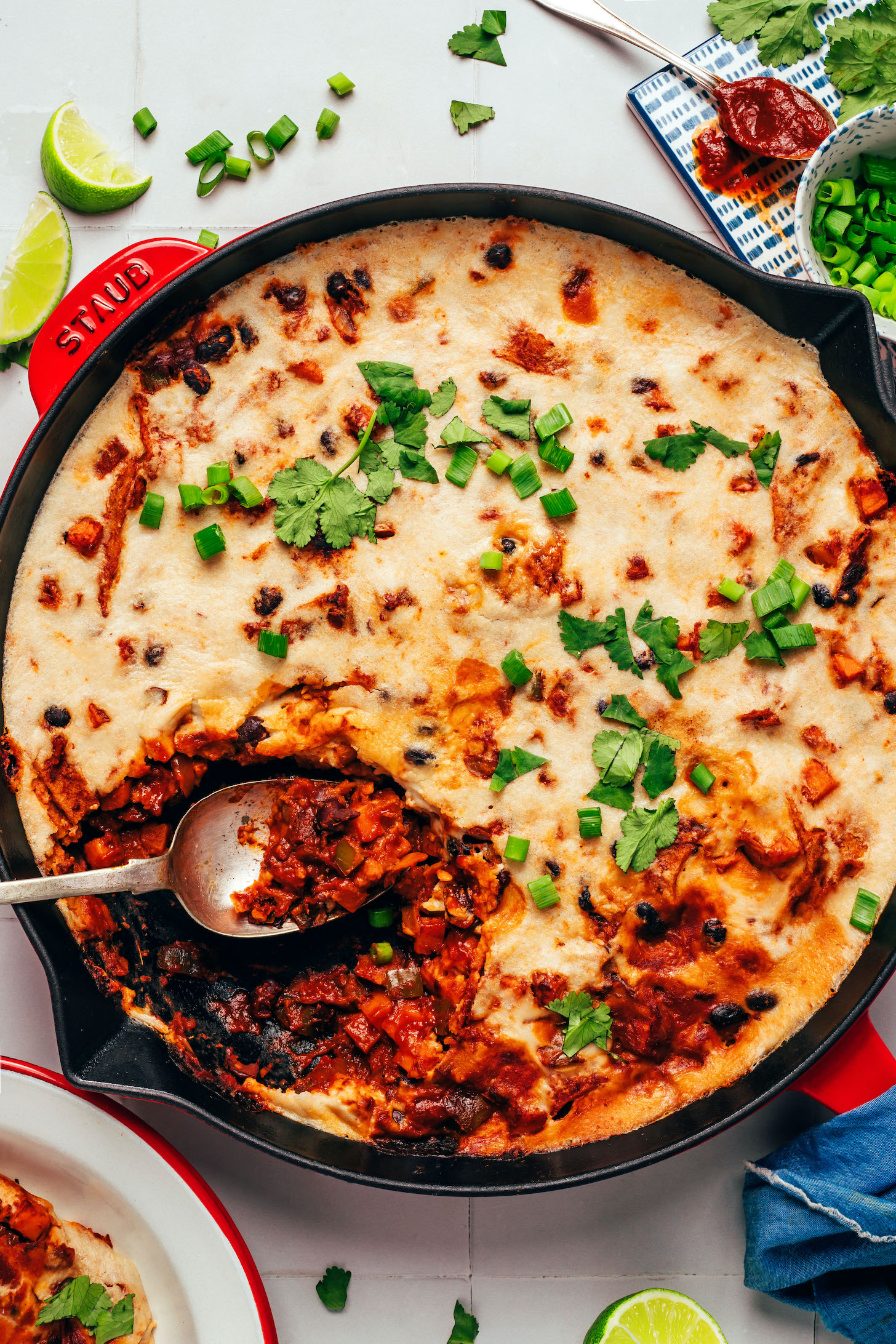
At its core, the vegan enchilada skillet is a masterclass in structural cooking. The recipe replaces the traditional "stuffed and rolled" methodology with a "deconstructed" approach. The primary components include:
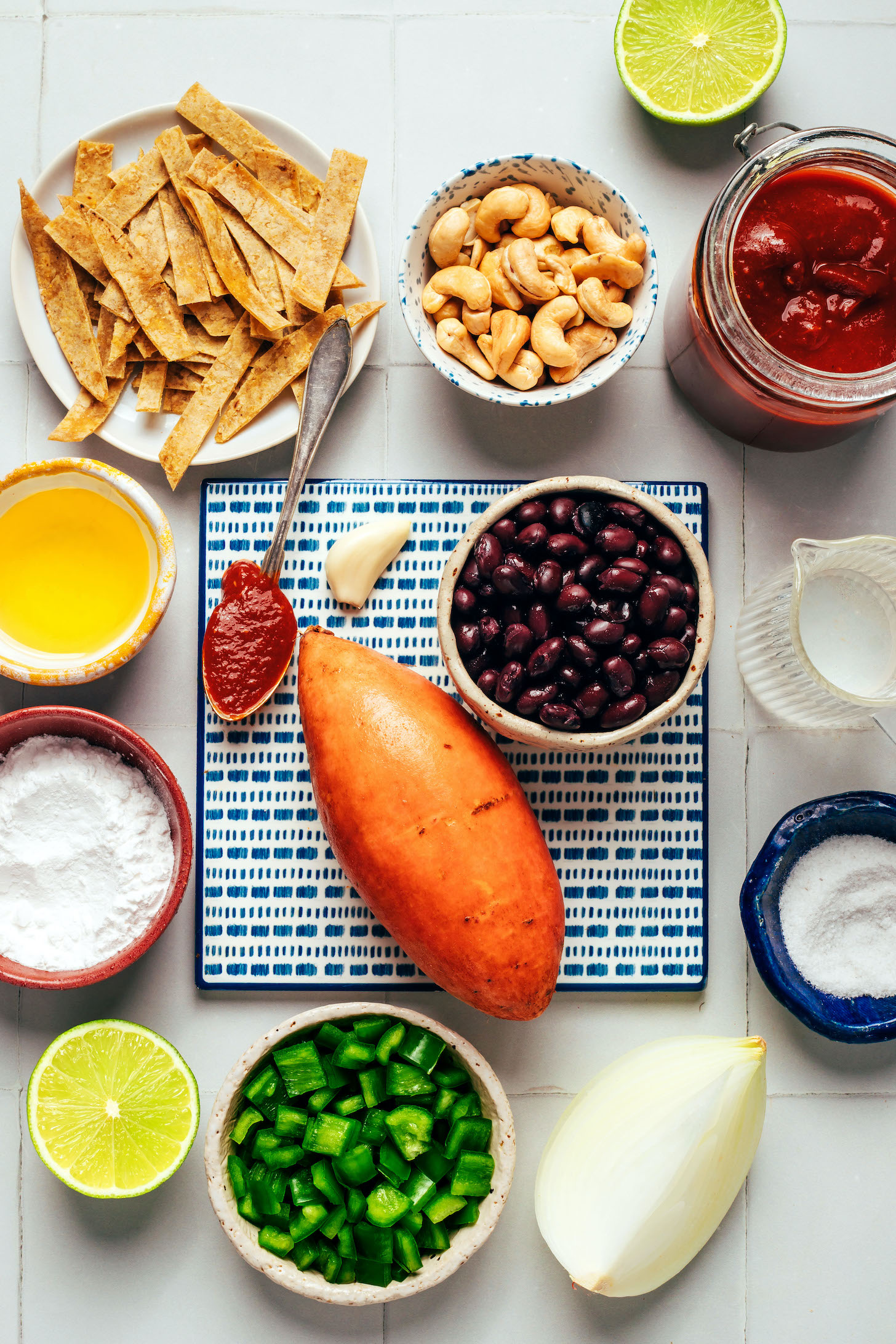
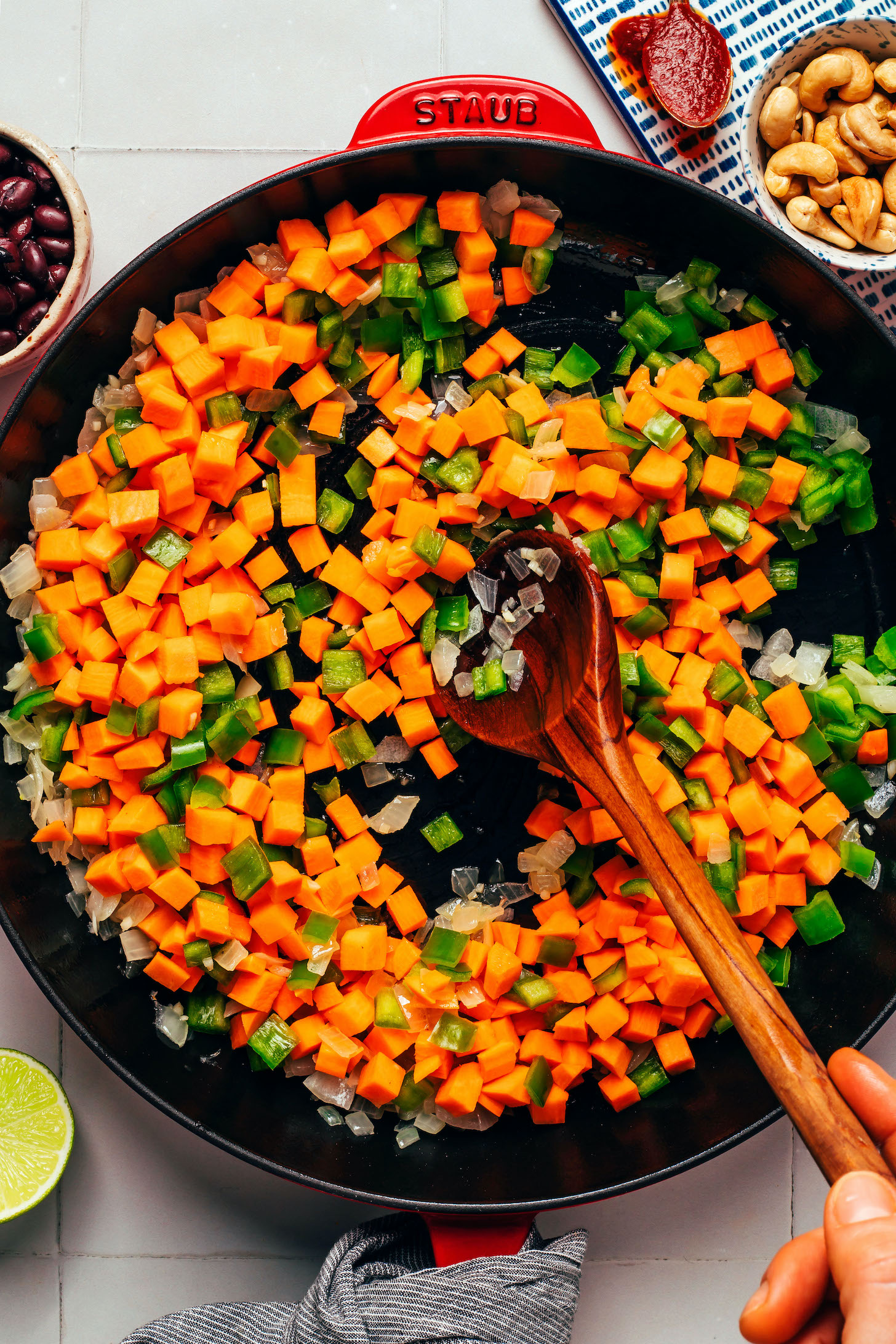
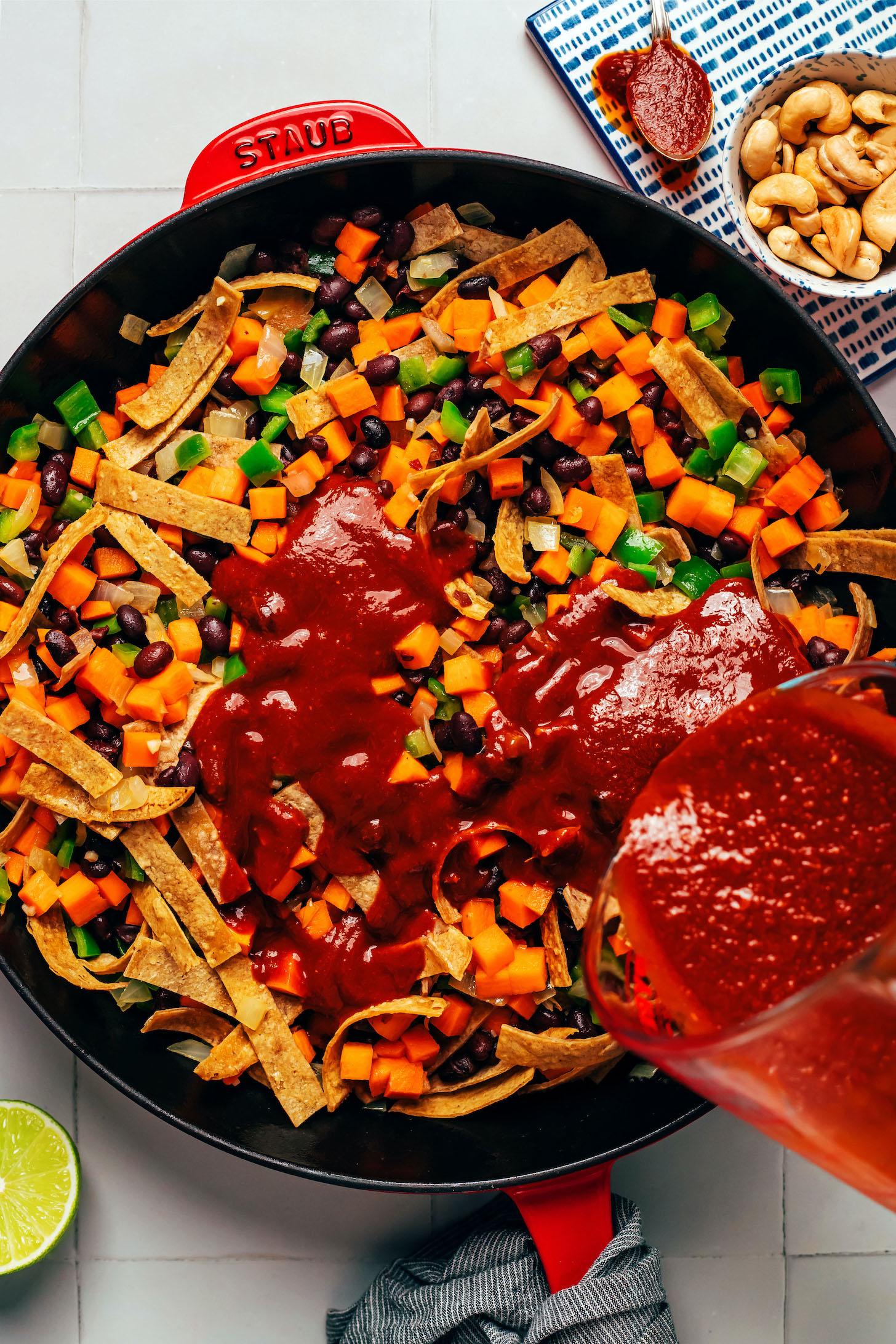
- The Foundation: A sauté of onions, garlic, poblano peppers, and small-cubed sweet potatoes or winter squash.
- The Protein: Fiber-dense black beans, which provide the structural integrity and satiety usually offered by shredded meats.
- The "Enchilada" Element: Corn tortillas, sliced into strips, which soften in the pan to mimic the texture of a traditional baked enchilada.
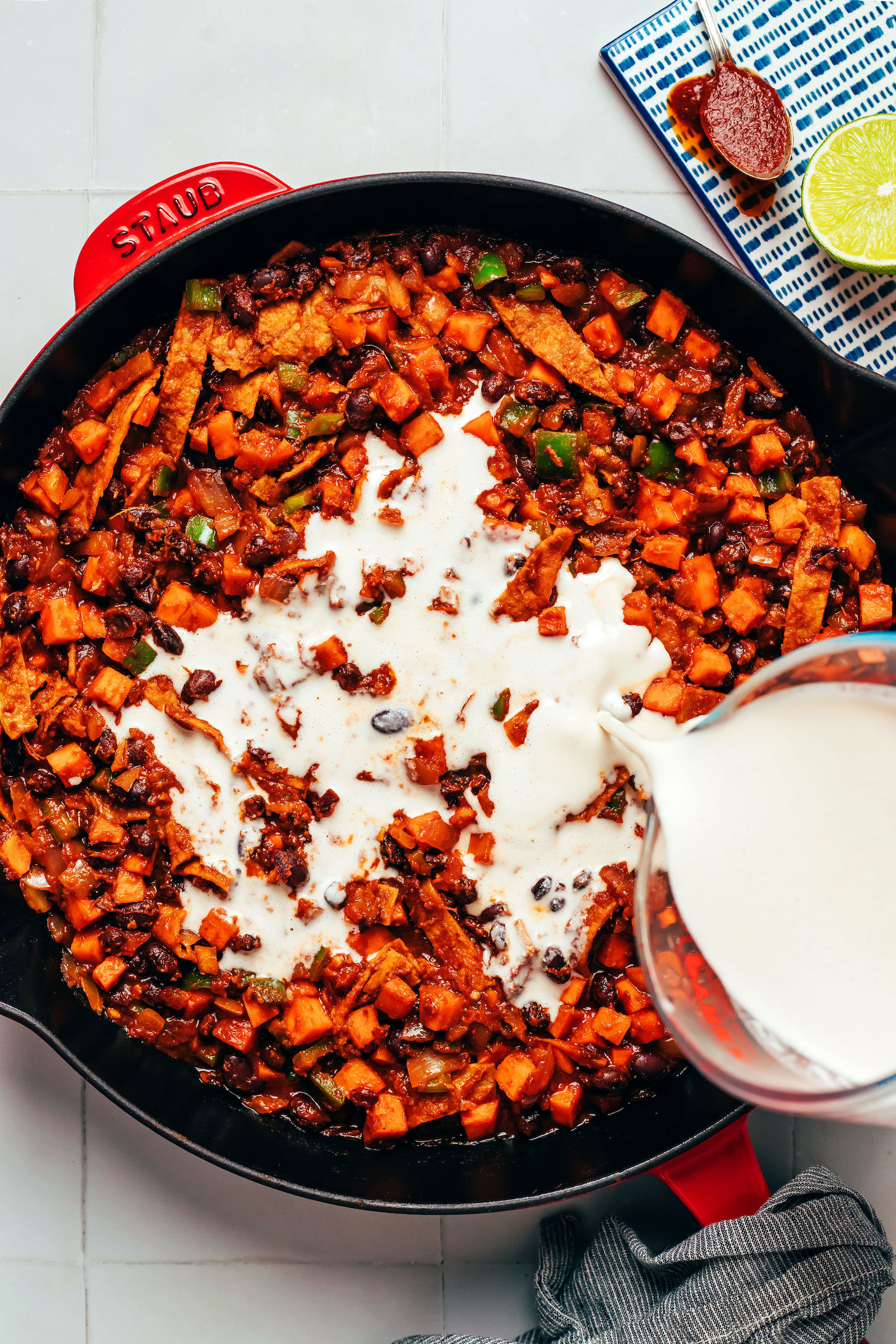
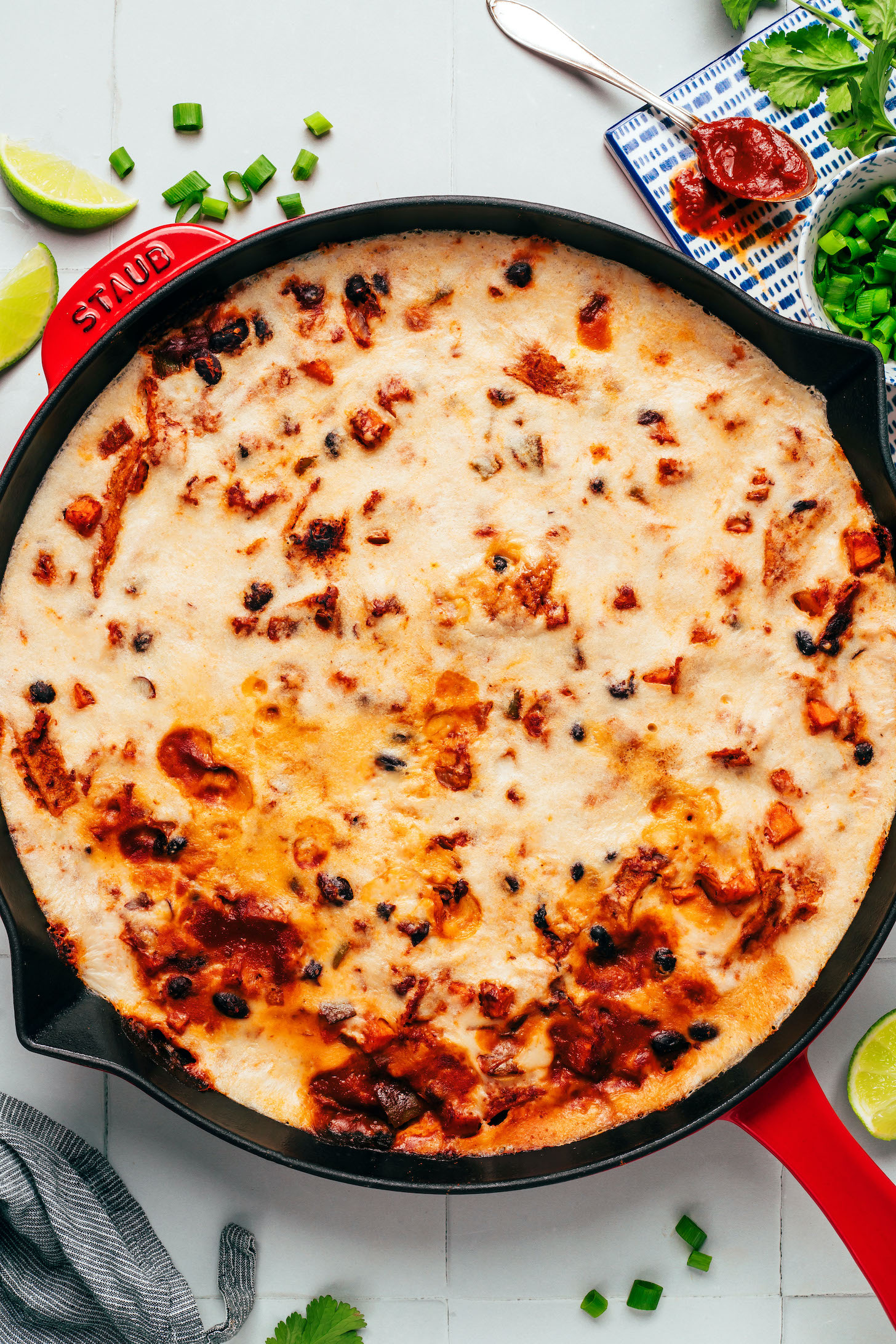
- The "Cheese" Innovation: A proprietary blend of cashews, lime juice, tapioca starch, and garlic that, when steamed under a lid, achieves a remarkably authentic, melty, and creamy texture without the use of dairy.
This composition creates a nutritionally balanced meal. With approximately 416 calories per serving, 13.6 grams of protein, and over 14 grams of fiber, the dish addresses the nutritional deficits often found in quick-prep meals, which are frequently heavy on processed carbohydrates and low in micronutrients.
Chronology: From Mayan Roots to Modern Stovetop
The evolution of the enchilada is a centuries-old journey. According to historical records, the dish finds its distant ancestor in the Mayan papadzules—tortillas dipped in a pumpkin seed sauce. However, the specific iteration we recognize today as the enchilada was first documented in the 1831 cookbook El Cocinero Mexicano.
For nearly two centuries, the dish remained fundamentally anchored to the oven. Whether it was the traditional corn tortilla wrapping or the transition into Tex-Mex baking styles, the requirement of an oven and a casserole dish remained a constant.
The "skillet" revolution began to take hold in the mid-2010s as home cooks began demanding faster, single-vessel cleanup options. The recent rise of this specific vegan version—inspired by contemporary adaptations like Rachael’s Good Eats and the Minimalist Baker—represents the final stage of this evolution. By utilizing tapioca starch to create a dairy-free emulsified "cheese," the recipe has successfully bypassed the need for the oven’s browning phase, effectively cutting cooking time by 60% compared to traditional baked enchiladas.
Supporting Data: Efficiency and Nutrition
The shift toward one-pan cooking is backed by a growing body of consumer data indicating that "cleanup time" is the number one barrier to home cooking.
- Time-Efficiency: A standard enchilada recipe requires an average of 60 to 90 minutes from prep to table, including the time required for oven preheating and baking. The skillet method reduces this to a 10-minute prep and a 20-minute cook.
- Nutrient Density: The reliance on sweet potatoes as a base introduces a high volume of Vitamin A and complex carbohydrates. The use of black beans, meanwhile, provides a low-glycemic index protein source, which is critical for sustained energy levels.
- Adaptability: The recipe’s architecture is intentionally flexible. Data from recipe testers suggests that the dish functions as a "pantry-clearing" meal, where ingredients like kale, bell peppers, or leftover squash can be substituted based on seasonal availability without compromising the integrity of the final product.
The inclusion of a cashew-based sauce is particularly noteworthy. Unlike many vegan cheese alternatives, which rely heavily on processed oils or starches, the cashew-based approach provides healthy fats and magnesium, elevating the dish from a "guilty pleasure" to a nutrient-dense entree.
Expert Perspectives and Culinary Adaptations
Professional chefs and nutritionists alike have weighed in on why this "skillet" method is gaining such traction. "The key to this recipe’s success is the use of the tortilla as a thickener," notes a culinary development consultant. "By slicing the corn tortillas into the sauce, you are essentially creating a rustic chilaquiles-adjacent texture. It isn’t just about speed; it’s about flavor development."
While purists may argue that the crisp edges of a baked enchilada are lost, the trade-off is a consistent moisture level that is difficult to achieve in an oven. The "official" consensus among plant-based food bloggers is that the versatility of this recipe—allowing for the addition of shredded tofu, leftover rotisserie chicken, or extra greens—makes it a foundational tool for the modern home cook.
Implications: The Future of Weeknight Dining
The popularity of the vegan enchilada skillet signals a broader shift in the "foodie" culture. We are moving away from the "Pinterest-perfect" baked dishes that require hours of aesthetic assembly and toward a more utilitarian, yet flavor-forward, model of cooking.
Implications for Home Cooking
- Reduced Food Waste: By allowing for a wide variety of vegetable "add-ins," the skillet method encourages the use of near-expiry produce, directly impacting household food waste metrics.
- Accessibility of Veganism: By replicating the "cheesy" experience without expensive or highly processed dairy alternatives, the recipe makes a vegan diet more accessible to those who are price-sensitive or live in areas where specialty vegan products are scarce.
- The "One-Pan" Standard: The industry is seeing a surge in demand for appliances and cookware designed specifically for high-heat, single-vessel cooking, suggesting that the convenience of this recipe is influencing consumer purchasing behavior.
A New Standard for Quick Meals
As we look toward the future of home-prepared meals, the 30-minute skillet is likely to remain a cornerstone. It satisfies the psychological need for comfort food while meeting the physical demands of a busy professional lifestyle.
For those looking to integrate this into their weekly routine, the strategy is simple: keep a base of black beans, corn tortillas, and a reliable red enchilada sauce in the pantry. With these three staples, the meal is never more than 30 minutes away. As evidenced by the thousands of tags on social media, the transition from the oven to the skillet is not merely a shortcut; it is a permanent upgrade to the home cooking experience.
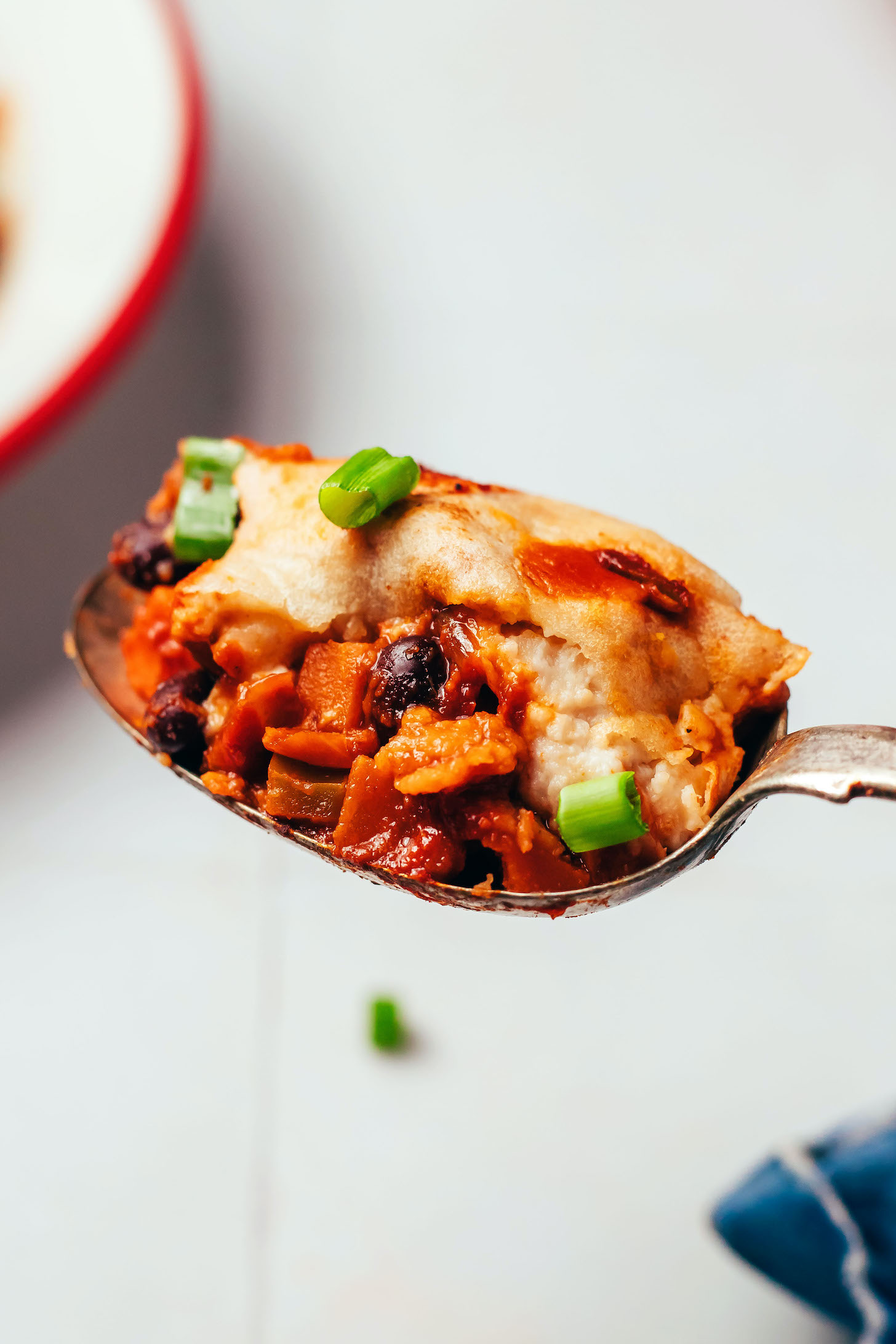
In conclusion, the Cheesy Vegan Enchilada Skillet is more than just a recipe; it is a testament to the fact that with a little innovation, traditional flavors can be preserved, elevated, and made efficient. Whether you are a dedicated vegan, a curious flexitarian, or simply someone trying to get dinner on the table before 7:00 PM, this method offers a blueprint for success in the modern kitchen.


 Azzam Bilal Chamdy
 Sagoh
Sagoh
