Dwi Wanna
 Nana Wu
 Muslim
 Reynand Wu
 Ammar Sabilarrohman
 Iffa Jayyana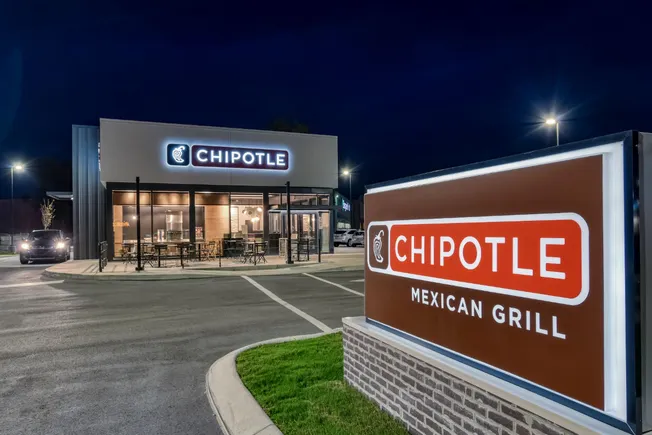
The year 2026 has proven to be a crucible for the American restaurant industry. While the headlines have been dominated by a sobering narrative of retrenchment—marked by high real estate costs, stifled consumer demand, and high-profile bankruptcies like that of the major Wendy’s franchisee Meritage Hospitality Group—a different story is unfolding in the background. Beneath the turbulence of store closures and fiscal caution, a select group of resilient chains is achieving historic expansion milestones.
This divergence suggests that the industry is experiencing a "K-shaped" recovery. While legacy operators burdened by debt or outdated footprints are struggling to survive, agile, modern, and high-growth brands are aggressively capturing market share. From fast-casual giants to challenger franchises, these companies are not merely surviving; they are actively reshaping the competitive landscape.
The State of the Industry: A Year of Two Tales
The economic environment of 2026 has been defined by extreme pressure on margins. Elevated interest rates have made the cost of capital prohibitive for many franchisees, while persistent inflation has forced consumers to rethink their dining habits, often opting for home-cooked meals over mid-tier dining. This has led to high-profile austerity measures, such as the mass closure of underperforming Starbucks locations at the close of the fiscal year.
However, the third and fourth quarters of 2026 revealed that growth is far from dead. In fact, four major players—Cava, Dave’s Hot Chicken, Freddy’s Frozen Custard & Steakburgers, and Chipotle—have hit significant unit milestones that underscore a shift in how successful chains view the future of real estate and consumer convenience.
Chronology of Milestones: A Rapid Expansion
The rapid pace of development in the latter half of 2026 highlights a strategic pivot toward scalability and brand ubiquity.
- Late September: Cava achieves a landmark 500-unit milestone with a new location in Minneapolis, signaling its successful push into the Midwest.
- Late September: Chipotle celebrates the opening of its 1,500th "Chipotlane," a dedicated drive-thru pickup lane that has become the engine of its unit economics.
- Early October: Dave’s Hot Chicken surpasses the 500-store threshold with a new opening in Phoenix, marking a meteoric rise from just two locations in 2020.
- Mid-October: Freddy’s Frozen Custard & Steakburgers reaches the 600-restaurant mark with a new development in Beaufort, South Carolina.
Supporting Data: The Anatomy of Success
Cava’s Strategic Midwest Pivot
Cava’s journey to 500 units is a masterclass in controlled, data-driven expansion. Less than a year after hitting the $1 billion annual revenue mark, the Mediterranean chain is proving that its model travels well outside of its coastal strongholds.
CFO Tricia Tolivar has been instrumental in this strategy, noting that up to 30% of new unit development is targeted at entirely new, untapped markets. By focusing on emerging growth markets where the brand has a "toehold" but not yet significant density, Cava is optimizing its supply chain and marketing spend. With a targeted opening cadence of 75 to 77 stores in 2026, the company is already looking toward a 1,000-unit future by 2032.
Dave’s Hot Chicken: From Niche to National
Perhaps the most aggressive growth trajectory in the industry belongs to Dave’s Hot Chicken. Backed by the institutional might of Roark Capital since 2025, the brand has transformed from a localized phenomenon into a national powerhouse. The company’s ability to open eight units in a single day back in April demonstrates a sophisticated franchising pipeline. Their expansion is no longer limited to the domestic market, as the brand has begun testing the waters in the United Kingdom, the Middle East, and Canada.
Freddy’s: Flexibility as a Competitive Advantage
Freddy’s Frozen Custard & Steakburgers is taking a more flexible approach to real estate. Its 600th unit in South Carolina is a non-traditional "end-cap" location without a drive-thru, reflecting a broader strategy to infiltrate smaller footprints and urban centers that might not accommodate a full-scale standalone building. Owned by the private equity firm Rhône, the brand is targeting growth across the Northeast and Pacific Northwest while simultaneously eyeing Southeast Asian expansion, starting with a five-unit deal in the Philippines.
The "Chipotlane" Effect
Chipotle remains the gold standard for integrating technology into physical architecture. The 1,500th Chipotlane, located in Florida, represents a core pillar of the company’s goal to reach 7,000 locations. The data supporting this strategy is clear: the Chipotlane format consistently delivers higher average unit volumes and better returns than traditional, dining-room-only restaurants. With a target of 350 to 370 new openings in 2026 alone, Chipotle is leveraging its high-efficiency equipment packages to reduce labor friction and improve speed of service.
Official Responses and Strategic Rationale
Executives across these firms emphasize that their current success is not an accident of timing, but a result of long-term planning.
"We are building for the next decade, not just the next quarter," noted a spokesperson for one of the expanding chains. The general consensus among these leaders is that the current economic volatility is actually a window of opportunity. As weaker competitors vacate premium real estate, these well-capitalized brands are stepping in to secure prime locations at more favorable terms than were available in the overheated market of 2024 and 2025.
Furthermore, the integration of "high-efficiency equipment packages"—as seen in Chipotle’s newer stores—is a direct response to the rising costs of labor. By streamlining kitchen operations, these chains are managing to maintain profitability even as wage pressures persist across the hospitality sector.
Implications for the Broader Restaurant Landscape
The success of these four chains carries significant implications for the industry at large:
1. The End of the "One-Size-Fits-All" Box:
As seen with Freddy’s, the days of every restaurant requiring a massive, standalone building with a standard drive-thru are ending. The future of growth lies in "flex-format" real estate that can adapt to high-density urban areas, suburban strip malls, and everything in between.
2. Franchisee Consolidation:
The bankruptcy of large operators like those associated with Wendy’s suggests that the franchise model is undergoing a professionalization phase. Private equity backing—as seen with Dave’s Hot Chicken and Freddy’s—provides the liquidity needed to weather economic downturns, allowing these brands to outlast smaller, under-capitalized operators.
3. Digital Integration as Physical Strategy:
The "Chipotlane" is not just a drive-thru; it is a digital-first physical touchpoint. Brands that fail to integrate their mobile ordering and pickup channels into their physical architecture are finding themselves at a permanent disadvantage against those that treat the digital customer as the primary customer.
4. The Geographic Shift:
The aggressive move into the Midwest and the South by coastal brands like Cava signals that the "saturated" markets are losing their luster. Growth-minded companies are increasingly looking to the middle of the country, where real estate is more affordable and consumer brand loyalty is up for grabs.
Conclusion: A Barometer for 2027
While 2026 has been a year of fear for many, it has been a year of foundational building for others. The milestones reached by Cava, Dave’s Hot Chicken, Freddy’s, and Chipotle serve as a barometer for the rest of the industry. The winners in the coming years will be those who balance rapid unit growth with technological efficiency and real estate flexibility.
As the industry looks toward 2027, the central question will not be whether growth is possible, but rather which brands have the discipline to execute their expansion plans without sacrificing the guest experience. The companies that crossed these major unit thresholds this year have proven that even in a climate of high costs and cautious spending, there is still an immense appetite for brands that can meet the modern consumer exactly where they are—whether that is in a new market in the Midwest, a pickup lane in Florida, or a compact urban store in South Carolina.

 Jia Lissa