Dwi Wanna
 Nana Wu
 Muslim
 Reynand Wu
 Ammar Sabilarrohman
 Sagoh
Sagoh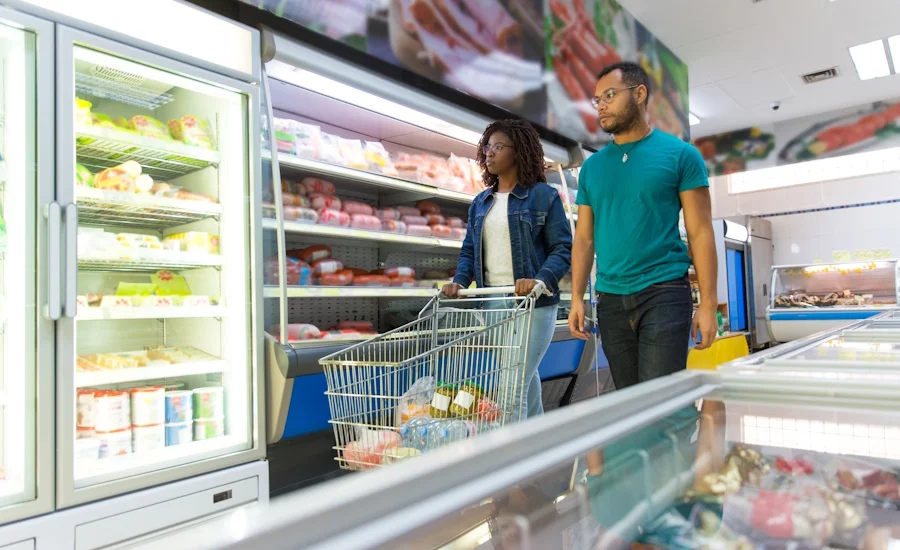
On October 12, 2026, the fragility of the modern global food supply chain was laid bare in a series of coordinated, malicious digital strikes that transcended simple data theft. Instead of targeting credit card numbers or corporate secrets, anonymous actors turned their attention to the physical infrastructure of life itself: the refrigeration systems of hundreds of major supermarkets across France and several other European nations. By remotely overriding the industrial temperature controls of these retail giants, attackers forced cooling units into a defrost cycle, pushing temperatures to a staggering 50°C (122°F). The result was not merely a technical glitch, but a massive, industry-wide spoilage event that has left retailers counting tens of millions of euros in losses and regulators scrambling to secure the "internet of things" (IoT) before the next wave strikes.
The Anatomy of the Attack: A Chronology of Chaos
The incident began in the early morning hours of October 12. As automated systems in French retail hubs flickered, facility managers were met with an unprecedented scenario: their digital dashboards reported a system-wide "forced defrost" command that could not be overridden locally.
By mid-morning, the scale of the operation became apparent. Hundreds of locations belonging to major chains—including Intermarché, Netto, Cooperative U, Carrefour, Monoprix, and E. Leclerc—reported that their refrigerators were malfunctioning. In several locations, the forced elevation of temperatures caused more than just food spoilage; it resulted in mechanical overheating that sparked small fires within the store units, necessitating emergency responses from local fire departments.
As the day progressed, reports began to trickle in from beyond French borders. Retailers in Spain, Portugal, Poland, Germany, and Belgium confirmed similar anomalies. While France bore the brunt of the assault, the coordinated nature of the event suggested a sophisticated, multi-national operation designed to maximize both economic disruption and the psychological impact on the food supply chain.
The Technical Vulnerability: A Danish Connection
Investigations led by France’s National Cybersecurity Agency (ANSSI) have pointed toward a specific vulnerability in equipment manufactured by the Danish industrial giant, Danfoss. Preliminary findings suggest that the hackers exploited weaknesses in the firmware of Danfoss refrigeration controllers—a critical component in the modern "connected" supermarket.
Danfoss issued a statement in the wake of the incident, noting that the compromised systems were running on outdated firmware versions. The company emphasized that they had previously advised customers to update their systems or replace aging hardware to mitigate such risks. However, the sheer ubiquity of these controllers across the European retail landscape meant that many systems remained unpatched, leaving a massive "attack surface" wide open for exploitation.
The concern now extends far beyond Europe. UK Cyber Defense, a security firm monitoring the aftermath, conducted internet scans identifying thousands of exposed Danfoss controllers worldwide. Their data revealed that while 60 percent of the identified exposed units were located in France, significant concentrations of vulnerable hardware were also detected in South Africa, the United States, the United Kingdom, and various other regions. This suggests that the October 12 attack may have been a "proof of concept," with potentially thousands of stores globally remaining at high risk.
Economic and Operational Fallout
The immediate economic impact is staggering. While official industry-wide loss estimates are still being tallied, the damage to fresh food inventory—including meats, dairy, and produce—is expected to reach into the tens of millions of euros.
Thierry Cotillard, CEO of Intermarché, described the event as a literal "hell" for the company’s operations. With 300 of their locations targeted, the firm was forced to dump entire stocks of perishables to ensure consumer safety, as the uncontrolled temperature spikes rendered the food legally and biologically unsafe for sale.
Dominique Schelcher, CEO of Cooperative U, expressed the industry’s frustration and alarm via LinkedIn. "Our refrigerators are connected to the internet to allow remote temperature monitoring, day and night, and rapid intervention in the event of an anomaly," Schelcher wrote. "This is an essential device for the proper preservation of food products. Attacking equipment that is essential to the preservation of fresh products is attacking the food supply chain of the French. This is unprecedented, extremely serious, and unacceptable."
For retailers, the attack represents a paradox: the very technology designed to improve food safety—remote monitoring—has become the primary vector for a food security crisis.
The Paradigm Shift: Cybersecurity as a Food Safety Mandate
For years, food safety experts have warned that the digitization of the supply chain was moving faster than the industry’s ability to secure it. The October 12 incident marks a grim milestone: cybersecurity is no longer an "IT department issue"; it is now a fundamental pillar of public health and food safety.
In a prescient 2022 analysis, Dr. Robert Norton of Auburn University and national security specialist N.C. Simmons warned that the "cyber backbone" of the food and agriculture sector was vulnerable. "Adversaries have the means, opportunity, and motivation to break the cyber backbone at will," they wrote. "Just because they have not done so, does not mean they will not in the future."
Their warning, once viewed as a theoretical exercise in risk management, has now been realized in the aisles of French supermarkets. The incident demonstrates that an adversary does not need to introduce a pathogen into the food supply to cause a crisis; they only need to manipulate the environmental controls that keep the food safe from natural degradation. By turning the "cold chain" into a "hot chain," hackers effectively weaponized the infrastructure of the food industry against itself.
The Path Forward: Implications and Urgent Remediation
As ANSSI continues its investigation, the global retail community faces an immediate mandate: perform an exhaustive audit of all connected IoT devices. The "connect everything" philosophy that has defined retail efficiency for the past decade is now being scrutinized.
Industry experts suggest that the following steps are now mandatory for any food retailer operating connected infrastructure:
- Hardening IoT Infrastructure: Moving beyond simple passwords to multi-factor authentication for all remote access points.
- Network Segmentation: Ensuring that refrigeration control networks are air-gapped or strictly segmented from general corporate networks to prevent a breach in one from cascading into the other.
- Mandatory Patch Management: Treating firmware updates for industrial equipment with the same urgency as critical OS security patches.
- Legacy Hardware Retirement: Aggressively phasing out hardware that can no longer support modern encryption or security standards, regardless of its remaining mechanical utility.
Moreover, governments are expected to weigh in with new regulatory frameworks. The idea that refrigeration systems are "critical infrastructure" is gaining traction. If a supermarket’s cooling system can be manipulated to create a massive health hazard, regulators may soon require these systems to meet the same security standards as power grids or water treatment plants.
Conclusion: A Wake-Up Call for Global Security
The cyberattack of October 12 is a watershed moment. It has shattered the illusion that the food supply chain is a distinct, protected sphere shielded from the chaos of the digital world. By exploiting the Danfoss vulnerabilities, the perpetrators didn’t just cause a financial loss; they struck at the heart of public confidence in the food supply.
As the retail sector cleans up the aftermath—disposing of spoiled goods and replacing fried electronics—the broader global community must digest the lessons of this crisis. We live in an age where a few lines of malicious code can trigger a physical catastrophe in thousands of locations simultaneously. If the food industry is to survive this new era of digital warfare, it must transition from a reactive posture to one of proactive, aggressive defense. The "cold chain" is only as strong as its weakest digital link, and as of October 12, that link has been exposed for the world to see. Whether or not global retailers will rise to meet this challenge remains the most pressing question for the future of global food security.