

 Raul Delapena Setiawan

 Ammar Sabilarrohman
 Lina Irawan
 Suro Senen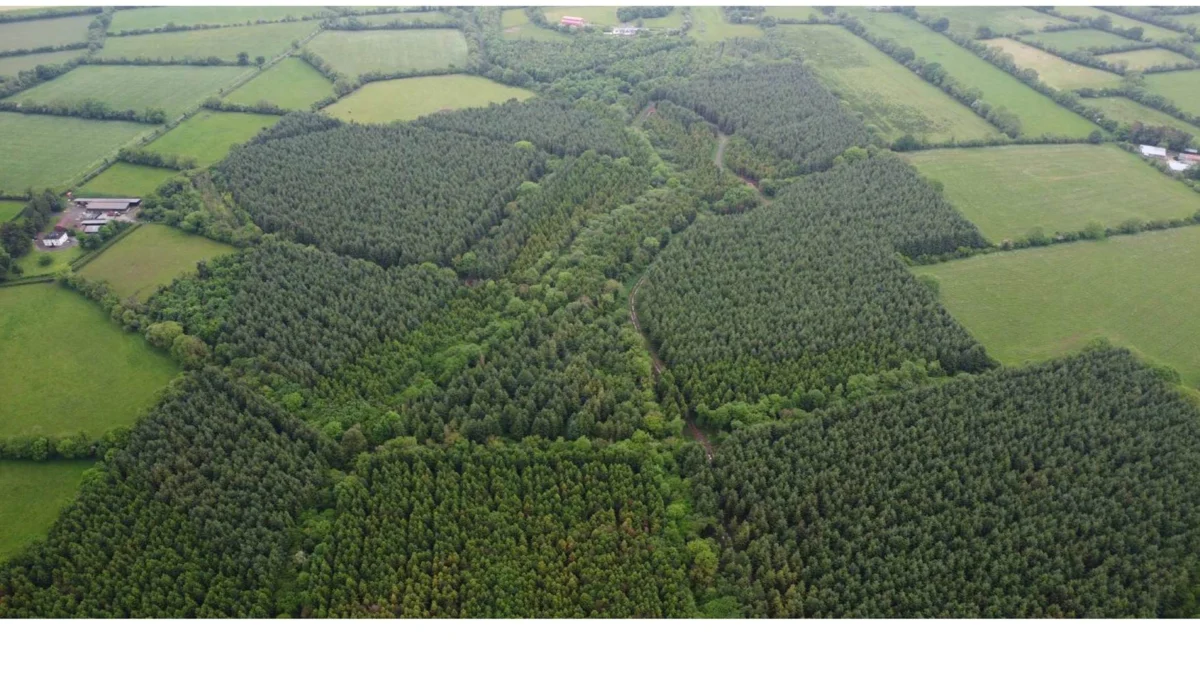
In a significant move toward the decarbonization and climate-proofing of European timber assets, natural real asset manager SLM Partners has announced the successful final close of its SLM Silva Fund II. The vehicle, which is dedicated exclusively to Continuous Cover Forestry (CCF) projects across Europe, secured €150 million ($167 million) in capital commitments from the Dutch pension giant APG, acting on behalf of the pension fund ABP.
The closing of Fund II marks a pivotal moment for the industry, signaling a shift in institutional investment sentiment. While traditional forestry has long relied on the "clear-fell" model—a high-intensity, short-cycle approach—SLM Partners is positioning CCF as the modern standard for long-term ecological and financial resilience.
The Strategic Core: Moving Beyond Clear-Fell
At the heart of SLM Partners’ investment philosophy is the move away from clear-fell forestry. In traditional industrial timber management, entire stands of trees are harvested simultaneously, leaving landscapes bare and prone to soil erosion.
Continuous Cover Forestry, by contrast, mimics natural forest cycles. By harvesting only specific portions of a forest at any given time, the canopy remains intact. This approach yields a host of environmental dividends: enhanced biodiversity, improved soil health, and more robust carbon sequestration.
“It is a way to maximize economic value from the forest over a very long period of time,” explains Paul McMahon, Managing Director at SLM Partners. "We are moving away from the ‘boom and bust’ cycle of clear-felling toward a model that prioritizes the health and longevity of the asset itself."
Chronology: From Irish Roots to European Ambition
The launch of SLM Silva Fund II is not an isolated experiment; it is the culmination of years of operational success, primarily in the Irish market.
- The Inception (SLM Silva Fund I): SLM Partners launched its first forestry vehicle with a specific mandate for Ireland. The goal was to prove that CCF could be both environmentally restorative and commercially viable.
- Operational Milestones (2023–2026): By June 2026, Fund I had successfully acquired 2,000 hectares of forestland. Crucially, the management team successfully transitioned 67% of this total area into a CCF management regime.
- Institutional Validation (2026): With the operational model validated, APG’s commitment of €150 million provided the necessary scale to launch Fund II. This marks the transition from a local pilot strategy to a pan-European investment platform.
- The Path Ahead: With the fund now officially closed, SLM Partners is turning its attention to scaling its Irish portfolio while simultaneously scouting prime forestry assets in other European jurisdictions.
Supporting Data: The Case for Resilience
The shift toward CCF is not merely a preference of environmentalists; it is a calculated response to the volatile reality of a changing climate. According to market data, approximately 22% to 30% of European forests are currently managed under some form of continuous cover. While this remains a minority of total forest area, the growth trajectory is steep.
Climate Pressures Driving Adoption
McMahon notes that the investment rationale is increasingly tied to "climate-proofing" portfolios against systemic risks:
- Storm Resilience: Clear-felled forests are often vulnerable to wind throw; a continuous canopy acts as a protective shield for the underlying stand.
- Disease Mitigation: Monoculture, clear-fell forests are notoriously susceptible to pest outbreaks. Diverse, uneven-aged forests—the hallmark of CCF—are significantly more resistant to pathogens.
- Fire Prevention: A maintained, healthy forest floor with diverse species composition creates a natural firebreak, reducing the risk of catastrophic wildfire events that have plagued Southern and Central Europe in recent years.
Financial Stability
For institutional investors like APG, the economic argument for CCF is grounded in stability. Rather than the irregular, high-risk "all or nothing" cash flows of clear-felling, CCF provides more predictable, recurring revenue streams. Regular thinning of the forest produces a steady supply of timber, while the reliance on natural regeneration eliminates the heavy capital expenditure associated with replanting after a clear-cut.
Official Responses and Perspectives
The involvement of APG, one of the world’s largest pension investors, underscores a broader institutional trend: the desire for "green" assets that offer both tangible climate benefits and long-term inflation-hedged returns.
Paul McMahon reflects on the changing perception of the strategy: “Traditionally, CCF was seen as something for environmentalists or for non-commercial forests. That is shifting. Investors are starting to recognize that this is a superior commercial forest management strategy.”
However, McMahon is careful to manage expectations. He stresses that CCF is not a panacea for all forestry challenges. "We are always very cognizant of the fact that this isn’t a ‘magic bullet’ for every situation," he notes. "Certain species, like Poplar, are designed for rotational, clear-fell cycles. We are selecting our sites based on where CCF adds the most value—economically and ecologically."
Implications for the Future of Forestry
The success of the SLM Silva Fund II sends a strong signal to the forestry sector, the European Union, and the global investment community.
1. Regulatory Alignment
The EU Forest Strategy for 2030 explicitly highlights CCF as a critical tool for climate adaptation. By aligning with these guidelines, SLM Partners is positioning its investors to benefit from future policy shifts, potential carbon credit integration, and regional grants—such as those currently available in Ireland—that favor sustainable management practices.
2. A New Asset Class
The emergence of dedicated CCF funds is creating a new sub-asset class within timberland. As investors look for ways to fulfill their ESG mandates without sacrificing financial returns, the "Sustainable Forestry" label is becoming a premium category.
3. The Shift in Ownership Models
The model of institutional ownership is evolving. As pension funds and sovereign wealth funds take more active roles in the management of their natural assets, the emphasis is shifting from "extraction-based" models to "stewardship-based" models. This shift likely ensures that forest lands will be managed for multiple generations rather than just the next harvest cycle.
Conclusion: A Template for the Future
The €150 million infusion into SLM Silva Fund II represents more than just a financial transaction; it represents a fundamental shift in how capital interacts with the natural world. By demonstrating that continuous canopy management can yield stable, long-term cash flows while simultaneously bolstering the resilience of European timberlands against the ravages of climate change, SLM Partners is setting a new benchmark.
As the industry watches, the success of this fund will likely dictate the pace at which other institutional managers adopt CCF as a standard, rather than an alternative, approach to forestry. For now, the integration of ecological integrity with institutional-grade financial performance appears to be the most promising path forward for the forestry sector in the 21st century.


 Pevita Pearce
 Nana
Nana
