 Ali Ikhwan
 Rifan Muazin
 Suro Senen
 Layla Zulfa
 Laily UPN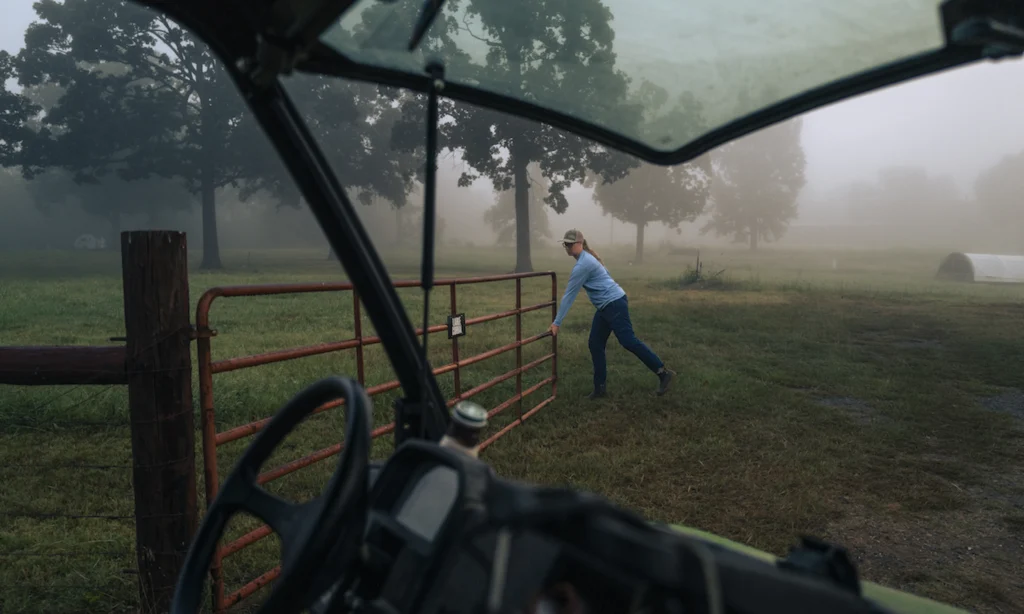
Introduction: A Dawn in Arkansas
The morning sun breaks over the horizon near Perryville, Arkansas, casting a golden hue across the Heifer Center for Regenerative Agriculture. A scissor-tailed flycatcher keeps watch from a fence line as cattle graze peacefully in the lush, low-lying bottoms. For Sam Noble, the day begins not with fanfare, but with the steady, rhythmic tasks of the chicken brooder.
Noble, the Poultry Coordinator for Heifer USA, is a practitioner of a profession as old as civilization itself. Yet, her presence in the fields and barns is part of a modern, vital narrative: the rising visibility and influence of women in agriculture. While women have historically been the backbone of agrarian life—managing livestock, preserving seeds, and ensuring food security—the institutional recognition of their labor is a relatively recent phenomenon. Today, that visibility is not just a matter of social progress; it is an economic and ecological imperative.
The Statistical Shift: Counting the Uncounted
For decades, the contribution of women to the agricultural sector was obscured by data collection methods that favored a singular, male-dominated definition of the "primary operator." However, the landscape of agricultural demographics is undergoing a long-overdue recalibration.
The Numbers Behind the Narrative
Since 2002, the percentage of women producers in the United States has seen a steady, consistent climb. According to the most recent data from the United States Department of Agriculture (USDA), women now account for over 36 percent of all U.S. agricultural producers.
This statistical surge is partially attributed to a critical shift in methodology. In 2012, the USDA revamped its census collection process, allowing farms to designate more than one primary operator. This simple, bureaucratic adjustment acted as a spotlight, revealing that women were not merely "helping out" on the farm—they were leading it.
Global Implications
The trend is not confined to the United States. Across the Americas, rural women are stepping into formal leadership roles within cooperatives and independent enterprises. This shift is essential because the challenges facing global agriculture—climate volatility, market instability, and resource scarcity—require the intellectual and physical contribution of every producer, regardless of gender.
A Chronology of Resilience: From Tradition to Transformation
To understand the current state of women in agriculture, one must look at the historical trajectory of their labor. For generations, women have served as the silent stewards of the land, often balancing domestic responsibilities with the strenuous demands of farm management.
The Era of "Invisible Labor"
For most of the 20th century, agricultural policy and discourse were framed through a lens that often relegated women to peripheral roles. Even as they managed complex supply chains and daily operations, their contributions were frequently categorized under "support" rather than "leadership."
The Turning Point: Access and Agency
The last two decades have marked a turning point. With the advent of better data, increased access to micro-finance, and the rise of local food movements, the narrative has shifted from "invisibility" to "empowerment." Women are increasingly securing land rights, obtaining agricultural certifications, and leading innovative cooperatives. This shift reflects a broader global movement to recognize that the sustainability of the food system depends on the inclusion of the very people who have kept it afloat for centuries.
Case Studies: Voices from the Field
To gain a clearer perspective on the challenges and triumphs of this movement, it is necessary to look beyond the statistics and into the lives of the women defining modern agriculture.
Chiapas, Mexico: Preserving Tradition, Securing Markets
In the Sierra Madre de Chiapas, land is a cultural touchstone. Despite the region producing 41 percent of Mexico’s coffee, women hold only about 25 percent of the land rights. Yumara Salas Ramírez is working to dismantle these systemic barriers. As the first female secretary of the Sierra Azul Cooperative, she is not only managing the flow of green coffee but is also spearheading efforts to help women producers market their own, distinct brands.
"Every time we work with coffee, we reflect what we were taught and keep a family tradition alive," says Ramírez. For her, the work is a bridge between the wisdom of her ancestors and the economic requirements of the future.
The Galápagos, Ecuador: Sovereignty and Sustainability
The Galápagos Islands present a unique challenge: over half of their food supply is imported from the mainland. María Espinoza is at the forefront of a movement to change this. By utilizing agroecological methods on land reclaimed from invasive blackberry bushes, she is restoring the local ecosystem and feeding her community. Since 2019, farmers like Espinoza have successfully increased the percentage of locally sourced food in their markets from 10 to 40 percent.
When asked about the difficulty of the task, Espinoza remains pragmatic: "The most difficult part? There isn’t one. With dedication, you just have to overcome the difficult challenges."
El Nance, Honduras: Climate Resilience as Survival
Climate change is not an abstract concept for farmers like Milexy Rodriguez. In 2024, a severe drought claimed 15 of her cattle, a devastating blow to her livelihood. However, rather than retreating, Rodriguez leaned into innovation. Utilizing support from a community savings group, she invested in a well and diversified her farm to include beekeeping and chili pepper production. Her story serves as a reminder that resilience is built through both infrastructure—like a well—and the courage to defy gendered expectations.
Defining the Future: Beyond Traditional Assumptions
Despite these gains, women in agriculture still encounter deep-seated biases. They are often asked to prove their competence in ways their male counterparts are not. Yet, leaders like Sam Noble are choosing to redefine the paradigm entirely.
"To me, being a woman farmer doesn’t mean proving that I can farm like a man," Noble notes. "It means I get to define what a good farmer looks like."
The Need for Diverse Perspectives
The agricultural sector does not need women to adopt traditional male management styles. Instead, it requires a broader recognition of "different ways of knowing." This includes:
- Holistic Land Management: Prioritizing ecological health alongside yield.
- Community-Centered Production: Focusing on food sovereignty rather than purely industrial output.
- Knowledge Transfer: Valuing the multi-generational wisdom that women have traditionally stewarded.
Implications for Global Food Systems
The rise of women in agriculture has profound implications for global food security. Studies have shown that when women are given equal access to resources, farm productivity increases and household nutrition improves.
Addressing the Climate Crisis
Women farmers are disproportionately vulnerable to climate disruptions, yet they are also the most active in implementing adaptive strategies. From the water-saving techniques of Honduran beekeepers to the biodiversity-focused agroecology of the Galápagos, women are leading the transition to a more resilient, sustainable agricultural model.
Institutional Recognition
The shift in USDA reporting and international NGO focus is just the beginning. Real progress will require:
- Legal Protections: Strengthening land rights for women, particularly in regions where inheritance and property laws remain biased.
- Access to Capital: Providing micro-loans and grants that specifically target women-led, small-scale operations.
- Mentorship Networks: Creating spaces where women can share knowledge and navigate the challenges of a rapidly changing industry.
Conclusion: A Movement, Not a Moment
As we observe the work being done at centers like Heifer International, it becomes clear that we are witnessing the maturation of a movement. Women are not waiting for an invitation to the table; they are building their own tables.
The underlying questions of modern agriculture—How do we care for the land? How do we pass down knowledge? How do we build resilient communities?—are being answered every day by women in the fields of Arkansas, the highlands of Mexico, the islands of Ecuador, and beyond.
By finally acknowledging the work that has been happening all along, we are not just correcting a historical record. We are unlocking the full potential of our global food systems. If we are truly serious about building a sustainable future, we must ensure that the leadership, experience, and innovation of these women are at the heart of the conversation. The face of farming is changing, and it is more diverse, resilient, and capable than ever before.


 Asro
Asro
 Azzam Bilal Chamdy