

 Ammar Sabilarrohman
 Dwi Wanna
 Nana Wu
 Neng Nana
 Nana
Nana Rifan Muazin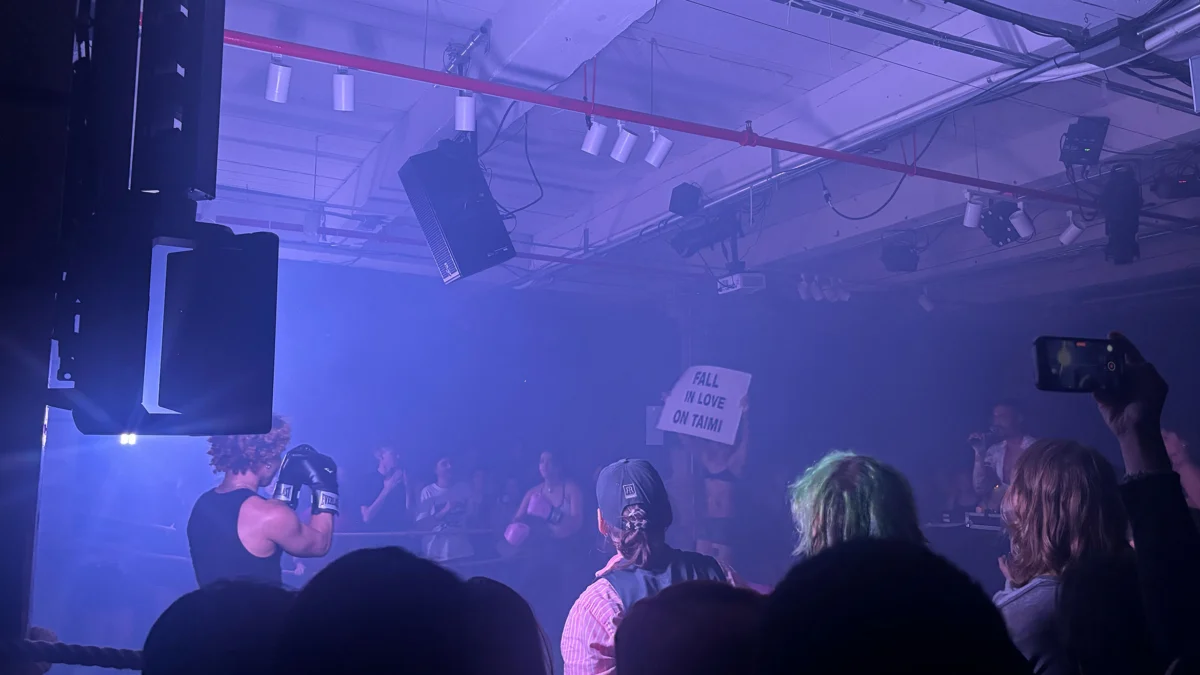
For years, the cultural narrative surrounding Generation Z has been defined by a singular, persistent critique: they are the "inside generation." Studies and op-eds have painted a portrait of a cohort paralyzed by digital isolation, shunning the traditional bar scene, eschewing dance floors, and retreating into the pixelated safety of social media. We are told they are lonely, detached, and increasingly disinterested in the messy, analog rituals of human connection.
But on a recent, smoke-filled night in Brooklyn, the "boring" allegations were not just challenged—they were physically dismantled. I stepped into the ring at the "Fight Your Evil Situationship" Boxing Rave to see if this generation is truly fading away, or if they are simply reinventing how we gather.
The Ring as a Third Space
The flyer promised "fighters that will bring a slight horniness," a tagline that felt quintessentially, if confusingly, Gen Z. Expecting a warehouse party, I was caught off guard by the center stage: a legitimate, rope-delineated boxing ring bathed in aggressive strobe lights, with a high-octane DJ booth looming behind it.
The event was hosted by Grownkid, a social club for 18- to 24-year-olds founded by Gael Aitor and Kayla Suarez. Grownkid isn’t just hosting parties; they are attempting to solve a structural crisis. Their manifesto is built on the premise that the modern world has eroded the "third space"—those vital community hubs between home and work. As Gen Z grapples with record levels of loneliness, Grownkid seeks to bridge the online-to-offline gap.
"The meaning of life is play," the organization claims. If the fight card for the evening was any indication, that play is increasingly visceral. This trend of "contact-heavy" socializing is surging in popularity across New York and beyond. From modern medieval combat leagues to competitive lesbian oil wrestling and the cult-favorite "Twinks vs. Dolls" showcases, young people are turning to physical, performative spectacle to manufacture intimacy.

Chronology of a Night: From Tinder to the Canvas
The event operated with the structure of a surrealist variety show. The co-hosts, Caroline Jo and Basquiat, acted as both ring announcers and psychological mediators, introducing combatants by their first names, their attachment styles, and the messy, digital-age backstories of their romantic entanglements.
The narrative arc of each "bout" was a masterclass in modern malaise. Take, for instance, the story of Randy and Meredith. They met on Tinder, endured a public cheating scandal involving a "hey girly" DM from an ex, and were currently in the throes of "rebuilding trust." As the hosts narrated their history, the crowd groaned in genuine, collective empathy.
Then there were Shani and Nik, whose two-month relationship culminated in mutual infidelity, cross-state moves, and a custody battle over a cat. The DJ, clearly moved by the chaos, dropped a track from Tinashe’s latest album as the two entered the ring.
The "fights" themselves were a form of performance art—a cathartic, slapstick release. They almost always began with the combatants pedaling their arms like bicycles and inevitably devolved into frantic, cinematic make-out sessions. The absurdity was the point. When one couple, Katie and Marshall—an avoidant-anxious pairing who had spent 10 months in a "situationship" of perpetual hooking up—took the ring, the crowd’s reaction was visceral. When Marshall pulled out an empty ring box in the final moments of their mock-fight, the room erupted in gasps. It was theatrical, ridiculous, and undeniably human.
Supporting Data: The Loneliness Crisis vs. The Need for Play
The Grownkid model addresses a well-documented sociological reality. According to recent reports, Gen Z is paradoxically the most connected generation in history, yet they report the highest levels of loneliness. Social media, designed to foster community, often acts as a digital barrier to real-world intimacy.

This generation’s "situationship" culture—a term that describes a romantic arrangement that lacks clear boundaries or labels—has become a shorthand for the general ambiguity of modern adult life. By turning these emotional conflicts into literal combat, attendees are externalizing their anxieties.
The age cutoff for Grownkid events is 24. It is a curious boundary. Perhaps the organizers believe that once you hit 25, the "play" of youth must yield to the rigid, professionalized structures of adult life. But for now, for the thousands of young people participating in these niche subcultures, the event serves as a necessary laboratory for social interaction.
Official Perspectives: The Philosophy of Conflict
"Healthy conflict is key for a happy life," is the mantra of this particular rave. While the organizers were clear that no actual harm was intended, they maintained that the spectacle served a purpose.
When speaking with attendees, the sentiment was consistent. Aran, a content creator who has attended multiple Grownkid events, described the night as "quintessentially Gen Z." To the outside observer, it might look like a rowdy, meaningless party. To those inside, it is a high-stakes effort to "find any excuse to talk to someone."
Sociologists suggest that for a generation raised in an era of digital perfectionism, the ability to engage in "low-stakes, high-absurdity" social situations is a vital developmental tool. By performing their "evil situationships" in front of a crowd, attendees are reclaiming control over their narratives. They are transforming the private, digital shame of a ghosted text or a messy breakup into a communal, shared experience of laughter and cheering.

Implications: A New Era of Socialization
As I navigated the crowd, I was struck by the sheer volume of interaction. Despite the fact that I was there to observe and report, I was approached by dozens of strangers. There was a palpable hunger for connection that transcended the ironic detachment usually associated with Gen Z.
The "Fight Your Evil Situationship" Boxing Rave did not make me a more "adult" or "shiny" person. If anything, it solidified my disdain for the term "situationship," which I will henceforth be replacing with the much more romantic and honest "ex-lover."
However, the event successfully debunked the myth that Gen Z is too broken or too digitized to party. They are simply changing the venue. If the "third space" has been killed by rising costs, digital isolation, and the death of the traditional bar, then this generation will build a new one in the center of a boxing ring.
They are, quite literally, fighting for their social lives. And based on the energy in that Brooklyn room, they are winning. The "boring" allegations have been officially beaten—or, at the very least, they’ve been put into a headlock until they surrendered. For a generation often accused of being terminally online, the most important lesson of the night was simple: when the screen goes black, the real work of being human begins in the physical world. It might be messy, it might involve a pair of boxing gloves, and it might be entirely ridiculous, but it is, above all else, alive.


 Basiran
