Azzam Bilal Chamdy
 Neng Nana
 Nana Muazin
 Dwi Wanna
 Raul Delapena Setiawan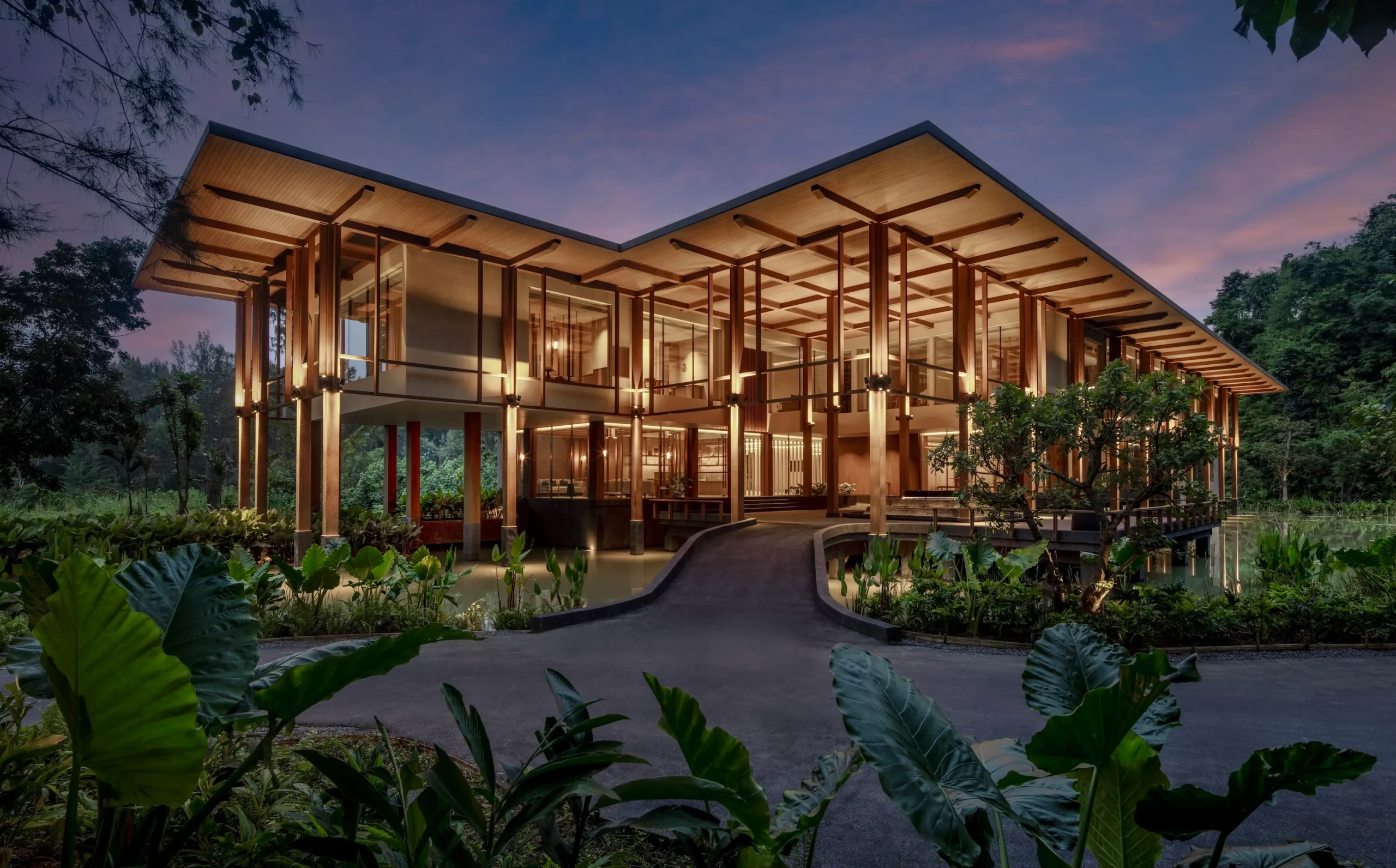
This sponsored content was created in collaboration with a Skift partner.
In the high-stakes world of global hospitality, hotel growth has long been measured by a standard, predictable yardstick: the "pipeline." Industry analysts and stakeholders track property signings, net unit growth, and the sheer volume of rooms entering the ecosystem. These metrics are the industry’s vanity fair—easy to quantify, simple to report, and vital for signaling market dominance.
However, beneath these headline-grabbing figures lies a more nuanced reality. For property owners and investors, the expansion of a brand’s footprint is secondary to the health of the individual asset. The fundamental question is no longer just "how fast is the chain growing?" but rather "how much value is being created for the investor at the end of that growth?" As the hospitality sector navigates a complex macroeconomic landscape defined by expensive capital, rising construction costs, and persistent project delays, the industry is undergoing a shift: the era of blind growth is yielding to an era of disciplined, value-driven investment.
The Disconnect Between Unit Growth and Asset Performance
"Net unit growth is an entirely logical measure for an asset-light operator," explains Wayne Williams, Chief Financial Officer of Minor Hotels. "It illustrates how efficiently a system is expanding and provides a clear map for future fee streams and market penetration. However, you should never confuse that with an owner metric."
For the owner, the scorecard is radically different. Their focus is granular and immediate: revenue-to-EBITDA conversion, cash flow stability, operational cost flexibility, and the long-term return on invested capital (ROIC). In an environment where the cost of a bad development decision has skyrocketed compared to five years ago, the "quality" of growth has surpassed the "pace" of growth as the industry’s most critical benchmark.
The Alignment Test: Bridging the Asset-Light Divide
The industry’s decisive pivot toward asset-light growth—where operators manage hotels without owning the underlying real estate—has undoubtedly fueled rapid expansion. It allows brands to scale distribution and loyalty platforms with minimal capital expenditure. Yet, as Williams points out, the fundamental nature of the asset remains unchanged.
"The underlying hotel hasn’t suddenly become ‘light,’" Williams observes. "What changes in an asset-light model is the responsibility. It is someone else’s money at risk, and operators need to act accordingly."
This creates the "Alignment Test." When an operator proposes a multimillion-dollar renovation, a shift in restaurant concepts, or a new technology implementation, the critical question for the owner is one of conviction: Would the operator make this same recommendation if the capital were their own?
This is where Minor Hotels differentiates itself. With approximately 70 percent of its existing portfolio involving direct capital exposure—whether through ownership or leasing—the company occupies a unique position in the market. Even as its extended pipeline shifts toward 85 percent asset-light, the firm maintains the "owner’s mindset" that characterizes its internal operations. By feeling the pressure of interest rates, labor shortages, and energy costs directly, Minor Hotels ensures its decisions are calibrated by the same realities its partners face.
Chronology of a Strategy: Turning Capital into Performance
Minor Hotels’ approach is not merely theoretical; it is a proven operational strategy. Between 2023 and 2024, the company undertook a deliberate exercise across its European portfolio. Rather than chasing new flags or greenfield developments, the team identified 43 existing hotels ripe for strategic repositioning.
The 2023-2024 Repositioning Initiative:
- Initial Action: Minor Hotels committed over $110 million toward the renovation and repositioning of 43 underperforming or aging assets.
- The Zero-Growth Strategy: Notably, this investment did not add a single new room to the company’s total portfolio count.
- The Result: By 2025, EBITDA across these 43 properties had soared by nearly 40 percent, significantly outperforming the 14 percent average growth observed in comparable assets within the same period.
"Being accretive to earnings is important, and the path you take to get there matters," says Williams. "It is counterintuitive to the net unit growth obsession, but when you are focused on bottom-line earnings, that becomes the most important part of how you think about growth."
The Laboratory of Ownership: Testing the Future
Beyond asset improvement, Minor Hotels uses its owned portfolio as a high-stakes testing ground for new concepts. The most prominent example is the $11 million investment in Layan Life in Phuket, a purpose-built medical wellness and longevity facility.
By funding the project itself, Minor Hotels effectively de-risked the concept. The company utilized the Phuket property to gather real-time data on consumer demand, refine the marketing funnel, and optimize the operational distribution model. Only after the model proved its efficacy—and the economics were stress-tested—did the company begin to consider the rollout of similar concepts to third-party owners.
This "ownership-first" philosophy extends to the invisible architecture of the hotel business: technology and operations. Before deploying new cloud-based financial systems or complex automation software to their managed partners, Minor tests these tools within their owned properties. By the time a solution is presented to a third-party owner, the bugs have been cleared, and the return on investment has been validated in the real world.
The Imperative of Agility in a Volatile Market
While scale remains a competitive advantage—bringing essential benefits in purchasing power, loyalty program reach, and geographic diversification—scale without agility is a liability. In today’s market, an operator’s ability to pivot when economic conditions shift is the ultimate insurance policy for the owner.
Minor Hotels builds its budgets and forecasts from the "bottom up." By analyzing market mix, source markets, and cost flexibility at the individual property level before consolidating these into a portfolio view, the company maintains a level of precision that allows for rapid response. If an investment stops performing as expected, the company does not wait for a cycle to end; it adjusts the scope, phases the investment, or pauses entirely.
Implications: A New Checklist for Owners
For hotel owners, the current landscape necessitates a change in how they vet potential operators. When evaluating a partnership, the conversation must move beyond the brand’s marketing prowess and into the technicalities of asset management.
Key Questions for Owners to Ask Before Signing:
- Direct Alignment: "If this were your own capital, would you still recommend this investment?"
- Operational Empathy: "How do your loyalty and distribution capabilities translate into net earnings after accounting for the associated costs?"
- Crisis Readiness: "How quickly can you demonstrate a shift in operational strategy when margins come under pressure?"
- Track Record of Value: "Can you provide examples of how you have turned capital expenditure into measurable improvements in asset value, independent of market-wide recovery?"
Conclusion: The Convergence of Ownership and Management
The debate between asset-light and asset-heavy models is becoming increasingly irrelevant. The future belongs to operators who can synthesize the two. By maintaining a significant stake in its own assets, Minor Hotels ensures that its growth strategy is not a abstraction, but a lived experience.
"Ultimately, owners should be looking for an operator that understands their hotel as an individual business, not simply another flag in the system," concludes Williams.
As the industry moves forward, the most successful operators will be those who view their portfolio not as a collection of unit numbers, but as a collection of individual businesses, each requiring the same stewardship, diligence, and financial rigor that an owner would apply to their own personal investment. In a world of increasing complexity, that is the ultimate competitive advantage.
To explore development and partnership opportunities with Minor Hotels, visit www.minorhotels.com/en/development.
This content was created collaboratively by Minor Hotels and Skift Studio.