 Dwi Wanna
 Nana Wu
 Muslim
 Reynand Wu
 Ammar Sabilarrohman
 Lina Irawan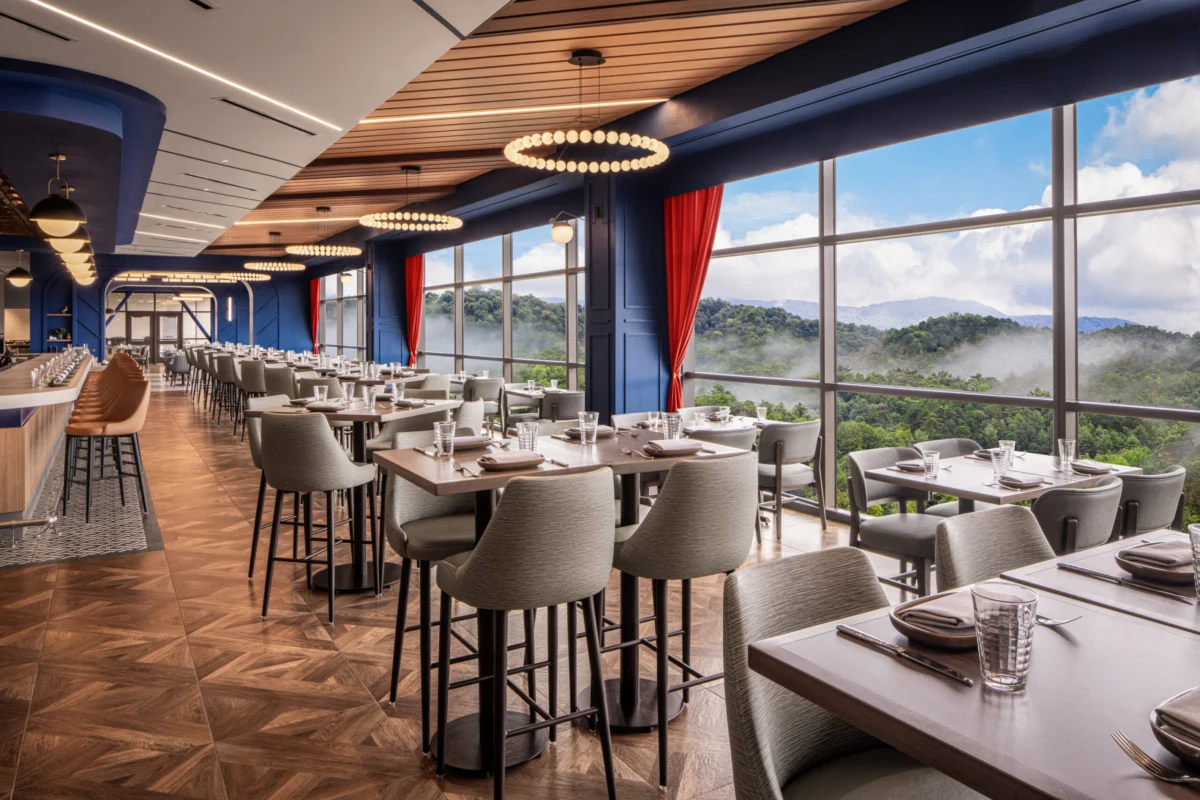
In the contemporary culinary landscape, the definition of a "memorable dining experience" has undergone a radical transformation. Gone are the days when quality food and impeccable service were the sole pillars of success. Today, as the food and beverage industry faces unprecedented competition—not just from rival establishments but from the convenience of high-end home delivery and meal-kit services—restaurateurs are finding that the "what" is no longer enough. The "where" and the "how" have become the new competitive frontier.
This shift has propelled design from a peripheral aesthetic concern to a core operational strategy. Modern diners are increasingly intentional, seeking atmospheres that offer narrative, immersion, and a sense of occasion that cannot be replicated within the confines of a home. By examining the recent development of Ramsay’s Kitchen at Harrah’s Valley River and the Gordon Ramsay Food Market at Harrah’s Cherokee Casino Resort, it becomes clear that the future of dining lies in the choreography of space, light, and movement.
The Evolution of the Guest Journey
The primary objective of modern experiential design is the creation of a "continuous guest journey." Rather than focusing on a singular, static focal point, architects and designers are now curating a series of connected experiential moments that guide the diner from the moment they cross the threshold to the final farewell.
This approach is particularly vital in environments like Harrah’s, where the goal is to draw patrons out of the gaming floor and into a distinct, elevated atmosphere. For the design teams at JCJ Architecture, the challenge was to move beyond the traditional "back-of-house vs. front-of-house" binary, creating instead a seamless, flowing narrative that engages the senses at every turn.
Chronology of a Design Concept: From Blueprint to Reality
The development of a space like Ramsay’s Kitchen at Harrah’s Valley River offers a masterclass in overcoming architectural constraints through creative problem-solving.
- Strategic Orientation: Because the restaurant is located on the 12th floor, accessibility is limited to a single elevator arrival. Designers identified this as a "vertically constrained" sequence. To counteract the potential for a disjointed arrival, the team placed the exhibition kitchen and the main dining room directly in the sightline of the elevator doors. This immediately orients the guest and builds anticipation.
- The Threshold Effect: The arrival sequence was deliberately choreographed. Upon exiting the elevator, guests enter a vestibule layered with bold finishes and oversized brand graphics. This "pause point" acts as a transitional psychological buffer, allowing the guest to mentally exit the casino environment and enter the world of the Ramsay brand.
- Framed Vistas: Following the arrival, the layout was designed to open gradually toward mountain vistas. Each window bay is treated as an intimate stage, with vibrant drapery providing rhythm and contrast.
- The Expansion of Service: The final phase of the experience involves the integration of the rooftop terrace, where lounge seating and lighting systems extend the narrative beyond the interior, encouraging guests to linger and cementing the establishment as a destination rather than just a place to eat.
The Anatomy of Immersive Dining
A cornerstone of this new design philosophy is the dissolution of the "wall" between the kitchen and the dining room. By integrating open kitchens, designers transform the culinary process into theater.
Visibility as Authenticity
Open kitchens do more than show off equipment; they reveal the rhythm of service. When the kitchen becomes a visual anchor, the "energy" of the cooking process—the coordination, the precision, and the urgency—is transmitted directly to the diner. This transparency creates an inherent layer of authenticity. It bridges the gap between the chef’s labor and the guest’s enjoyment, reinforcing the idea that the dining room and the kitchen are inseparable parts of a single, living organism.
The Role of Atmospheric Frameworks
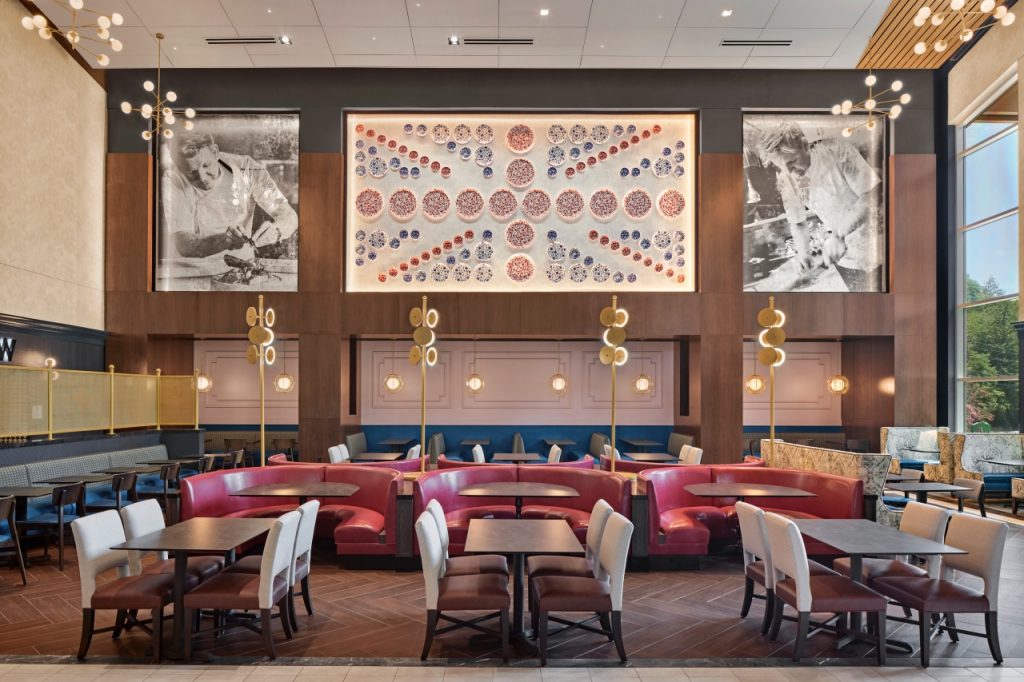
Atmosphere is the connective tissue of a restaurant. It is the synthesis of materiality, sound, lighting, and activity. In the Gordon Ramsay Food Market, this was taken to a dramatic level through a 15-by-30-foot installation composed of vividly colored plates arranged into a Union Jack. This piece serves as a "wow factor," a deliberate moment of surprise that anchors the brand narrative while providing a natural social media focal point.
Supporting Data and Industry Implications
The push toward experiential design is backed by a shift in consumer behavior. Data indicates that modern diners prioritize "shareability"—the ability to capture and curate their experience for social media.
- Social Capital: Design decisions are now evaluated based on how they translate into digital storytelling. "Instagrammability" is no longer a vanity metric; it is a marketing tool that extends the restaurant’s brand reach beyond its physical walls.
- The "Stay-at-Home" Threat: With the rise of high-end delivery, the "function" of eating (hunger satisfaction) has been commoditized. To remain competitive, restaurants must provide an "emotional shift." This is why thresholds—the transition from the exterior world to the interior environment—are now treated with the same architectural importance as the dining room itself.
- Spatial Psychology: Research into hospitality design shows that curated sightlines and "staged" environments significantly increase the perceived value of a meal. When a guest feels they are in a "curated" space, their willingness to engage with premium price points increases.
Official Perspectives: The Designer’s Insight
Megan Lamontagne, NCIDQ, an Associate at JCJ Architecture, emphasizes that these design choices are rarely about decoration. "It’s about balancing creativity with technical expertise," she notes. For Lamontagne, the success of a project lies in the "operational functionality" of the design.
She argues that a well-designed restaurant must perform in two ways: it must be a machine for efficient service, and it must be a stage for emotional connection. When these two functions align, the restaurant becomes more than a business; it becomes a piece of local culture. "We are not just designing a layout," Lamontagne explains. "We are shaping perception and movement. We are creating a framework where the execution of the chef and the experience of the guest become one and the same."
Implications for the Future of F&B
The implications for the industry are profound. As we look toward the future, the "back-of-house" will continue to emerge into the "front-of-house." We can expect to see:
- Hyper-local Integration: As seen with the rooftop terrace at Ramsay’s Kitchen, future designs will increasingly leverage local geography to frame the dining experience, moving away from generic, "placeless" luxury toward designs that are deeply rooted in their specific environment.
- The Rise of the "Performance" Kitchen: Kitchens will become increasingly stylized, incorporating bespoke lighting and architectural features that treat the act of cooking as a high-stakes performance art.
- Dynamic Zoning: Restaurants will move away from fixed seating charts toward more fluid, multi-purpose environments that allow for different types of interactions, from intimate dining to large-scale social gatherings.
Conclusion: The Total Experience
Ultimately, the most compelling dining environments today are defined by the synergy of multiple layers. It is the intersection of a dramatic arrival, a transparent and rhythmic kitchen, an atmosphere that fluctuates between energy and calm, and a design that is as beautiful on a digital screen as it is in person.
In this new era, restaurant design is no longer a backdrop; it is an active participant in the guest experience. By treating the dining journey as a carefully composed narrative, architects and restaurateurs are ensuring that the industry remains relevant, resilient, and profoundly memorable. As the lines between architecture, culinary craft, and digital presence continue to blur, the restaurants that succeed will be those that understand one fundamental truth: guests don’t just come to eat; they come to be transported.

 Jia Lissa
 Iffa Jayyana