

 Dwi Wanna
 Nana Wu
 Muslim
 Reynand Wu
 Ammar Sabilarrohman
 Layla Zulfa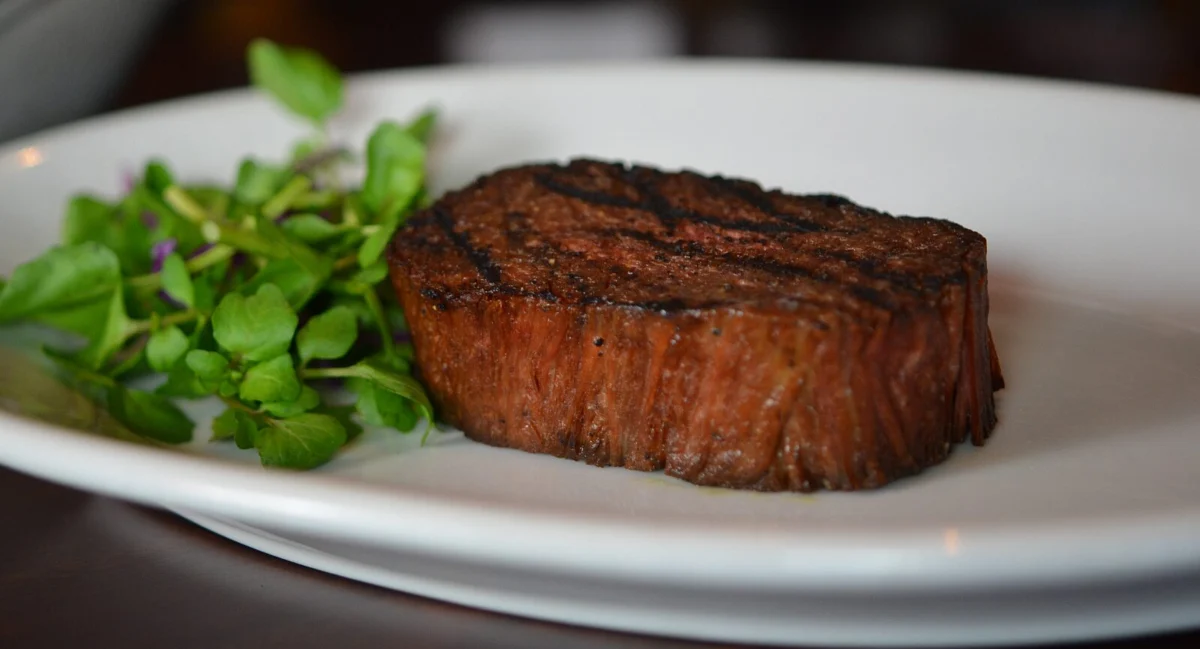
In an industry often marred by high-profile failures and waning consumer enthusiasm, one Israeli startup is charting a distinctly different path. Chunk Foods, a pioneer in the development of whole-cut plant-based meat through solid-state fermentation, is currently navigating a period of aggressive expansion. By marrying a disciplined, capital-efficient manufacturing model with the growing consumer demand for high-protein, clean-label nutrition, the company is positioning itself to reach profitability by late 2026.
Led by founder and CEO Amos Golan, Chunk Foods has managed to secure its place on the shelves of major US retailers—including Whole Foods Market, Sprouts, and H.E.B.—while simultaneously cementing its presence in the foodservice sector. As the company prepares for its next phase of growth, it stands as a case study in how to scale a food-tech venture in an era where capital efficiency and unit economics have replaced the "growth at all costs" mentality of the previous decade.
A Chronology of Growth: From Lab to Table
Chunk Foods’ journey began in 2020, rooted in the idea that the future of plant-based protein lay not in ground-up patties or nuggets, but in the sophisticated replication of whole-cut meat.
- 2020: Amos Golan founds Chunk Foods in Israel, focusing on proprietary solid-state fermentation technology.
- 2023: The company makes its high-profile entry into the US foodservice market, targeting high-end culinary operators who require premium, center-of-plate plant-based alternatives.
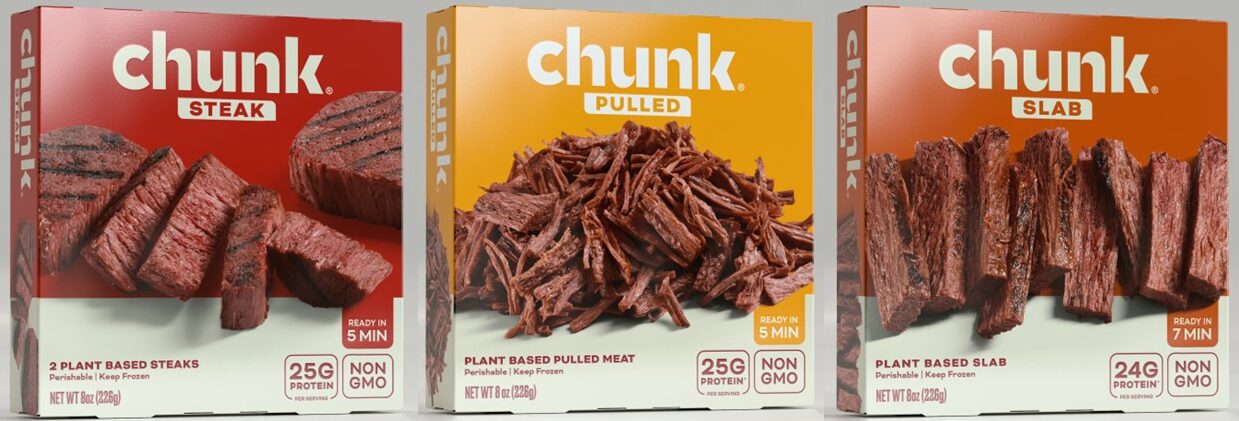
- 2024: Chunk Foods initiates its US retail expansion, introducing a range of steaks, slabs, and pulled-meat products. During this year, the company also secures a strategic investment and partnership with the Mexican food giant Sigma Alimentos.
- 2025: The company experiences a banner year, recording 140% revenue growth, signaling strong market validation.
- 2026 (Present): Chunk Foods is on track for a 100% year-over-year revenue increase. The company is actively optimizing its supply chain and looking toward localized US production to eliminate the current costs associated with shipping frozen goods from Israel.
The Technological Edge: Why Solid-State Fermentation Wins
The plant-based sector has seen its share of "spectacular implosions," most notably the downfall of companies that over-leveraged themselves on massive, capital-intensive submerged fermentation facilities. In contrast, Chunk Foods has adopted a "capex-light" approach.
Efficiency Through Design
Traditional submerged fermentation requires gargantuan, expensive steel bioreactors and complex downstream processing to separate the biomass from the liquid medium. This process is not only energy-intensive but also generates significant wastewater. Chunk Foods utilizes solid-state fermentation, where soy flour—the primary medium—is transformed directly into the final product. There is no waste, no costly separation, and significantly lower overhead.
"We’re growing capacity as we’re growing market, which is very hard to do with other technologies that require a single very large capex investment to start," Golan explains. "When you build a $300 million facility, even if you don’t manufacture anything, there’s a cost associated with that."
Texture Control: The "Micro-Texture" Breakthrough
Beyond the economic benefits, the technology allows for unprecedented control over the final product. According to Golan, the proprietary process allows the company to dictate the direction, thickness, and structure of the fibers. Unlike tempeh or extrusion-based products, which often rely on gums and binders to hold shape, Chunk’s steaks are held together by the natural fiber matrix created during fermentation. The result is a product that retains its integrity, juice, and fat content throughout the cooking process.
Supporting Data: Meeting the Protein-Centric Consumer
The landscape of the US plant-based meat market is undeniably challenging. Recent data suggests that the category has seen stagnant growth in retail as some consumers return to conventional meat or move toward cleaner, more processed-free diets. However, Golan argues that the problem is not the consumer’s desire for plant-based options, but rather the failure of legacy products to meet nutritional and culinary expectations.

Nutritional Profile
A single 4oz Chunk steak provides:
- Protein: 25g
- Fiber: 3g
- Fat: 4.5g
- Calories: 160
These figures position Chunk Foods as a functional food, appealing even to the cohort of consumers currently utilizing GLP-1 weight-loss medications, who require high-protein, low-calorie, and high-satiety food options.
The Value Equation
Price parity has long been the "holy grail" of the alternative protein industry. As the price of conventional beef has climbed—with some basic ground beef products jumping from $4/lb to over $6/lb in recent years—the price gap between premium plant-based cuts and animal proteins has narrowed.
Chunk Foods retails between $16 and $24 per pound. While this may seem high, the company argues that the value proposition is enhanced by the product’s cooking performance. Because the steak does not shrink or lose significant weight during cooking—a common issue with animal-based proteins—the "plate yield" is higher, effectively lowering the cost-per-serving for foodservice operators and home cooks alike.
Official Responses: Strategy and Scaling
Golan’s strategy since the company’s inception has been one of "deep rather than wide." Rather than overwhelming the market with an immediate, nationwide saturation strategy that requires massive marketing spend, Chunk Foods focused on smaller retailers to gather data on velocities and consumer feedback.
"In the first year, we went deep rather than wide and focused on smaller retailers where we could establish relationships and understand velocities," Golan notes.
This disciplined approach allowed the company to refine its messaging and product-market fit. Now, with a presence in over 3,000 locations and distribution partnerships with industry giants like Sysco and US Foods, the company is scaling with a data-backed foundation.
The "Solution-First" Sales Pitch
When engaging with the foodservice industry, Chunk Foods avoids the "vegan" label. Instead, it positions itself as a solution to operational headaches. Chefs are looking for high-protein, shelf-stable, and versatile ingredients that can perform across multiple applications—from corporate cafeterias to high-end hospitality.
"Chefs are not necessarily looking for a vegan steak; they’re looking for solutions for problems," says Golan. By providing a product that can be grilled, fried, or microwaved without losing its texture, the company has become an indispensable tool in the modern professional kitchen.
Global Implications and Future Outlook
The success of Chunk Foods suggests that the "death of plant-based" narrative is premature. Instead, it signals a maturation of the sector. The companies that survive the current economic climate will be those that prioritize:
- Unit Economics: Proving that the product can be profitable at the SKU level before scaling to global distribution.
- Technological Agility: Choosing production methods that allow for incremental expansion rather than betting the house on a single, massive production facility.
- Nutritional Transparency: Aligning products with the modern consumer’s obsession with protein and clean labels.
Looking Toward 2027
As Chunk Foods eyes the end of 2026 for its milestone of company-level profitability, the focus will shift to domesticating production. Currently, the company operates out of Israel, which necessitates the absorption of high freight and tariff costs to serve the US market.
"We’re pushing capacity in Israel and at some point we’ll be looking for the right partnership to set up production in the US," Golan confirms.
By localizing production, Chunk Foods will further reduce its cost structure, potentially allowing it to undercut traditional premium beef prices. With the backing of venture capital firms like Cheyenne Ventures and Fall Line Capital, and a strategic partnership with a global powerhouse like Sigma Alimentos, the company is well-resourced to make this transition.
In an industry that has been characterized by hype, Chunk Foods represents the new guard: quiet, calculated, and focused on the fundamentals of the food business. Whether they can truly displace a significant portion of the meat market remains to be seen, but their trajectory confirms that the appetite for high-quality, plant-based whole cuts is not just surviving—it is evolving.


 Laily UPN
 Pevita Pearce