
 Dwi Wanna
 Nana Wu
 Muslim
 Reynand Wu
 Ammar Sabilarrohman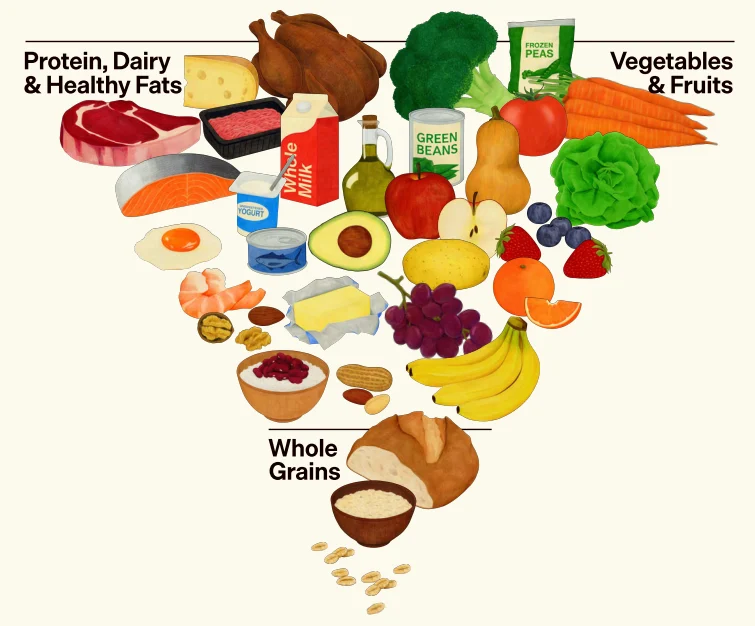
The release of the 2025–2030 Dietary Guidelines for Americans (DGAs) was met with immediate scrutiny from the public health community. While the federal government’s updated guidance arrives with the promising, simplified tagline of “eat real food,” the document has sparked a firestorm of controversy regarding its visual presentation, the methodology behind its development, and its potentially contradictory advice on heart health.
For decades, the DGAs have served as the cornerstone of federal nutrition policy, influencing school lunch programs, military rations, and clinical dietary advice. However, this year’s iteration—characterized by a new, “flipped” pyramid graphic—is being described by leading experts as a departure from the rigorous, evidence-based standards that have historically defined the process.
The Main Facts: A Shift in Tone and Presentation
The 2025–2030 DGAs attempt to pivot toward a more consumer-friendly approach. The text explicitly calls for the reduction of “highly processed” foods, a significant, albeit vaguely defined, expansion of previous guidance that primarily focused on sodium and added sugar. The guidelines emphasize the necessity of whole, fiber-rich grains and encourage a general move away from refined, shelf-stable carbohydrates.
Yet, the most jarring aspect of the new release is the visual communication strategy. The reintroduction of a pyramid-like graphic—flipped on its head—positions foods such as steak, full-fat dairy, and butter in a place of prominence. This visual hierarchy stands in direct conflict with the text of the guidelines themselves, which technically retain the long-standing scientific consensus that saturated fat intake should remain below 10% of total daily calories.
Frank Hu, professor of nutrition and epidemiology and chair of the Department of Nutrition at the Harvard T.H. Chan School of Public Health, warns that this duality is dangerous. “I think the new Guidelines move in the right direction by reinforcing the importance of reducing added sugars and cutting back on refined grains,” Dr. Hu stated. “However, there appear to be several contradictions within the DGAs and between the DGAs and the new pyramid. The mixed messages surrounding saturated-fat-rich foods may lead to confusion and potentially higher intake of saturated fat and increased cardiovascular risk.”
Chronology: The Road to the 2025–2030 Guidelines
The development of the DGAs follows a well-established, multi-year cycle mandated by the U.S. Departments of Agriculture (USDA) and Health and Human Services (HHS). Traditionally, this process is anchored by the Dietary Guidelines Advisory Committee (DGAC), an independent group of experts who synthesize the latest nutritional science.
- Evidence Synthesis: The DGAC spends two years reviewing evidence, with meetings livestreamed to the public and opportunities for stakeholders to submit comments.
- The Scientific Report: The committee publishes a comprehensive report that is intended to serve as the foundation for the final policy document.
- Administration Review: In a departure from recent history, the 2025–2030 process saw the Committee’s initial report rejected by the current administration.
- Supplemental Analysis: Following the rejection, a separate “supplemental scientific analysis” was conducted by a team selected through a federal contracting process.
- Final Release: The resulting document, while claiming to be based on scientific rigor, lacks the transparent, peer-reviewed methodology that characterized previous cycles.
This abrupt change in procedure has alarmed many in the scientific community. Deirdre Tobias, an assistant professor who served on the 2025–2030 DGAC, noted that the final document deviates significantly from the replicable, unbiased standards previously maintained by the HHS. The lack of clarity regarding who specifically wrote the final version, combined with concerns over financial ties between reviewers and the beef and dairy industries, has cast a long shadow over the document’s credibility.
Supporting Data: The Arithmetic of Saturated Fat
The discrepancy between the "New Food Pyramid" and the 10% saturated fat limit is not merely a philosophical debate; it is a mathematical one. For an individual consuming a standard 2,000-calorie diet, the 10% limit equates to approximately 22 grams of saturated fat per day.
When the guidelines recommend three servings of dairy per day, the "saturated fat math" becomes restrictive. A single cup of whole milk contains 5 grams, three-quarters of a cup of full-fat Greek yogurt contains 6 grams, and one ounce of cheddar cheese contains 6 grams. Together, these three items total 17 grams—nearly 80% of the daily limit. If an individual were to add a tablespoon of butter (7 grams) or beef tallow (6 grams) for cooking—both of which are suggested in the guidelines—they would immediately exceed the daily saturated fat threshold before consuming a single bite of meat or other snacks.
Dr. Hu emphasizes that the quality of fat is paramount. “Olive oil is a healthy choice, but the guidelines fail to emphasize that all plant-based oils, including soybean and canola, are superior to animal fats like butter or tropical fats like coconut oil for lowering LDL cholesterol,” he explained. By failing to distinguish between the types of fats in the pyramid, the DGAs implicitly suggest that all fats are created equal, a stance that contradicts decades of cardiovascular research.
Official Responses and Industry Influence
The inclusion of high-saturated-fat foods in the primary visual hierarchy has drawn sharp criticism from independent researchers who point to the financial conflicts of interest among those who conducted the supplemental analysis. Investigative reports have identified that several members of the review panel had documented ties to the beef and dairy industries.
While the government maintains that the supplemental analysis underwent "internal quality checks" and external peer review, critics argue that the process was "relitigated" to favor specific commodity groups. The result is a set of guidelines that, while technically advising lower saturated fat intake, visually promotes the very foods that make achieving those limits nearly impossible for the average consumer.
Furthermore, the guidelines significantly increased the recommended protein intake to 1.2–1.6 grams per kilogram of body weight—an increase of up to 100% over previous minimums. While protein is essential, the guidelines fail to specify the source of that protein. Nutrition experts argue that the “protein package”—what comes along with the protein, such as fiber, sodium, and specific types of fat—is more important than the raw quantity. By failing to prioritize plant-based proteins or fish over red meat, the guidelines miss a critical opportunity to improve public health outcomes.
Implications for the Future of Public Health
The 2025–2030 DGAs present a paradoxical reality. On one hand, they take a commendable, hard-line stance against added sugars, specifically recommending that children under 10 avoid added sugars entirely—an increase from the previous age-2 threshold. On the other hand, the document’s failure to provide concrete, actionable advice on how to implement these changes—coupled with the vague "consume less alcohol" directive—leaves the public in a state of confusion.
The lack of environmental and socioeconomic considerations is also a glaring omission. In an era where food systems are inextricably linked to climate change and food insecurity, the DGAs remain siloed, focusing narrowly on individual consumption while ignoring the broader systemic impact of dietary choices.
As history has shown, Americans often struggle to adhere to the DGAs even when they are clear. When the guidelines are ambiguous or seemingly compromised by industry influence, their effectiveness as a tool for public health is further diminished. For the average consumer, the best advice remains to look beyond the "New Food Pyramid." Resources like the Harvard T.H. Chan School of Public Health’s Healthy Eating Plate provide a more consistent, evidence-based framework that prioritizes whole grains, healthy proteins, and unsaturated fats.
Ultimately, the 2025–2030 DGAs serve as a reminder that nutrition science is as much about policy and politics as it is about biology. As the public navigates these new recommendations, the ability to discern between industry-promoted visual cues and established clinical evidence will be more important than ever.


 Nila Kartika Wati
 Iffa Jayyana