

 Dwi Wanna
 Nana Wu
 Muslim
 Reynand Wu
 Ammar Sabilarrohman
 Lina Irawan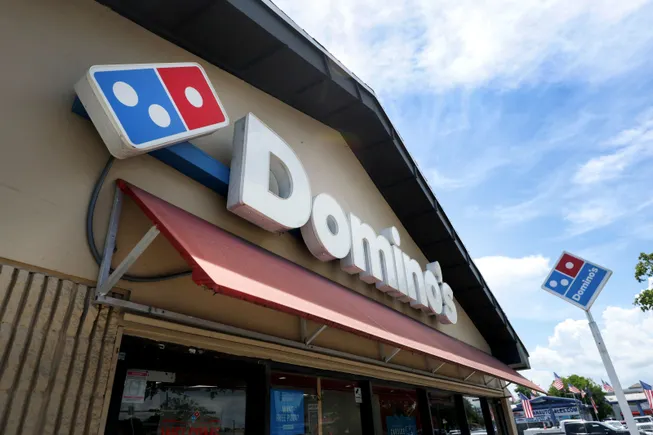
Executive Summary: A New Era for Domino’s
Domino’s Pizza is at a critical inflection point. As the quick-service restaurant (QSR) landscape undergoes a period of significant volatility, the world’s leading pizza delivery chain is recalibrating its operational strategy. Newly appointed CEO Joe Jordan is inheriting a brand that, while remaining the undisputed heavyweight in the pizza segment, faces mounting pressure on franchisee profitability and slowing sales momentum.
The core challenge for the incoming leadership is clear: stabilize the bottom line for franchise operators while simultaneously reigniting the top-line growth that has defined the brand’s success for years. Through a mix of aggressive marketing, menu innovation, and a return to the "franchisee-first" philosophy, Domino’s is attempting to differentiate itself from competitors like Papa Johns and Pizza Hut, both of which are grappling with store closures and sustained sales declines.
Chronology of Recent Performance
The trajectory of Domino’s performance over the last several quarters reflects the broader macroeconomic pressures facing the consumer base.
- Q2 2024: Domino’s reported a modest same-store sales growth of 0.1%, a figure that underscored the difficulty of sustaining high-growth numbers in a price-sensitive market.
- Summer 2024: In an effort to capture market share and diversify its appeal, the company launched its "Domino" rectangular pizza. Designed to accommodate group settings and individual preferences, the product was positioned to bridge the gap between traditional delivery and the evolving demands of aggregator platforms.
- Q3 2024: The company saw a slight uptick in same-store sales compared to the previous quarter. This period also saw the deployment of the "Best Deal Ever" promotion, which bundled premium offerings like Parmesan Stuffed Crust to incentivize customer trial and long-term retention.
- Late 2024: The leadership transition was formalized, with Joe Jordan stepping into the CEO role. This move signaled a strategic pivot toward operational execution and a renewed focus on franchisee economics.
Supporting Data: The QSR Pizza Landscape
The broader QSR pizza sector is currently defined by a sharp divide between the industry leader and its primary competitors. While Domino’s has maintained positive, albeit slow, growth, the rest of the category is in a state of retrenchment.
Comparative Market Performance
- Papa Johns: The brand has faced significant headwinds, characterized by a steep decline in same-store sales—the worst in its recent history. This has led to the shuttering of hundreds of locations and a reduction in its total workforce by approximately 7%.
- Pizza Hut: Following a period of strategic review, Yum! Brands finalized the sale of Pizza Hut to a private equity firm in late 2024. The brand has been plagued by ongoing store closures, with plans to shutter over 250 additional units by 2026.
- Domino’s Resilience: Despite the environment, Domino’s maintains "best-in-class" franchisee economics. While year-on-year absolute dollar profitability is under pressure, the brand’s ability to retain customers—even as others struggle—highlights its superior supply chain and digital infrastructure.
Official Responses and Strategic Vision
The transition to Joe Jordan as CEO is viewed by analysts as a "steady hand" approach to leadership. Jordan has emphasized that the goal is to shift from sporadic high-performance milestones to "everyday performance."
The "Franchisee-First" Mandate
"My job now is to turn that around, get back to profit growth along with the order count growth, continue to expand our lead and I believe push us to compete even more broadly outside of just QSR pizza," Jordan stated during a recent investor briefing.
Jordan’s philosophy is rooted in the belief that when franchisees are healthy, the brand thrives. By focusing on stabilizing the year-on-year absolute dollar profit, the company intends to build a foundation that supports future investment in technology and store upgrades.
Leveraging Innovation and Marketing
The launch of the rectangular pizza was not merely a menu experiment; it was a data-driven response to consumer behavior on third-party aggregator platforms. Jordan noted that these platforms often highlight the need for individualized, high-customization orders. By offering a product that balances group consumption with individual choice, Domino’s has created a "compelling reason" for consumers to choose the brand over competitors.
Furthermore, the "Best Deal Ever" promotion serves as a blueprint for future marketing. By bundling premium items with core value propositions, the company effectively increases the "ticket" or average order size. Internal data suggests that customers who engage with these promotions demonstrate higher frequency of return, creating a long-term value loop that benefits the entire system.
Implications: The Path Forward
The implications of this strategy are significant for investors, franchisees, and the competitive landscape.
1. Navigating Consumer Price Sensitivity
Consumers remain under significant financial pressure. Domino’s acknowledgment of this reality is the first step in maintaining its market share. The brand’s strategy of "value leadership"—offering quality at a price point that feels accessible—is its primary defense against inflation-weary diners. If Domino’s can continue to offer high-value deals without eroding its margins, it will likely continue to outpace the rest of the category.
2. The Shift Beyond QSR
Jordan’s comment about competing "more broadly outside of just QSR pizza" suggests that Domino’s is looking to capture share from casual dining and fast-casual segments. By utilizing its superior delivery infrastructure, Domino’s is essentially competing on convenience and speed, not just taste. This "logistics-first" approach allows the company to act as a tech-enabled delivery service rather than just a pizza shop.
3. Consolidation of the Market
With Papa Johns and Pizza Hut closing hundreds of stores, a vacuum is being created in various markets. Domino’s is positioned to absorb this market share. As these legacy competitors retreat, the "best-in-class" franchisee economics of Domino’s will likely become a beacon for multi-unit operators looking to relocate capital from failing chains into the Domino’s system.
4. Operational Execution as a Moat
The shift toward "turning our best performance into our everyday performance" indicates that Domino’s is looking to optimize its internal processes. This includes everything from prep times and delivery routing to the efficiency of its supply chain. In an environment where margins are slim, operational excellence acts as a competitive moat that rivals cannot easily replicate.
Conclusion
Domino’s is entering a phase of tactical consolidation. While the era of hyper-growth experienced in 2025 has leveled off, the brand’s structural advantages remain intact. By focusing on the health of its franchise partners and doubling down on digital-first menu innovation, the company is positioning itself to weather the current macroeconomic storm.
As Joe Jordan steers the company, the industry will be watching to see if Domino’s can successfully transition from a period of "tough environment" management to a new cycle of sustainable profit expansion. For now, the company remains the standard-bearer for the QSR pizza industry, proving that even in a difficult economy, a commitment to consistent execution, value, and customer frequency is the most effective roadmap to success.


 Evan Lee Salim
 Azzam Bilal Chamdy
