

 Dwi Wanna
 Nana Wu
 Muslim
 Reynand Wu
 Ammar Sabilarrohman
 Suro Senen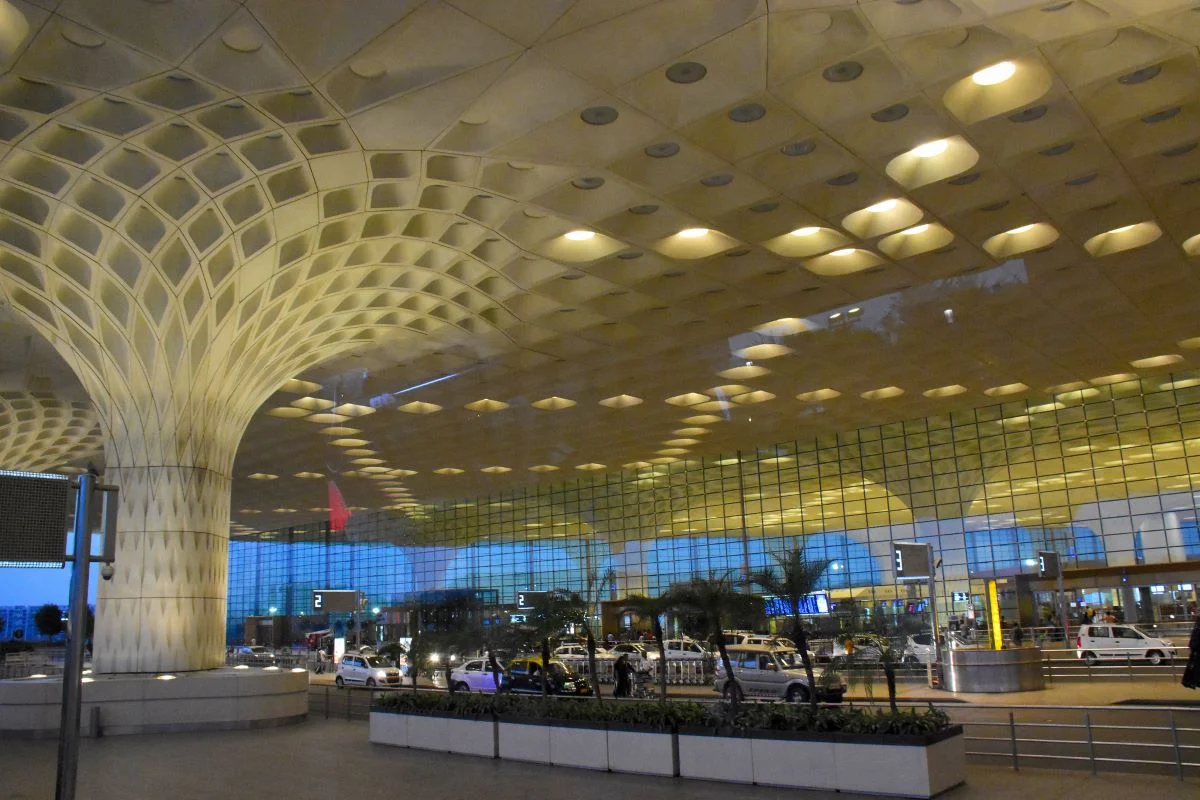
The aviation landscape in India’s financial capital has seen a significant reprieve. Adani Airport Holdings Ltd (AAHL), the operator of Chhatrapati Shivaji Maharaj International Airport (CSMIA), has officially confirmed that international flight operations will remain stationed at the existing Terminal 2 (T2) throughout the upcoming winter schedule. This decision effectively shelves, at least temporarily, the controversial proposal to relocate a portion of international services to the nascent Navi Mumbai International Airport (NMIA) or reconfigure T2 space to accommodate domestic traffic displaced by ongoing infrastructure projects.
The decision follows a high-stakes consultation between AAHL leadership and the Airline Operators Committee (AOC) of Mumbai, signaling a strategic pivot aimed at maintaining operational stability during one of the busiest travel periods in the Indian aviation calendar.
The Core Conflict: Infrastructure Versus Operational Continuity
At the heart of the dispute was a logistical tightrope. AAHL has been aggressively pursuing the modernization of Terminal 1 (T1), the legacy hub for domestic traffic at CSMIA. As construction intensifies, the operator required additional physical space to accommodate the displaced domestic passengers and airline offices.
The initial proposal—which sent ripples of concern through the international airline community—was to shift a cluster of international flights from T2 to either the newly inaugurated Navi Mumbai facility or to reallocate T2’s capacity. International carriers, however, voiced strong opposition. Airlines argued that such a mid-season transition would trigger massive operational disruptions, compromise passenger connectivity, and force expensive logistical overhauls for ground handling and crew scheduling.
The Meeting of Minds
The breakthrough occurred this past Tuesday. Jeet Adani, Director of Adani Airport Holdings, and CEO Arun Bansal met with members of the AOC to deliberate on the airport’s capacity management. According to an official spokesperson for Mumbai International Airport, the management recognized the "operational sensitivities" of the carriers. The result was a formal commitment to maintain the status quo until the commencement of the summer schedule in March 2027.
Chronology of the Mumbai Airport Evolution
To understand the weight of this decision, one must look at the timeline of Mumbai’s aviation infrastructure development:
- 2014: The inauguration of the iconic Terminal 2 at CSMIA, a move that consolidated most international and some domestic operations under one roof, widely regarded as a masterpiece of terminal design.
- 2019: The Adani Group moves to acquire a controlling stake in Mumbai International Airport Ltd (MIAL) from the GVK Group, signaling a new era of private management.
- 2023-2024: Intensive renovation work begins on Terminal 1 to modernize check-in areas, security checkpoints, and baggage handling systems.
- Early 2024: Reports emerge of AAHL seeking to optimize T2 space, sparking rumors of forced international flight relocations.
- October 2024: The formal meeting between AAHL leadership and the AOC results in the deferral of the shift, ensuring that the winter schedule remains untouched for international carriers.
Supporting Data: Why Stability Matters
The aviation sector in India is currently undergoing an unprecedented boom. Mumbai airport remains the second busiest in the country, handling millions of passengers annually. The following data points highlight why any sudden change in terminal allocation is fraught with risk:
1. Passenger Throughput
CSMIA consistently handles a significant percentage of India’s international passenger traffic. Any disruption in T2—the primary gateway for long-haul international flights—would have a cascading effect on global airline networks, particularly those relying on Mumbai as a transit hub for connecting flights across the Middle East, Europe, and Southeast Asia.
2. Operational Costs for Carriers
For international airlines, moving operations requires renegotiating contracts with ground handling agents, updating IT systems, and reconfiguring crew rest facilities. A study by the AOC suggested that an abrupt shift would result in a "significant escalation of operating costs" that would likely be passed on to the consumer in the form of higher airfares.
3. The "Navi Mumbai" Factor
While Navi Mumbai International Airport is designed to eventually absorb a massive portion of the region’s air traffic, it is currently in its nascent stage of operational readiness. Transitioning international flights to an untested facility during a peak winter season was deemed a high-risk gamble by industry analysts.
Official Responses and Stakeholder Perspectives
The industry reaction to the announcement has been one of cautious optimism.
The Airline Operators Committee (AOC):
Representatives from the AOC expressed relief following the Tuesday meeting. "The operator has listened to our concerns regarding the complexity of terminal transitions," one senior airline executive noted. "By pushing the shift to 2027, they have given us the necessary breathing room to plan our fleet deployment and schedules with certainty."
Adani Airport Holdings:
In their statement, AAHL emphasized their commitment to a "seamless passenger experience." The leadership acknowledged that while infrastructure modernization is a non-negotiable imperative for a growing city like Mumbai, the transition must be synchronized with the operational realities of the airlines. "We are working closely with all stakeholders to ensure that the development of Mumbai’s aviation ecosystem continues without compromising the quality of service today," a spokesperson stated.
Industry Analysts:
Aviation consultant Ankur Sharma noted that this decision reflects a shift in how private airport operators interact with carriers. "In the past, these decisions were often top-down. The current climate in Indian aviation, marked by intense competition and a surge in demand, has forced operators to treat airlines as essential partners rather than mere tenants."
Implications for the Future
The deferral until March 2027 has far-reaching implications for the aviation sector in Maharashtra:
The "Seamless Transition" Strategy
By delaying the shift, AAHL has effectively bought itself time to complete the T1 renovations without the pressure of a T2 reconfiguration. This suggests a phased, rather than a forced, migration strategy for the future. The extra time allows for better coordination between the existing CSMIA and the upcoming Navi Mumbai airport, potentially allowing for a more gradual shift of capacity once the new facility is fully matured.
Enhancing Mumbai’s Global Connectivity
Mumbai is striving to position itself as a global transit hub, competing with the likes of Dubai, Singapore, and Doha. For this to materialize, consistency is key. The decision to keep international flights at T2 ensures that the airport remains "user-friendly" for international passengers, preventing the confusion that often follows terminal changes.
Infrastructure Development
The construction at T1 is expected to yield a more efficient terminal with increased capacity. The two-year window granted by the agreement will allow AAHL to finish these works and potentially optimize its internal processes, making the eventual shift in 2027 more palatable for carriers. It also serves as a litmus test for the relationship between the Adani Group and the airline community, setting a precedent for how future disputes regarding airport development might be resolved.
Conclusion
The decision to maintain the winter schedule as-is for international carriers at Mumbai’s T2 is a pragmatic resolution to a complex infrastructure challenge. It underscores the vital balance between the necessity of modernization and the requirement for operational stability. For the millions of passengers passing through Mumbai, the status quo means fewer delays, reliable connections, and a predictable travel experience through 2027. For the aviation industry, it represents a win for collaborative governance, proving that when operators and carriers engage in transparent dialogue, the broader travel ecosystem stands to benefit.
As the industry looks toward the March 2027 milestone, all eyes will be on the progress of the Navi Mumbai International Airport and the completion of the Terminal 1 overhaul. If the current trajectory continues, the shift in 2027 might not be viewed as a point of contention, but as a seamless transition into a new, expanded era of aviation for the Mumbai Metropolitan Region.


 Pevita Pearce
 Azzam Bilal Chamdy
