
 Dwi Wanna
 Nana Wu
 Muslim
 Reynand Wu
 Ammar Sabilarrohman
 Raul Delapena Setiawan
The food and beverage manufacturing landscape is undergoing a profound structural shift. As the industry moves past the unprecedented demand surge triggered by the COVID-19 pandemic, a new, more stable baseline has emerged. According to the newly released 2026 Processing State of the Industry Report—a landmark collaboration between the Food Production Solutions Association (FPSA) and PMMI, the Association for Packaging and Processing Technologies—the market is characterized by steady, calculated growth driven by automation, sanitation mandates, and the urgent need to overcome labor shortages.
This report serves as a critical compass for food manufacturers, original equipment manufacturers (OEMs), and private equity stakeholders, providing a roadmap for capital investment in an era of rapid technological change and evolving consumer expectations.
The Genesis of a Strategic Collaboration
For years, the FPSA and PMMI operated on parallel tracks, each publishing industry reports that served their respective memberships. However, the realization that both associations were chasing the same fundamental truths—market size, growth opportunities, and risk mitigation—led to a strategic merger of research efforts.
FPSA President and CEO Chris Lyons describes the collaboration as a natural evolution. "There is a good deal of overlap in our memberships, and they both want the same thing: some headlights into how prices are moving, where to find growth opportunities, and what are the big risks they have to factor into planning," Lyons notes. By combining the data-gathering power of both organizations, the 2026 Processing State of the Industry Report provides a comprehensive view of the U.S. processing machinery market, establishing a baseline that is as much a benchmarking tool as it is a market forecast.
Market Chronology: From Pandemic Peak to Steady Expansion
The trajectory of the food equipment market since 2020 has been volatile, marked by a massive post-COVID spike followed by a transition to current market stabilization.
- 2020–2022 (The Surge): The pandemic created an immediate, desperate need for expanded production capacity and automated safety measures, leading to a period of rapid, somewhat frantic capital expenditure.
- 2023–2024 (The Adjustment): As supply chains began to normalize, the industry entered a phase of recalibration. Manufacturers began prioritizing efficiency over sheer output volume.
- 2025–2026 (The Steady State): The market has settled into a phase of "modest growth." The report pegs 2025 U.S. food and beverage processing machinery shipments at $6.2 billion.
- The Forecast (2027 and beyond): Analysts project growth at approximately 3.2% year-over-year, with the market reaching an estimated $6.7 billion by 2027.
"We’re past the surge, but the baseline remains strong and continues to grow," says Lyons. "The U.S. continues to be the biggest market for food equipment, and we are seeing significant international interest from firms looking to establish a domestic footprint to tap into this stability."
Supporting Data: Where the Dollars are Flowing
The report breaks down market share and growth potential across specific sectors and machinery categories. As of 2025, the market is dominated by three primary verticals:
- Meat and Poultry: 29.2% market share.
- Prepared Foods: 14% market share.
- Dairy: 12.4% market share.
While meat and poultry maintain the largest share, the report highlights that significant growth is occurring in the prepared foods and dairy sectors. This is particularly impactful because these sectors are already operating on such a large base, meaning a modest percentage increase represents a substantial infusion of capital into equipment upgrades.
Key Growth Categories
By equipment type, the report identifies the fastest-growing segments between 2024 and 2030:
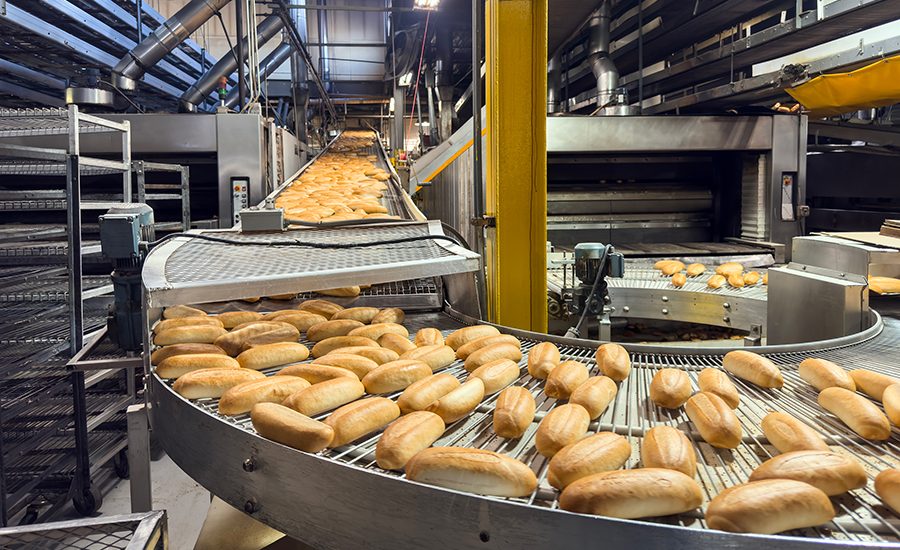
- Automation and Robotics: Driven by the need to operate with fewer human touchpoints.
- Advanced Inspection and Vision Systems: Critical for quality assurance and brand protection.
- Hygienic Design Processing Equipment: Essential for meeting stringent sanitation requirements and avoiding costly recalls.
Official Responses: Insights from Industry Leadership
When asked what he hopes stakeholders gain from this research, Chris Lyons emphasizes its utility as a decision-support tool. "We hope food and beverage manufacturers use this research as a way to prioritize and benchmark their own capital plans," Lyons explains. "For OEMs, the goal is to provide market clarity—aligning product roadmaps with high-growth end markets and competitive improvements in features driven by labor, sanitation, and data requirements."
The report also addresses the persistent disconnect between facility construction and equipment demand. Currently, equipment demand is outpacing greenfield construction. "Facility construction lags broader order activity," says Lyons. "This suggests a near-term caution. Businesses are dealing with tariffs, inflationary pressure, and skill shortages, so spending is heavily focused on brownfield upgrades, line expansions, and targeted modernization rather than massive new builds."
Implications: The Structural Drivers of Change
The most significant takeaway from the 2026 report is that investment is no longer driven by short-term cycles, but by "structural realities."
1. The Workforce Constraint
The labor shortage is the single greatest influence on machine design. Manufacturers can no longer assume a deep pool of skilled labor to maintain or reconfigure lines. Consequently, the demand for "intuitive controls" and equipment that requires less specialized internal engineering oversight has reached an all-time high. OEMs are now under pressure to provide not just hardware, but technical support solutions to help processors maximize uptime.
2. Sanitation and Risk Mitigation
In the wake of high-profile recalls, food safety has become an existential risk to brand equity. The complexity of modern ingredient formulations creates new sanitation challenges. The industry is moving toward equipment that prioritizes "hygienic design" and "repeatable sanitation workflows." As Lyons notes, companies are moving away from treating sanitation as an add-on; it is now a primary design requirement.
3. Health and Wellness Shifts
Consumer demand for simplified ingredients and higher protein density is forcing manufacturers to change their product mixes. This requires greater flexibility in process design. Equipment must now be versatile enough to handle diverse inputs and quality expectations, often requiring mid-cycle upgrades to existing machinery.
Future Outlook: A Collaborative Path Forward
The 2026 Processing State of the Industry Report is not a static document. To increase its utility, the FPSA and PMMI have launched a companion interactive dashboard. This tool allows users to filter data by machine type, subcategory, and industry, enabling them to perform customized queries that fit their specific operational needs.
Looking ahead, the collaboration between the two associations may deepen. There is significant potential for synergy between the PMMI’s established training programs and the FPSA’s Food Industry Technician (FIT) program. "There may be a path for continuing education of our FIT grads by partnering with PMMI on some of their training," Lyons suggests.
Ultimately, the report paints a picture of a robust, mature industry. While the days of explosive, pandemic-driven growth are over, the current landscape offers a sustainable path for those who focus on the right drivers: automation, data-driven inspection, and hygienic excellence. By focusing on these structural necessities, the food and beverage industry is positioning itself for a steady, profitable, and secure future.


 Laily UPN
 Pevita Pearce