

 Dwi Wanna
 Nana Wu
 Muslim
 Reynand Wu
 Ammar Sabilarrohman
 Nana
Nana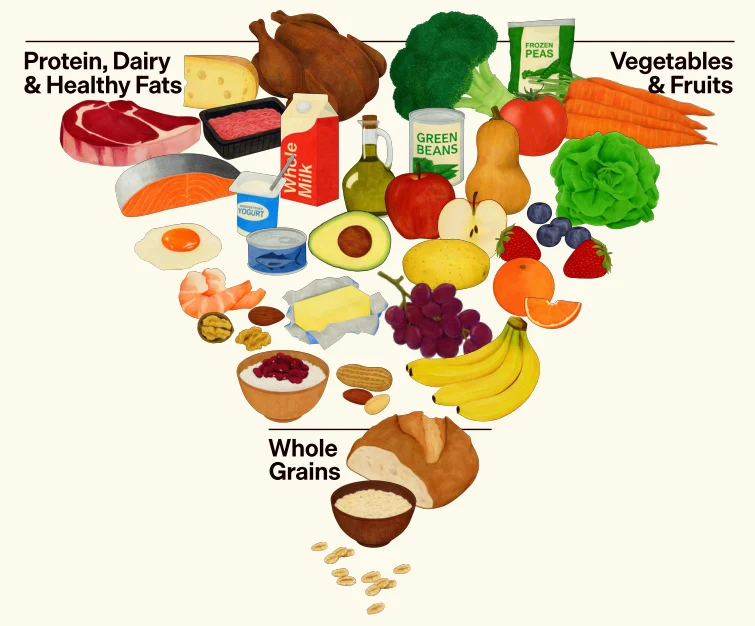
The release of the 2025–2030 Dietary Guidelines for Americans (DGAs) was met with immediate, widespread scrutiny. Billed under the catchy, minimalist tagline "eat real food," this latest iteration from the U.S. Departments of Agriculture (USDA) and Health and Human Services (HHS) promises a simplified, consumer-facing approach to nutrition. However, behind the glossy, simplified graphics and the "real food" branding lies a complex web of contradictory messaging that has left the scientific community—and the public—deeply divided.
While the guidelines make strides in addressing the perils of ultra-processed foods and added sugars, they simultaneously introduce a "new food pyramid" that appears to elevate the consumption of saturated fats—a move that critics argue undermines decades of cardiovascular research.
The Core Facts: A Shift in Tone and Presentation
The 2025–2030 DGAs are, by design, more accessible than their predecessors. The document is shorter, more visual, and supported by an interactive website aimed at the average American consumer. The central theme of "eating real food" is a clear attempt to curb the epidemic of diet-related chronic diseases by steering the public away from the aisles of highly processed, shelf-stable snacks and toward whole-food options.
However, the visual centerpiece of the campaign—a revamped, inverted pyramid—has become a point of contention. Unlike the previous "MyPlate" graphic, this pyramid highlights foods like steak, butter, and full-fat milk at its base. This visual hierarchy sits in stark contrast to the written text of the guidelines, which maintains the longstanding recommendation that saturated fat intake should not exceed 10% of total daily calories. This disconnect between visual marketing and clinical advice is, according to experts, a recipe for public confusion.
A Chronological Look at the Development Process
To understand why the 2025–2030 guidelines feel so unconventional, one must look at the process that birthed them. Typically, the DGAs are the culmination of a rigorous, multi-year process involving an independent Dietary Guidelines Advisory Committee (DGAC) composed of nutrition scientists. This group is responsible for synthesizing the current state of science, free from political or industry influence.
Following two years of exhaustive review, the 2025–2030 Advisory Committee released their Scientific Report. However, in a departure from historical norms, the administration opted to move forward with a supplemental scientific analysis conducted by a group of individuals selected via a federal contracting process, rather than the traditional committee.
This transition from a transparent, academic-led review to a contracted analysis has raised alarm bells. Dr. Deirdre Tobias, a professor who served on the initial 2025–2030 Advisory Committee, has been vocal about the lack of clarity. "There has not been transparency in who wrote the new DGAs," she noted. "The reviews themselves, as well as their overall presentation and integration, deviate significantly from the rigorous process that the HHS developed to ensure the evidence base was replicable, unbiased, and free from non-scientific influences."
Furthermore, investigations by independent media outlets have identified financial ties between some of the supplemental reviewers and the beef and dairy industries—a detail that, while disclosed, has fueled concerns that industry interests may have influenced the prioritization of animal-based proteins in the final graphic.
Supporting Data: The "Saturated Fat Math"
The most significant point of friction remains the role of saturated fats. The guidelines formally advise limiting saturated fat to under 10% of total daily caloric intake. Yet, the inclusion of animal fats in the "base" of the food pyramid creates a practical paradox.
Consider a standard 2,000-calorie diet. The 10% limit equates to approximately 22 grams of saturated fat per day. The guidelines also recommend three servings of dairy daily. If a consumer follows the visual cue to choose full-fat dairy—such as one cup of whole milk (5g), three-quarters cup of full-fat Greek yogurt (6g), and an ounce of cheddar cheese (6g)—they reach 17 grams of saturated fat before the day has even truly begun.
If that individual then cooks their dinner using a tablespoon of butter (7g) or beef tallow (6g), they have immediately exceeded the recommended daily limit of saturated fat. This does not even account for the saturated fat naturally occurring in the proteins they might consume.
Dr. Frank Hu, chair of the Department of Nutrition at the Harvard T.H. Chan School of Public Health, warns that this "mixed messaging" is not merely academic. "The mixed messages surrounding saturated-fat-rich foods such as red meat, butter, and beef tallow may lead to confusion and potentially higher intake of saturated fat and increased LDL cholesterol and cardiovascular risk," he says.
Official Responses and Scientific Criticism
The response from the nutritional science community has been one of cautious critique. While experts like Dr. Hu applaud the explicit call-out of "highly processed" foods—a first for the DGAs—the lack of precision regarding protein quality and fat sources is viewed as a major oversight.
The guidelines take a strict, commendable stance on added sugars, suggesting that no amount is considered part of a healthy diet, and extending the recommendation to avoid added sugar in childhood from age 2 to age 10. Yet, this clarity is not mirrored in the protein recommendations. The new DGAs suggest an intake of 1.2 to 1.6 grams of protein per kilogram of body weight—an increase of 50–100% over previous minimums. While some individuals may benefit from higher protein, the guidelines fail to distinguish between the health implications of plant-based proteins versus high-saturated-fat animal proteins.
Implications: What This Means for the Consumer
The implications of these guidelines are far-reaching. As federal policy, the DGAs dictate the composition of school lunches, hospital meals, and nutrition assistance programs. When these guidelines are perceived as "confusing" or "industry-influenced," the downstream effects impact the health of millions who rely on these programs for their daily nutrition.
Furthermore, the omission of environmental and socioeconomic factors remains a glaring gap. The production of meat and dairy has a significantly higher environmental footprint than plant-based staples, and ignoring these realities prevents the government from offering a truly holistic view of sustainable health.
For the average American, the message is effectively fractured. On one hand, the government is telling you to cut out the refined sugar and the ultra-processed snacks. On the other hand, the visual guide suggests that a diet heavy in steak and butter is the foundation of health.
Moving Forward
History suggests that Americans rarely follow the Dietary Guidelines to the letter. However, the 2025–2030 edition serves as a reminder of the power of visual communication. If the "New Food Pyramid" becomes the primary way that people consume the guidelines, we may see a shift in public eating habits that is at odds with the written clinical advice.
For those navigating these recommendations, experts suggest looking past the simplified graphics. The Healthy Eating Plate and Healthy Eating Pyramid, developed by institutions like the Harvard T.H. Chan School of Public Health, remain the gold standard for those seeking science-backed, transparent, and consistent nutritional advice.
In an era where "real food" is the buzzword, the ability to distinguish between marketing and sound nutritional science has never been more essential. Whether this iteration of the DGAs will lead to a healthier nation or simply deepen the confusion remains to be seen, but for now, the advice remains the same: choose whole, fiber-rich grains, prioritize plant-based fats over animal fats, and consult with a registered dietitian to navigate the nuances of your own nutritional needs.


 Nila Kartika Wati
 Iffa Jayyana