 Dwi Wanna
 Nana Wu
 Muslim
 Reynand Wu
 Ammar Sabilarrohman
 Lina Irawan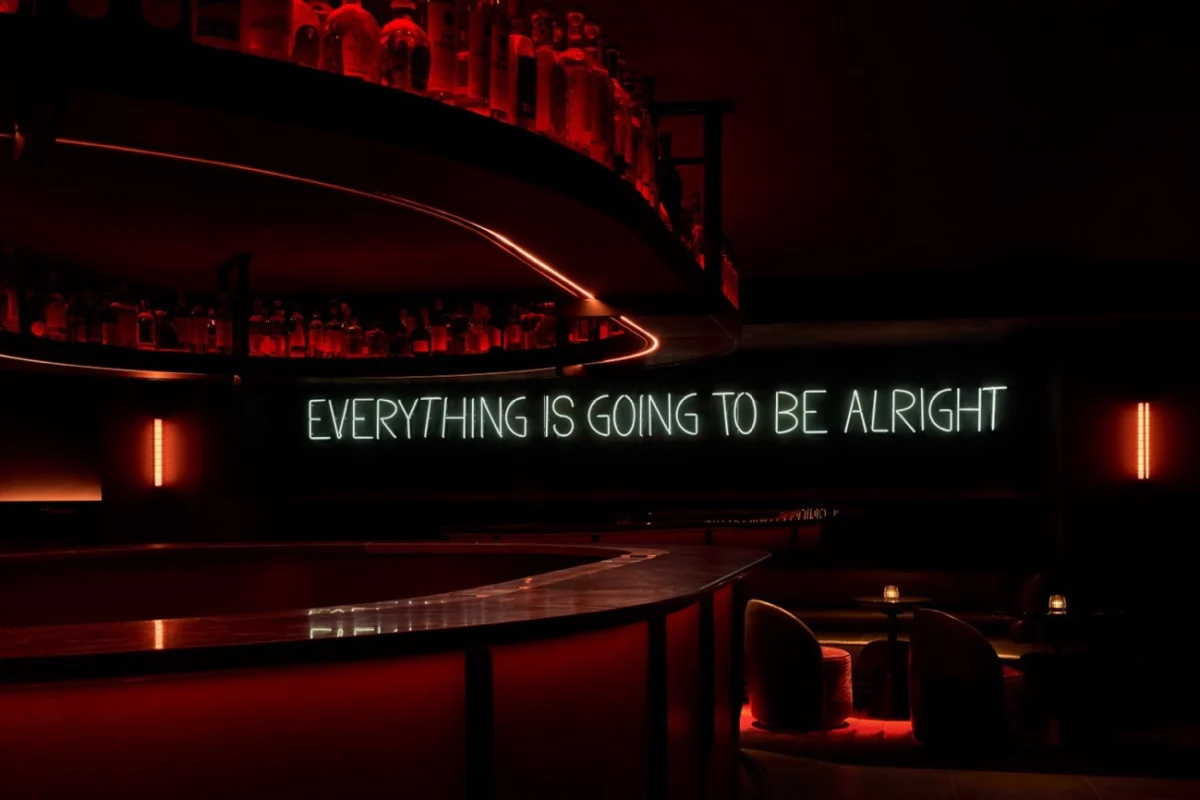
The landscape of Midtown Manhattan has long been defined by the silhouette of 550 Madison Avenue. Once the corporate fortress of AT&T and later the headquarters of Sony, this postmodern masterwork by Philip Johnson and John Burgee has undergone a profound transformation. Today, the building marks the culmination of a multi-year effort to pivot from an exclusive office tower into a porous, vibrant civic hub. At the heart of this evolution is the Rockwell Group, which has unveiled the final stage of the tower’s refurbishment: a sophisticated triad of dining destinations that bridge the gap between high-concept architecture and the bustling public life of New York City.
The Chronology of a Landmark’s Reimagination
The story of 550 Madison’s rebirth began in 2016, when the Olayan Group and Chelsield acquired the iconic 37-storey high-rise. Recognising that the era of the hermetically sealed corporate headquarters was ending, the developers sought to transform the building into a modern, amenity-rich vertical campus.
Rockwell Group has been the creative engine behind this metamorphosis since the project’s inception. Their involvement deepened in 2022 when the firm completed the office tower’s premium amenity floors, a project designed to cultivate a seamless flow between professional productivity and leisure. The recent unveiling of the dining anchor program represents the final, public-facing chapter of this master plan. By integrating high-end hospitality directly into the ground, lower-ground, and mezzanine levels, the developers have succeeded in "opening" the building to the city, effectively turning the base of the tower into an extension of the sidewalk.
Architectural Heritage Meets Modern Hospitality
550 Madison is, by any measure, an architectural legend. Its Chippendale-inspired curved roof pediment and stark, granite-clad exterior made it a lightning rod for debate upon its 1984 completion. The challenge for Rockwell Group was to introduce contemporary hospitality interiors that would not clash with such a strong historical identity.
"From the outset, we wanted the restaurants at 550 Madison to feel like immersive extensions of the city itself," says Brad Zuger, Partner at Rockwell Group. "The design draws on the building’s extraordinary architectural legacy but reinterprets it through a contemporary lens, balancing grandeur with intimacy."
The firm adopted a "purposeful throughline" strategy, preserving the building’s materiality while introducing softer, more organic elements that invite public interaction. The resulting spaces do not merely exist within the building; they converse with it.
Bar Chimera: An Urban Oasis in the Heart of Midtown
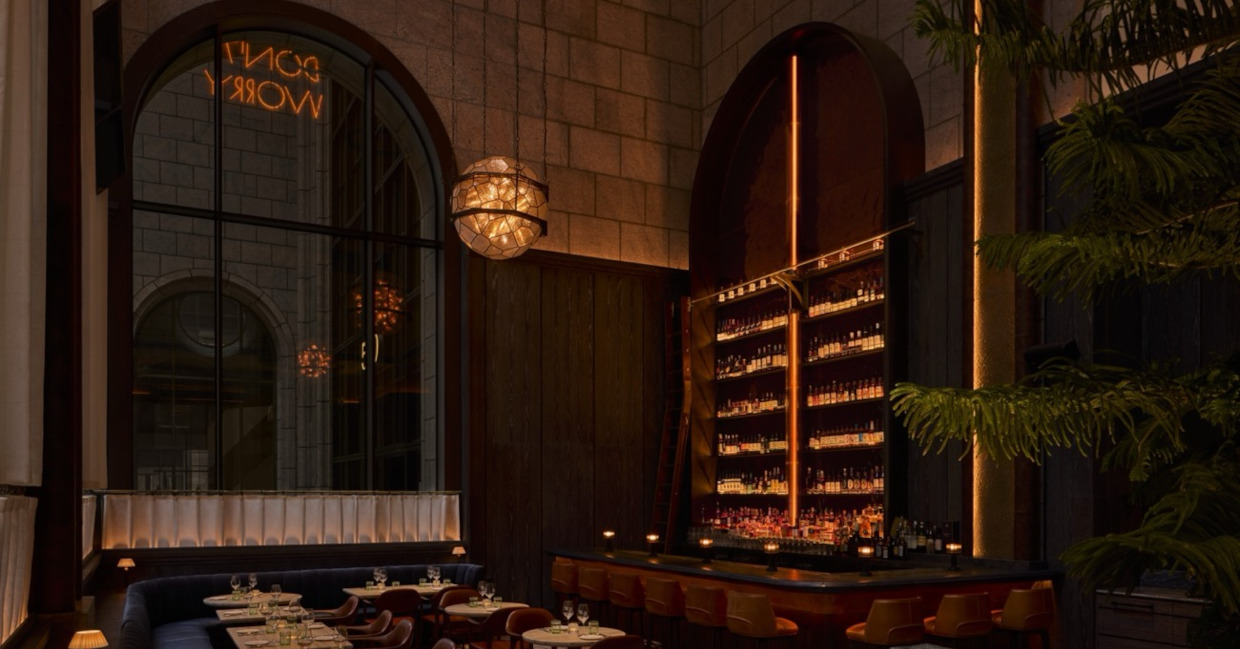
Bar Chimera serves as the primary gateway to the 550 Madison dining experience. Situated at ground level, the bar is conceived as a "Midtown oasis," acting as an indoor-outdoor bridge between the street and the building’s garden.
The design philosophy is rooted in the concept of the plaza as a civic town centre. The scale of the space—a staggering 60 feet in height—is modulated by a 16-foot datum of warm oak and ceramic inlays, which grounds the expansive lobby and creates a sense of human-scale intimacy.
Design Highlights of Bar Chimera:
- The Arches: Two monumental arches, crafted from hammered metallic-toned plaster and distressed leather, frame the mezzanine level. These are not merely decorative; they act as sculptural elements that celebrate the postmodern curves of the original architecture while providing integrated lighting that casts a soft, inviting glow.
- The Lighting: Drawing inspiration from the Theatre District and the delicacy of Tiffany glass, Rockwell Group commissioned large, faceted globe pendants that offer a sophisticated, landmark aesthetic.
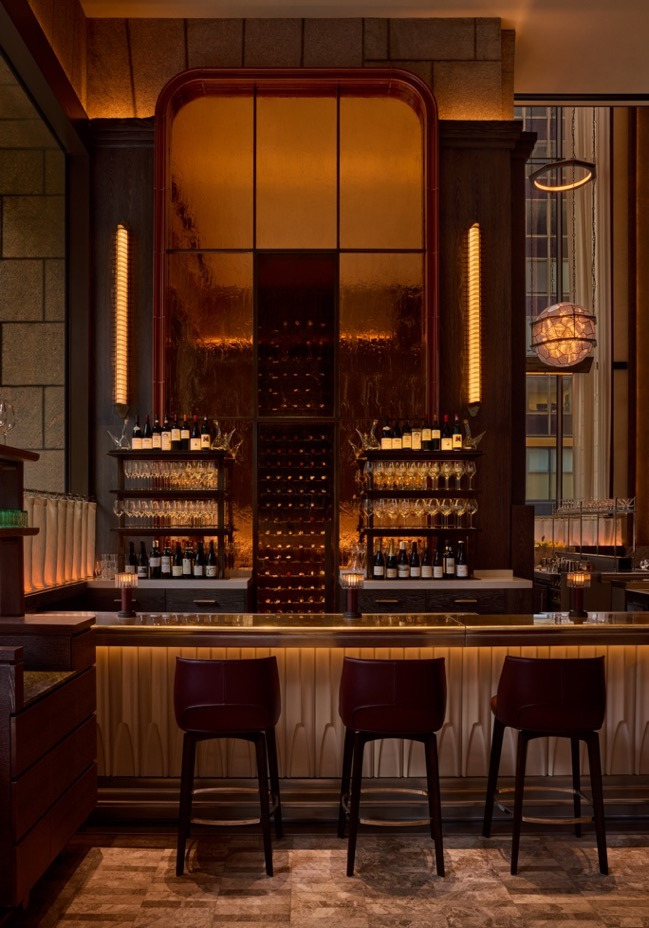
- The Three Bars: The space is anchored by whiskey, wine, and martini bars. While each possesses a distinct personality, they are unified by consistent leather stems on the bar lighting. The whiskey bar, in particular, leans into a "moodier" aesthetic with cast amber glass and a custom leather-detailed ladder, while the wine bar utilizes polished pewter and ivory lava stone.
- Artistic Integration: The north wall features Work No. 3936 — DON’T WORRY (2025), a neon installation by Turner Prize-winner Martin Creed, which adds a layer of contemporary provocateur energy to the space.
COTE 550: A Descent into the Golden City
If Bar Chimera is the bright, airy transition from the street, COTE 550 is the destination—a subterranean, sensory-driven experience that marks the arrival of the Michelin-starred Korean steakhouse in the building.
Accessing COTE 550 requires a transition. Guests descend a dark, translucent resin staircase past another Martin Creed neon installation, Work No. 3935 — COMING GOING (2025), which pulses with rhythmic pink and blue light. The subterranean level is designed as a sequence of thresholds. The initial draw is the dry-ageing room, which glows with a deep, dramatic red, pulling patrons toward the standing-room-only bar area.
The main dining room is a radical departure from the industrial, modern feel of the upper lobby. Inspired by the myth of El Dorado, the room is a dense, lush environment filled with reflective surfaces and golden hues. A gold mesh sculpture by Catellani & Smith hangs overhead, creating a complex interplay of shadow and light that mimics the shimmering mystery of the mythical city.
The dining room features a central turquoise water feature and walls of greenery, offering a meditative, "hidden-garden" quality that feels entirely removed from the concrete jungle of Midtown. It is an exercise in escapism, where the mirrors and ceiling treatments create an illusion of infinite space, rewarding guests for their journey below ground.
Implications for the Manhattan Real Estate Market
The completion of the 550 Madison dining program is a bellwether for the future of commercial real estate in New York City. As the hybrid work model continues to redefine the utility of office buildings, landlords are under increasing pressure to provide "experiential" value.
By curating a mix of high-end dining—including the upcoming third restaurant on the mezzanine—the Olayan Group and Chelsield have shifted the building’s value proposition. It is no longer just a place to house a corporation; it is a lifestyle destination. This approach serves several critical functions:
- Placemaking: By opening up the plaza and the ground floor to the public, 550 Madison avoids the "dead zone" effect that often plagues corporate lobbies after business hours.
- Asset Resilience: High-quality culinary anchors serve as a magnet for premium tenants. A company looking to attract top-tier talent is far more likely to choose an office building that offers a seamless integration of world-class dining and leisure.
- Cultural Longevity: By incorporating significant contemporary art (the Martin Creed installations) and working with artisanal partners like Artemest, the developers have ensured the building remains culturally relevant, protecting the long-term status of the property as a "trophy asset."
Looking Ahead: The Final Piece of the Puzzle
While Bar Chimera and COTE 550 have already begun to draw crowds, the anticipation surrounding the third restaurant on the mezzanine level remains high. Expected to open in the autumn, this final anchor will round out a trio of dining concepts that successfully synthesize the building’s history with the demands of 21st-century urban life.
Rockwell Group’s work at 550 Madison demonstrates that the most successful renovations do not seek to erase the past, but rather to layer the present atop it. By respecting the bold, postmodern lines of Philip Johnson’s original design while injecting a new, tactile, and light-filled hospitality experience, the firm has turned a static landmark into a living, breathing component of the Midtown social fabric.
As New York continues to evolve, 550 Madison stands as a compelling model of how to treat the city’s architectural past: not as a museum piece, but as a foundation upon which to build a more connected, experiential, and culinary-forward future.


 Evan Lee Salim