 Dwi Wanna
 Nana Wu
 Muslim
 Reynand Wu
 Ammar Sabilarrohman
 Nana Muazin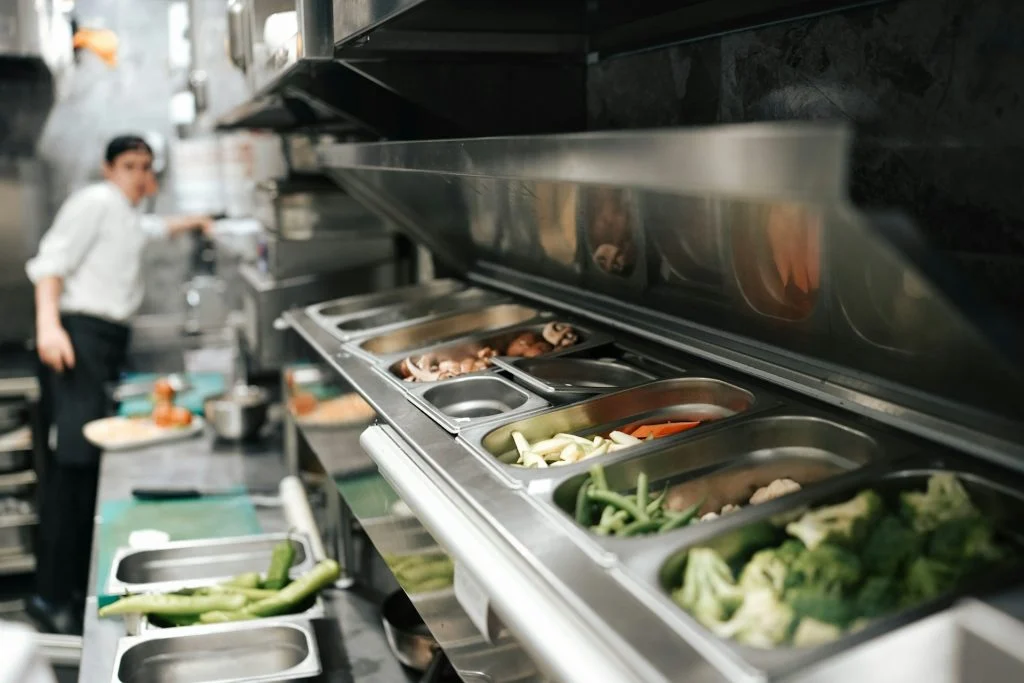
In the high-stakes world of Quick Service Restaurants (QSR), the allure of the "new" often overshadows the power of the "proven." From viral TikTok food trends to high-tech AI drive-thrus, the industry frequently prioritizes novelty to capture fleeting consumer attention. However, as the sector faces tightening margins and evolving guest expectations, a different philosophy is emerging—one that prioritizes operational grit over marketing glitz.
Jackie Secor, the incoming Chief Operating Officer of Taco John’s, refers to this philosophy as "invisible excellence." With a career spanning over a quarter-century in restaurant operations, Secor argues that while innovation might spark an initial visit, it is the seamless, often unnoticed execution of fundamentals that builds long-term brand equity. As Taco John’s prepares for a significant nationwide expansion, this focus on operational discipline is being positioned as the brand’s primary engine for growth.
Main Facts: The Shift from Novelty to Consistency
The modern QSR industry is currently navigating a paradox. While digital transformation has made it easier for brands to reach customers, it has also lowered the threshold for consumer frustration. In an era of instant gratification, the "invisible" elements of a restaurant—kitchen workflows, order accuracy, and speed of service—have transitioned from backend requirements to front-facing competitive advantages.
The Definition of Invisible Excellence
Invisible excellence is the cumulative effect of optimized operational systems that function so smoothly the guest never has to think about them. When a drive-thru order is correct, the food is the proper temperature, and the interaction is polite, the "system" has succeeded. Secor posits that these moments, though rarely celebrated in headlines, are the true drivers of customer lifetime value.
Strategic Leadership at Taco John’s
Taco John’s, a legacy brand known for its "West-Mex" flavors, is doubling down on this operational-first approach. By appointing Jackie Secor as COO, the company is signaling a commitment to data-driven growth. Secor’s mandate includes overseeing restaurant operations, technology integration, and training—three pillars that must be perfectly aligned to maintain brand standards during a national rollout.
Chronology: The Evolution of Operational Strategy
The trajectory of the QSR industry over the last decade reveals why the focus is shifting back to the basics.
- The Innovation Era (2015–2019): This period was defined by the "menu arms race." Brands focused heavily on Limited Time Offerings (LTOs) and "stunt" food items to drive social media engagement. While successful in the short term, this often led to "operational complexity creep," where kitchens struggled to keep up with increasingly complicated recipes.
- The Pivot to Digital (2020–2022): The pandemic forced a rapid shift toward off-premise dining. Delivery and mobile ordering became the primary revenue streams. However, this shift exposed "cracks in the system" for many brands, as existing kitchen layouts were not designed to handle a surge in third-party delivery drivers alongside traditional drive-thru traffic.
- The Era of Execution (2023–Present): Consumers, now facing inflationary pressures, have become more discerning. They are less likely to forgive a $15 "value meal" if the order is wrong or the wait is excessive. This has ushered in the current focus on operational excellence as the ultimate differentiator.
- The Future (June 2025 and Beyond): With Jackie Secor officially joining the Taco John’s leadership team in June 2025, the brand is entering a phase of intentional scaling. The goal is to ensure that a Taco John’s experience in a new market like Florida or New England is indistinguishable from the experience in its heartland markets.
Supporting Data: The High Cost of Operational Failure
To understand why "invisible excellence" is vital, one must look at the quantitative impact of operational errors in the QSR space. Industry benchmarks suggest that the cost of a lost customer far outweighs the cost of the initial marketing spend used to acquire them.
The "One-Strike" Rule
Recent consumer sentiment surveys indicate that nearly 60% of QSR diners are unlikely to return to a specific location after a single negative experience involving order accuracy or excessive wait times. In a crowded market, the "switching cost" for a consumer is zero; they can simply drive to the next block.
Speed as a Revenue Driver
Data from QSR Magazine’s annual Drive-Thru Studies shows a direct correlation between Speed of Service (SOS) and total unit volume. For every 10-second reduction in average drive-thru times, brands often see a measurable uptick in overall guest satisfaction scores. However, Secor notes that speed without accuracy is a "false economy." An incorrect order delivered quickly still results in a "failed visit" and potential negative reviews that damage brand reputation.
The Scalability Gap
For growing brands, the "fragmentation risk" is high. Without standardized KPIs (Key Performance Indicators), a brand’s quality can vary wildly between corporate-owned stores and franchised locations. Secor emphasizes the need for "operational frameworks that act as guardrails," ensuring that the brand’s promise remains consistent regardless of geography.
Official Responses: Insights from Jackie Secor
In outlining her vision for the future of Taco John’s, Secor emphasizes that operational excellence is not a static goal but a proactive discipline.
"In my 25-plus years of operations experience, I’ve learned that the fundamentals in execution are what shape the differentiations," Secor states. "When operators are proactively delivering a consistent experience, rather than reacting to issues, trust is reinforced with every visit."
On the Relationship Between Discipline and Innovation
One of the most significant insights Secor provides is the idea that discipline does not stifle innovation; it enables it. "Strong operational systems actually pave the way for effective innovation," she explains. "When your core experience is reliable and operations are seamless, you have the ability to test new menu items or roll out new technologies without compromising execution."
Secor warns against the "speed to market" trap, where brands launch new products before the kitchen staff is properly trained or the supply chain is ready. Her approach involves a "thoughtful, structured approach" that includes assessing kitchen capacity and piloting changes before a full-scale rollout.
On the Human Element
Despite the rise of automation, Secor remains a staunch advocate for the role of the frontline worker. "Training plays a key role in shaping invisible excellence," she says. "When you deliver a great team member experience, a great guest experience follows." She believes that a cohesive team, confident in their roles, is the final and most important link in the chain of trust.
Implications: The Future of Brand Sustainability
The focus on "invisible excellence" has profound implications for Taco John’s and the broader QSR industry. As the landscape continues to evolve, several key trends are likely to emerge from this operational-centric approach.
1. The Rise of "Quiet" Technology
While some brands focus on flashy consumer-facing tech, the most successful operators will invest in "quiet" technology—tools that help the back-of-house run more efficiently. This includes advanced Kitchen Display Systems (KDS) that optimize order flow, AI-driven inventory management to reduce waste, and automated scheduling tools that ensure the right number of staff are on hand during peak hours.
2. Resilience Against Economic Headwinds
Brands that prioritize operational efficiency are better positioned to handle economic uncertainty. When labor costs rise or supply chain disruptions occur, a brand with tight operational controls can pivot more effectively than one that relies on high-volume, low-margin "gimmicks."
3. Trust as the Ultimate Currency
In a fragmented media environment, brand trust is difficult to build and easy to lose. By delivering a "frictionless" experience every time, brands like Taco John’s aim to move beyond being a mere "food provider" to becoming a reliable part of a customer’s daily or weekly routine.
4. Strategic National Expansion
For Taco John’s, the move toward invisible excellence is the prerequisite for its national ambitions. To compete with larger incumbents, the brand must offer a level of consistency that makes it a "safe bet" for consumers in new territories. By focusing on KPIs for speed, accuracy, and hospitality, the brand creates a repeatable blueprint for success.
Conclusion: Winning the Long Game
The QSR industry is often a marathon disguised as a sprint. While the "loudest" brands may capture the headlines today, the brands that master the "invisible" fundamentals are the ones that survive for decades.
As Jackie Secor prepares to take the helm of operations at Taco John’s in 2025, her philosophy serves as a reminder to the entire industry: Innovation is the engine of growth, but consistency is the fuel. In the end, the most powerful brand message isn’t a billboard or a commercial—it is the simple, quiet satisfaction of a guest who receives exactly what they expected, exactly when they expected it. That is the essence of invisible excellence, and it is the new gold standard for the modern restaurant era.

 Suro Senen
 Pevita Pearce