

 Raul Delapena Setiawan

 Ammar Sabilarrohman
 Lina Irawan
 Suro Senen
 Basiran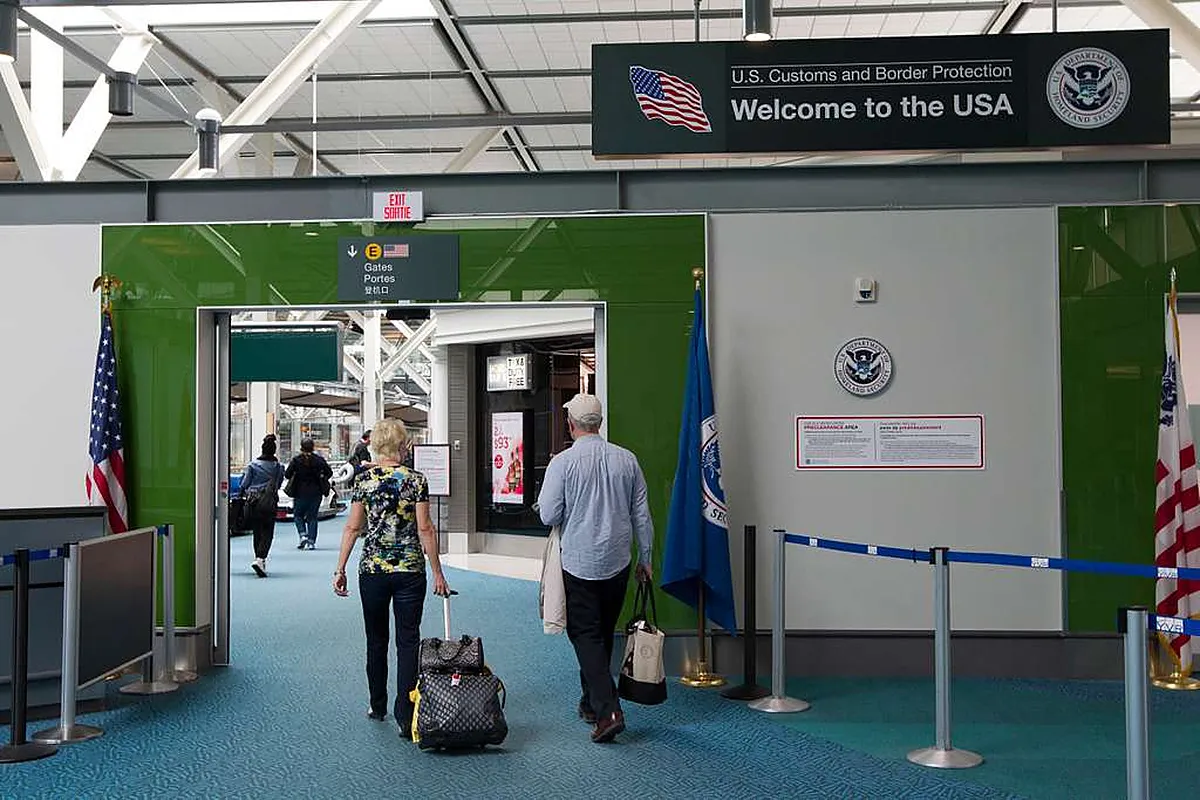
Introduction: A Fragile Resurgence
For years, the border between Canada and the United States has served as one of the world’s most significant conduits for commerce, tourism, and family connection. However, the post-pandemic travel landscape has proven to be a complex terrain of fluctuating recovery. According to the latest data released by Statistics Canada this week, Canadian travelers are steadily returning to the United States—a positive signal for the tourism and hospitality sectors on both sides of the border. Yet, despite six consecutive months of year-over-year growth, the data highlights a sobering reality: the return to the pre-2024 travel volume remains a distant horizon, with significant gaps remaining in both automotive and aerial transit.
The Current State of Play: September’s Statistical Snapshot
The latest figures from Statistics Canada paint a picture of a sector in recovery, albeit one that is moving at a measured pace. In September, Canadian-resident return trips from the United States climbed by 6.8% compared to the same period in the previous year. This growth marks the sixth month in a row of consistent, year-over-year expansion, suggesting a sustained appetite for cross-border movement.
The recovery is bifurcated by mode of transport. Air travel, which has historically been more sensitive to economic shifts and fluctuating fuel surcharges, showed a robust 11.6% increase in September. Meanwhile, the more traditional route—travel by car—saw a more modest, yet still significant, growth of 5.6%.
However, when viewed through the lens of long-term recovery, the numbers become more nuanced. Despite the recent momentum, return trips by car in September remained 31.1% lower than the benchmarks set in September 2024. Similarly, air travel—while surging month-over-month—is still trailing 2024 levels by 18.7%. These figures underscore that while the trajectory is upward, the industry is still navigating a period of profound transition.
Chronology: The Arc of Cross-Border Travel
To understand why the current numbers remain below 2024 levels, one must look at the timeline of the post-2024 economic and social environment.
2024: The High-Water Mark
Throughout 2024, the travel industry saw a "revenge travel" phenomenon that drove numbers to historic peaks. Pent-up demand, combined with relatively stable currency exchange rates and an easing of all remaining pandemic-era health protocols, created a surge in cross-border activity. By the end of 2024, the volume of Canadians visiting the U.S. had effectively neutralized the volatility of the previous years.
Early 2025: The Correction
The transition into 2025 brought new macroeconomic headwinds. Inflationary pressures began to impact discretionary income, and the Canadian dollar faced significant downward pressure against the U.S. greenback. Consequently, the first quarter of 2025 saw a cooling off of travel demand. The "novelty" of unrestricted travel had worn off, replaced by the harsh reality of rising costs for hotels, dining, and fuel.
Mid-2025 to Present: The "Slow Burn" Recovery
By the second quarter of 2025, the market began to stabilize. The six-month growth trend reported by Statistics Canada indicates that the industry has bottomed out and is now in a steady state of climb. This period has been characterized by strategic shifts in traveler behavior, with many Canadians opting for shorter, more budget-conscious trips, which explains the disparity between the raw volume of travelers and the still-lagging overall capacity compared to 2024.
Supporting Data: Dissecting the Trends
The Statistics Canada report provides a granular look at the data, which offers insight into the specific behaviors of the modern traveler.
The Car vs. Air Dichotomy
The 31.1% deficit in car travel is particularly telling. Historically, car travel is the bedrock of Canadian tourism in the U.S., particularly for residents in Ontario and British Columbia visiting border states like New York, Washington, and Michigan. The decline here points to several systemic issues:
- Fuel Costs: High fuel prices continue to make long-distance road trips less attractive for middle-income households.
- Border Friction: While preclearance operations at major airports are efficient, land border crossings have faced staffing challenges, leading to wait times that can deter frequent leisure travelers.
Air Travel Resilience
The 11.6% increase in air travel is a testament to the resilience of the premium traveler segment. Travelers who choose to fly are generally less price-sensitive and are often driven by business requirements or pre-planned vacation packages that were booked months in advance. The growth in this segment suggests that the travel industry’s investment in increased frequency and new routes is beginning to pay dividends.
Official Responses and Industry Sentiment
The Department of Homeland Security (DHS) and various tourism boards have responded to the data with cautious optimism.
"We are seeing a consistent recovery in throughput at our preclearance facilities," noted a spokesperson for the U.S. Customs and Border Protection (CBP). "Our goal remains to facilitate legitimate travel while maintaining the highest levels of security. We are working closely with Canadian airport authorities to ensure that as volumes return to pre-2024 levels, the passenger experience remains fluid."
On the Canadian side, travel industry analysts suggest that the "long road" back to 2024 levels is not necessarily a failure of the sector, but a recalibration. "The travel market of 2024 was fueled by a unique set of circumstances—a post-pandemic burst that was always going to be difficult to sustain," says Dr. Aris Thorne, a senior analyst in tourism economics. "What we are seeing now is a more ‘organic’ growth curve. We aren’t seeing the explosive, unsustainable growth of 2024; we are seeing the steady, predictable growth of a mature market returning to equilibrium."
Implications for the Future
The current trends carry significant implications for both government policy and private enterprise.
For the Travel and Hospitality Industry
Hoteliers and tourism operators in U.S. border states must adjust their strategies. Since total volume is still lagging, marketing efforts should be focused on "value-added" propositions rather than relying solely on volume. Offering extended stay packages or loyalty incentives can help capture a larger share of the returning Canadian demographic.
For Government and Infrastructure
The data suggests that infrastructure investment needs to be prioritized. If the current growth rate of 6-7% continues, land border crossings will face significant strain within the next two years. Governments may need to look at increasing investments in digital border technology—such as biometrics and automated kiosks—to reduce the reliance on manual processing, which is often the bottleneck for road travel.
For the Canadian Traveler
For the average Canadian, the road ahead is one of cost-management. The disparity between the 2024 high and the current recovery levels suggests that Canadians are prioritizing travel, but they are doing so with a closer eye on their wallets. We can expect to see a rise in "micro-vacations"—shorter trips that allow for travel without the significant financial commitment of a two-week excursion.
Conclusion: A New Normal
The report from Statistics Canada is a clear indicator that the cross-border travel relationship between Canada and the United States is resilient. While the 31.1% shortfall in car travel and the 18.7% gap in air travel compared to 2024 might look discouraging at first glance, the trendline is undeniably positive.
Six months of consecutive growth suggests that the "road back" is well-paved. While it may take another 18 to 24 months to reach the absolute heights of 2024, the market is currently in a state of healthy, sustainable expansion. For those in the tourism sector, the message is clear: the Canadian traveler is coming back, but they are more discerning, more cost-conscious, and more strategic than they were in the immediate aftermath of the pandemic. As both nations continue to navigate this recovery, the focus must remain on efficiency, accessibility, and the enduring value of the cross-border bond.


 Laily UPN
 Rifan Muazin
