

 Raul Delapena Setiawan

 Ammar Sabilarrohman
 Lina Irawan
 Suro Senen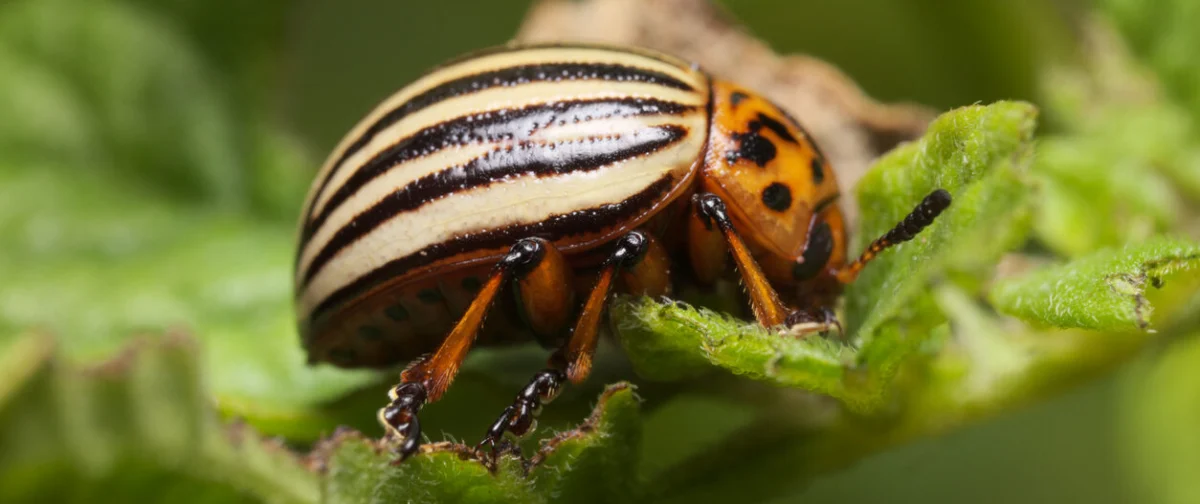
In the high-stakes world of agricultural biotechnology, the quest for a "silver bullet" that protects crops without harming the environment has long been elusive. RNA interference (RNAi) has stood as the most promising frontier in this search, offering the ability to silence specific genes in pests with surgical precision. However, the technology has been plagued by two fundamental hurdles: the inherent fragility of RNA and the difficulty of effective delivery.
Vancouver-based Renaissance Bioscience claims to have solved these systemic issues. By leveraging the natural biological machinery of baker’s yeast, the company has pioneered a "virus-like particle" (VLP) system that promises to transform RNAi from a niche laboratory tool into a scalable, cost-effective, and versatile solution for global agriculture.
The Core Innovation: Hijacking Yeast for Precision Delivery
To understand the magnitude of Renaissance Bioscience’s latest development, one must first look at their foundational technology. The company has historically engineered baker’s yeast to produce double-stranded RNA (dsRNA). When ingested by pests like the Colorado potato beetle, this dsRNA triggers an RNAi response, effectively "turning off" vital genes and leading to the demise of the pest without affecting the plant, the soil, or beneficial insects.
The primary limitation of this first-generation approach was its dependency on "chewing" insects. Because the dsRNA remained protected inside the yeast cell, it required the pest to physically consume the yeast for the payload to be delivered. This restricted the technology’s application to a narrow segment of agricultural pests.
The new VLP platform, currently under a recently-filed provisional patent, represents a massive leap forward. Dr. John Husnik, CEO of Renaissance Bioscience, explains that the company is now repurposing naturally occurring dsRNA viruses found within yeast. By stripping these viruses of their genetic material and substituting it with targeted dsRNA payloads, the team creates "protein nano-carriers." These VLPs, measuring between 40 and 50 nanometers, are significantly smaller than the yeast cells themselves and offer a sophisticated delivery vehicle that transcends the limitations of the previous generation.
Chronology of Development: From Lab Bench to Field Trials
The journey to the VLP breakthrough has been a methodical progression of biological engineering:
- Foundational Research: Renaissance Bioscience spent years perfecting the engineering of Saccharomyces cerevisiae (baker’s yeast) to act as a bio-factory for stable, ambient-temperature-stored dsRNA.
- Initial Field Validation: The company successfully moved its first-generation whole-yeast platform into field trials, targeting the Colorado potato beetle. These trials proved that the yeast-protected RNA remained stable under real-world conditions, a critical victory in the RNAi space.
- Strategic Partnerships: Throughout the development process, the company engaged in non-disclosure agreements (NDAs) with European partners, testing the platform against various insect targets beyond the initial potato beetle focus.
- The VLP Pivot: Recognizing the need for a broader delivery mechanism, the company transitioned its focus toward the VLP system, identifying the ability to utilize the yeast’s internal viral-packaging machinery as the key to scaling production and diversifying applications.
- Present Day: With the filing of the provisional patent for the VLP system, Renaissance Bioscience is now moving toward defining the regulatory and commercial strategy for this second-generation technology.
Supporting Data: Why VLPs Change the Economic Calculus
While the VLP system requires an extra step—breaking open the yeast cells to harvest the nano-carriers—Dr. Husnik argues that the economic benefits far outweigh the processing costs.
"We’ve discovered a new way to package double-stranded RNA inside of yeast, and we can get very high levels during production—more so than our previous system, which was already commercially viable," Husnik told AgFunderNews.
The production efficiency of the VLP platform is a critical differentiator. By concentrating the dsRNA into these protein shells, Renaissance achieves a higher "payload density." This efficiency is vital for the commercial viability of biopesticides, which must compete on price with traditional, often cheaper, chemical pesticides.

Furthermore, the versatility of the VLP platform allows for a "cocktail" approach to pest management. Rather than engineering a single, overly complex strain of yeast to combat multiple pests, Renaissance can produce multiple specialized VLP strains and combine them at the final stage of manufacturing. This modularity allows for bespoke, regionalized pest control solutions that can be adjusted as pest populations evolve or as resistance patterns emerge.
Official Perspectives: The Regulatory and Scientific Landscape
The regulatory pathway for any new biotechnology is rarely a straight line. For Renaissance Bioscience, the VLP platform presents a unique challenge and a significant opportunity.
Discussions with regulators regarding the first-generation whole-yeast platform focused primarily on the safety of the dsRNA active ingredient. The VLP system, however, introduces protein shells into the equation. While this necessitates new regulatory scrutiny, Dr. Husnik remains optimistic. He points to the human medical field, where VLPs are already a well-established and accepted technology.
"Some HPV vaccines use virus-like particles," Husnik notes, emphasizing that the science behind these carriers is well-documented and widely considered safe. Because the VLP shells are derived from harmless, naturally occurring yeast viruses, the company expects that the safety profile will remain robust. However, they are currently in the "early days" of these discussions, acknowledging that they are navigating uncharted territory in the agricultural sector.
Regarding competition, Renaissance is aware of bacterial systems that currently boast higher dsRNA yields. However, they maintain that their yeast-based system offers superior stability and safety. "We’ve been closing the gap through engineering," Husnik says, asserting that the VLP platform may effectively neutralize the production advantages of bacterial competitors while retaining the environmental and safety benefits inherent to yeast.
Implications: A New Era for Sustainable Agriculture?
The shift toward VLP-based RNAi delivery could have profound implications for global food security and environmental sustainability:
- Expansion of Scope: By moving beyond chewing insects, the technology opens the door for effective, precision-based fungicides and herbicides. This could provide a lifeline for farmers struggling with chemical-resistant weeds and fungal pathogens.
- Environmental Safety: Because RNAi is inherently sequence-specific, it targets only the intended pest. This contrasts sharply with broad-spectrum chemical pesticides that often kill beneficial insects, pollinators, and soil micro-biota.
- Stability and Storage: One of the most significant barriers to the adoption of biopesticides in developing nations has been the cold-chain requirement. The ability to store yeast-derived dsRNA at ambient temperatures for long periods ensures that this technology can be deployed in remote or infrastructure-poor regions.
- Regulatory Harmonization: If Renaissance Bioscience successfully navigates the regulatory landscape for their VLP platform, they could establish a framework for the next generation of biopesticides, potentially accelerating the transition away from toxic synthetic chemicals.
Looking Ahead
As Renaissance Bioscience seeks new partners for joint development agreements, the focus is clearly on scaling. The firm is positioning itself not just as a technology developer, but as an essential partner for the agricultural industry’s transition to precision management.
While the "early days" caveat remains, the momentum behind the company’s yeast-based RNAi platform is palpable. By turning baker’s yeast into a sophisticated, nano-scale delivery system, Renaissance Bioscience is not just fighting bugs—they are rewriting the rulebook for how we protect the global food supply. Whether the VLP platform will become the standard for 21st-century pest control remains to be seen, but the industry is watching closely as this Vancouver firm continues to push the boundaries of what is possible in agricultural biotechnology.


 Pevita Pearce