
 Raul Delapena Setiawan

 Ammar Sabilarrohman
 Lina Irawan
 Suro Senen
 Asro
Asro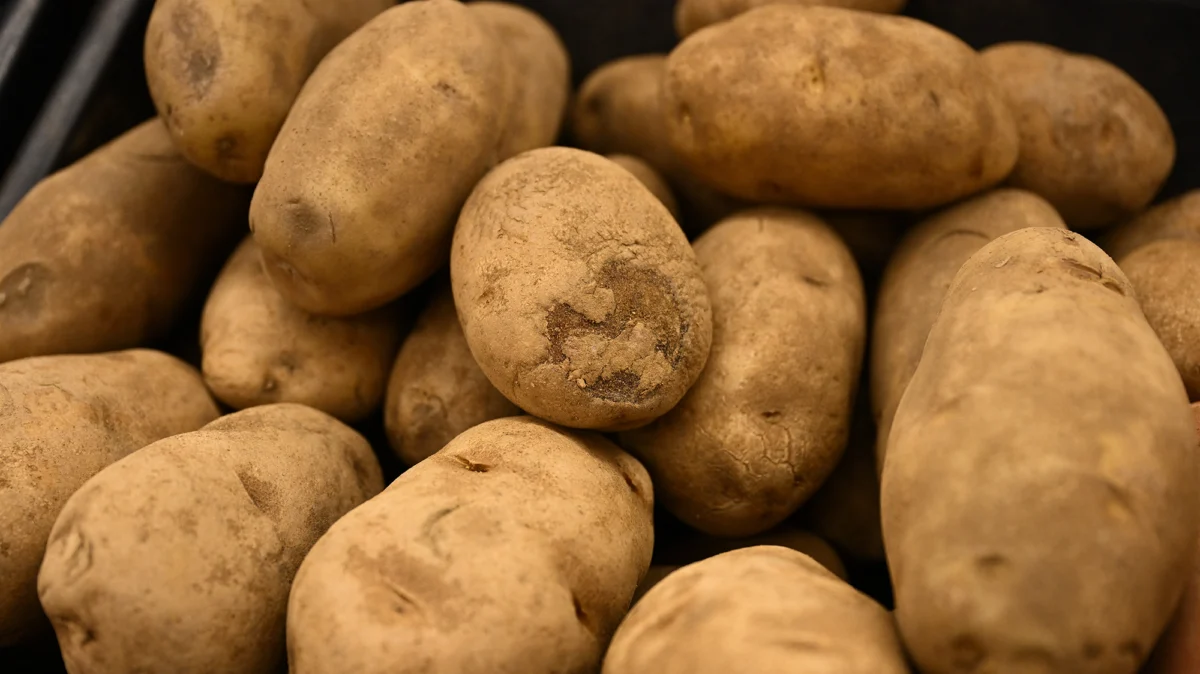
In the increasingly polarized landscape of American energy policy, a peculiar and unfounded narrative has taken hold: the claim that solar energy installations are effectively "poisoning" farmland, rendering it forever unsuitable for growing potatoes. This assertion, which has been championed by certain state lawmakers and industry trade groups, hinges on the unproven theory that solar infrastructure leaches toxic materials into the soil or leaves behind hazardous debris.
Despite a complete lack of empirical evidence and explicit denials from major corporate stakeholders, the myth has gained significant traction, threatening to undermine the economic stability of farmers and derail critical renewable energy projects across the United States.
The Genesis of a Myth: From Local Worry to Viral Misinformation
The narrative began to coalesce roughly a year ago, primarily driven by the Potato Growers of Michigan (PGMI). In a public statement issued in May 2025, the trade group expressed concerns about the long-term impact of solar development on agricultural land. Their core argument rested on the contention that when solar arrays are eventually decommissioned, "small fragments of plastic and metal may remain in the soil."
The group further speculated that because potatoes grow underground, they could potentially "engulf" these foreign objects, creating a contamination hazard that would jeopardize consumer safety and processor standards. While this was framed as a concern for the future, it quickly morphed from a hypothetical risk into a stated "fact" used to oppose solar land leases.
The momentum shifted from trade group caution to political firestorm in January 2026, when Michigan state Representative Cam Cavitt released a 51-second video on Facebook titled "Solar Farm SECRET." In the clip, Cavitt and his colleague, Representative Dave Prestin, explicitly named Frito-Lay—one of the largest potato purchasers in the country—as a company that supposedly refuses to buy produce from land that has hosted solar panels.
"Any field that had solar panels installed on it will never be allowed to grow potatoes for human consumption due to the leaching," Prestin claimed in the video. The clip, which garnered over one million views, served as a catalyst for other lawmakers. Pennsylvania state Senator Cris Dush echoed the sentiment, using the Frito-Lay claim to advocate for aggressive "cash bonds" to ensure the total restoration of soil following solar decommissioning.
Scientific Reality vs. Political Narrative
To investigate the validity of these claims, experts in civil engineering, plant ecology, and agronomy were consulted. The consensus is unequivocal: there is no scientific basis for the assertion that solar installations leave behind harmful residue or cause soil toxicity that would impact tuber development.
Steven Loheide, a professor of civil and environmental engineering at the University of Wisconsin–Madison, noted that he has found no evidence to support the concerns raised by the Michigan trade groups. His research into the intersection of farmland and solar projects suggests the opposite of the fearmongering claims: solar arrays can actually provide significant benefits to the surrounding ecosystem.
"There’s a huge opportunity to get both agricultural benefits and energy production off a single plot of land," Loheide explained. He points to the potential for solar panels to help retain groundwater by reducing evaporation and shielding the soil from extreme heat, effectively creating a micro-climate that can be advantageous for certain crops.
Alan Knapp, a plant ecologist at Colorado State University, reinforced this position. "I’ve never heard of any sort of toxicity issues or any concerns about the quality of the crop being consumed by humans being impacted by the installation of solar panels above," he stated. According to Knapp, the list of fears—ranging from silica shards to chemical leaching—remains entirely unsubstantiated by field studies.
Official Responses and Corporate Clarification
The most damaging aspect of the misinformation campaign has been the direct invocation of Frito-Lay’s procurement policies. By positioning a household-name brand as the enforcer of an anti-solar mandate, proponents of the myth gave it a veneer of corporate credibility.
However, when contacted for comment, PepsiCo—the parent company of Frito-Lay—categorically rejected the claims. A spokesperson for the company clarified that "the company has not issued blanket guidance to growers that fields with solar installations will not be accepted."
While PepsiCo noted that it prefers to focus its renewable energy efforts on land that is not classified as "prime agricultural land" to avoid potential, albeit speculative, impacts on crop yields, it has never issued a ban on potatoes grown on former solar sites. The company’s stance is one of careful land-use management, not a rejection of solar-adjacent agriculture.
Furthermore, state officials have confirmed they have no record of such policies. Lynsey Mukomel, communications director for the Michigan Department of Agriculture and Rural Development, confirmed that her office is unaware of any company, including Frito-Lay, that has established a policy refusing to purchase crops from land that previously hosted solar infrastructure.
The Economic Implications for Farmers
The spread of this misinformation carries tangible, negative consequences for the agricultural community. As energy developers look to meet rising electricity demands, they are increasingly seeking to lease flat, sun-drenched acreage. For many farmers, these leases offer a "financial lifeline."
In a volatile agricultural market, the steady, guaranteed income from a solar lease can be the difference between a farm staying in the family or facing bankruptcy. Scott Laeser, senior working lands adviser for the Rural Climate Partnership, emphasizes that the "speculated risk" being spread by lawmakers creates a chilling effect on these opportunities.
"Raising these claims about solar could prevent farmers from diversifying their income stream and adding a really stable source of income to their operation," Laeser said. By framing solar as a "death knell" for potato farming, opponents are effectively lobbying against the economic autonomy of the very farmers they claim to protect.
The "Agrivoltaics" Future
The irony of the current debate is that it ignores the growing field of "agrivoltaics"—the practice of using land for both solar energy production and agriculture simultaneously.
A four-year study conducted in Italy and published in 2026 provided empirical evidence that agrivoltaic systems can, in fact, support potato production. The shade provided by the panels can mitigate heat stress, and the strategic placement of infrastructure can improve water management. Rather than destroying the soil, these systems represent a synergistic approach to land use that maximizes the productivity of every acre.
Conclusion: A Persistent Challenge
Despite the lack of evidence and the direct refutation by corporate stakeholders and scientists, the potato-solar myth persists. Its survival is part of a larger trend in which misinformation regarding renewable energy—similar to the debunked claims about offshore wind turbines harming whales—is used as a political weapon to stall the transition to clean energy.
As recently as late March 2026, the claim continued to find life on social media, with anti-solar accounts racking up tens of thousands of likes for posts repeating the falsehood that solar-exposed land is "tainted."
The challenge moving forward is not just one of technology or policy, but of communication. As long as speculative fear outweighs scientific consensus, the farmers who stand to gain the most from energy diversification will remain caught in the crossfire of a manufactured crisis. For now, the "potato paradox" serves as a stark reminder of how quickly digital-age myths can take root, even when they are entirely devoid of truth.

 Azzam Bilal Chamdy