
 Raul Delapena Setiawan
 Ammar Sabilarrohman
 Lina Irawan
 Suro Senen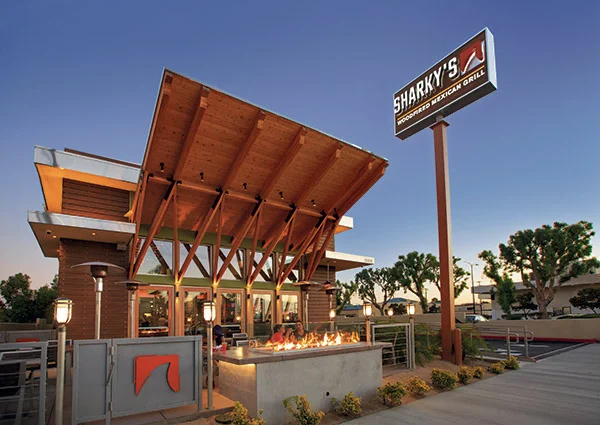
For years, a pervasive myth has crippled the marketing strategies of multi-unit quick-service restaurant (QSR) operators: the belief that meaningful social media ROI requires an astronomical budget. The industry narrative has long suggested that to "move the needle," brands must hemorrhage capital on high-priced celebrity influencers, aggressive post-boosting, and production-heavy paid ad campaigns. For many regional and national operators, this perception has transformed social media from a powerful business tool into a frustrating, "pay-to-play" barrier that feels impossible to win.
However, a new wave of data-driven, organic-first strategies is dismantling this misconception. Industry leaders are proving that the most effective path to store-level revenue growth isn’t found in a massive media spend, but in the disciplined execution of authentic content and community-based influencer partnerships.
The Myth of the "Paid-First" Mandate
The traditional marketing playbook for restaurants has historically prioritized broad awareness—getting as many eyeballs as possible on a brand logo. But for a restaurant, awareness without conversion is a vanity metric. Operators are beginning to realize that the disconnect between "likes" and "sales" is often a result of relying on sterile, corporate-produced advertising that fails to resonate with the modern, algorithm-driven consumer.
At BAM Media Group, a shift in philosophy has yielded a repeatable, highly scalable framework that prioritizes organic engagement as the foundation for all growth. By focusing on platform-native content and trade-based influencer collaborations, brands are discovering that the most effective way to fill seats is to stop acting like an advertiser and start acting like a community member.
Case Study I: Scaling from Zero to Millions in Reach
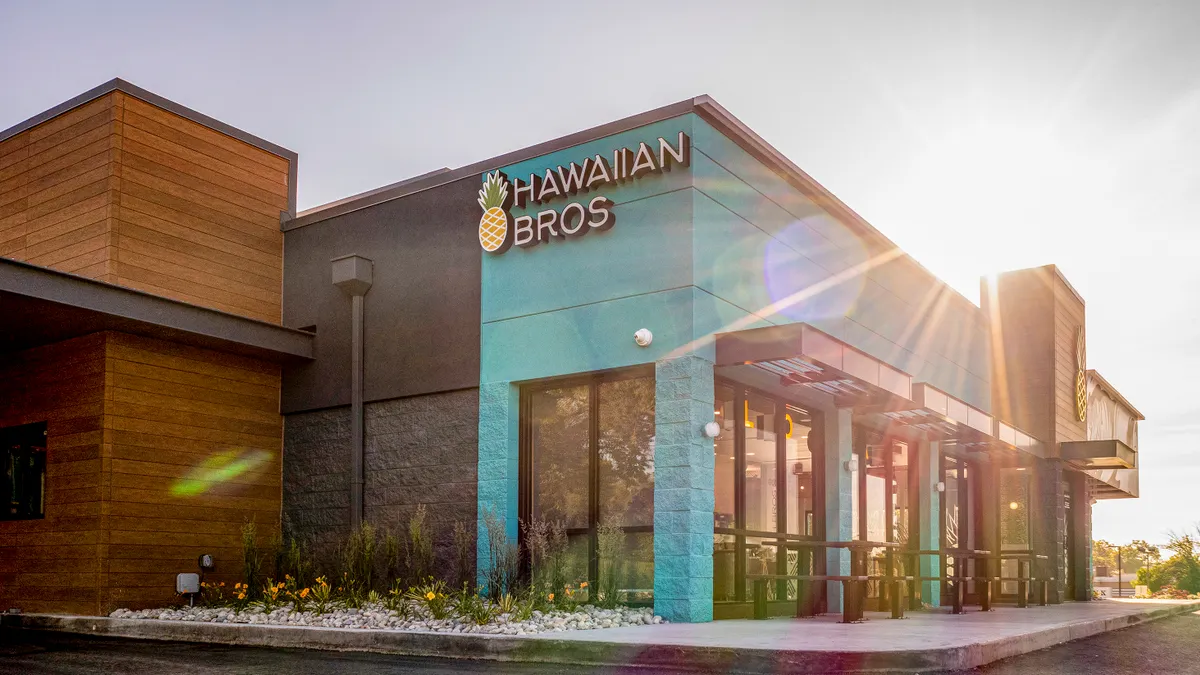
The challenge of building a brand from a blank slate is daunting, especially in the hyper-competitive F&B space. One recent client of BAM Media Group, a food and beverage brand with a footprint spanning five U.S. locations and over 150 international outlets, faced a classic dilemma: they had a robust global presence but virtually no brand recognition or social infrastructure within the United States. They possessed no established influencer network and, crucially, no budget for paid influencer collaborations.
The objective was clear: transform a non-existent U.S. social presence into a measurable driver of foot traffic and store-level revenue.
Over a four-month period, the team implemented an organic-first strategy designed to cultivate local affinity rather than global vanity. By prioritizing content that felt authentic to the specific markets they operated in, the brand saw a massive shift in its digital footprint.
The results were transformative:
- Sales Growth: An 11.3 percent year-over-year sales lift across all domestic locations.
- TikTok Acceleration: A 178 percent increase in views, hitting 1.1 million in just 90 days.
- Instagram Engagement: Monthly reach surged by 71.9 percent, totaling roughly 800,000 views per month.
- Viral Impact: A single organic post organically reached 373,000+ views, proving that quality content—not paid reach—is the primary driver of exposure.
Perhaps the most significant takeaway was the efficiency of the paid-media backstop. By taking the high-performing organic content created during the campaign and repurposing it into paid ad creative, the brand reduced its cost-per-result by approximately 78 percent compared to standard, static promotional ads.
Case Study II: Reversing Declining Sales at Sharky’s
While starting from zero presents one set of challenges, revitalizing an established brand with declining performance presents another. Sharky’s, a modern Mexican kitchen chain with a significant footprint, faced a reality common to many legacy brands: they had brand equity and a loyal following, but that presence was stagnant. Their digital strategy was failing to translate into the metrics that actually matter at the store level: entree counts, check averages, and total revenue.
The solution required a hybrid approach: a multi-channel campaign that combined organic social content with a trade-based influencer model. This model, which utilizes product or dining experiences as compensation rather than cash, eliminated influencer spend entirely.
The turnaround was both rapid and substantial. In just three months:
- Volume Metrics: At a key location, year-over-year entree sales shifted from a -0.21 percent decline to a +20.21 percent increase.
- Revenue Growth: Total revenue moved from +4.25 percent to +24.05 percent.
- Customer Traffic: Check counts improved from +8.30 percent to +24.44 percent.
Steve Paperno, CEO and Founder of Sharky’s, noted the tangible impact of this shift: "BAM Media has continuously delivered results we can actually see and measure. Not many social media marketing companies or agencies can do that. Since partnering with Jake and BAM Media, we’ve experienced significant growth across many of our restaurant locations, including revenue gains of up to 120 percent in sales."
The Four Pillars of the New QSR Playbook
Based on these successful campaigns, the industry is witnessing the emergence of a new "Gold Standard" for restaurant social media. This framework relies on four specific strategic pillars that any multi-unit operator can implement.
1. The Scalability of the $0 Influencer Model
The "trade-based" influencer model is not merely a cost-saving measure; it is a quality-control mechanism. When a creator is incentivized by the product itself—rather than a flat fee—they are more likely to be a genuine fan of the food. Authentic enthusiasm translates to better performance in social algorithms. By building a systematic process for identifying, vetting, and managing these creators, brands can maintain a high volume of content without the financial burden of traditional influencer marketing.
2. Diversifying the Influencer Pool
One of the most persistent errors in restaurant marketing is the obsession with "food influencers." Data consistently shows that community-focused accounts—neighborhood guides, city lifestyle pages, and local personality accounts—often outperform dedicated food bloggers. Because these creators possess deep, localized trust, their endorsements act as high-conversion social proof. Expanding the search for partners beyond the food category allows brands to tap into hyper-local audiences that are more likely to visit a physical storefront.
3. Organic as a Testing Lab
The most successful brands have stopped viewing organic social as a separate entity from their paid media strategy. Instead, they treat organic social as a high-speed, low-cost "testing laboratory." By analyzing which organic posts drive the highest watch time, "save" behavior, and engagement, brands can identify winning creative concepts with zero ad spend. Once a concept is validated by the audience, it is then amplified with a paid budget. This drastically lowers the cost of customer acquisition, as the brand is only paying to promote content that has already proven its ability to perform.
4. Metrics That Reflect Reality
For too long, the industry has been distracted by vanity metrics like follower counts and total impressions. While these metrics have their place in branding, they do not pay the rent. The new standard for success is the direct correlation between social media activity and same-store sales (SSS). Whether it is tracking year-over-year changes in check counts, entree volume, or gross revenue, the strategy must be tethered to the Point of Sale (POS) system. If a social program cannot be connected to these core business metrics, it is effectively a cost center, not an investment.
Implications for the Future of Hospitality Marketing
The implications of this shift are profound. As the digital landscape continues to fragment, the ability to generate authentic, community-driven engagement is becoming the primary competitive advantage for QSR and fast-casual brands.
The "playbook" developed by agencies like BAM Media Group is not a one-time campaign; it is a sustainable content engine. It requires a fundamental move away from the "broadcast" mentality—where brands push messages out to passive consumers—toward a "participation" mentality, where brands facilitate a conversation that drives physical traffic.
For multi-unit operators, the path forward is clear. Winning on social media in the modern era is no longer a matter of who can outspend their competitors. It is a matter of who can be more disciplined in their content strategy, more authentic in their creator relationships, and more transparent in how they measure their results.
In an economy where every marketing dollar must be accounted for, the brands that succeed will be the ones that stop viewing social media as an experimental expense and start treating it as a primary revenue driver. The tools are available, the models are proven, and the barrier to entry—at least in terms of cash spend—is lower than it has ever been. The only remaining hurdle is the willingness to abandon the myths of the past and embrace a new, data-backed reality.

 Laily UPN
 Rifan Muazin