

 Dwi Wanna
 Nana Wu
 Muslim
 Reynand Wu
 Ammar Sabilarrohman
 Ali Ikhwan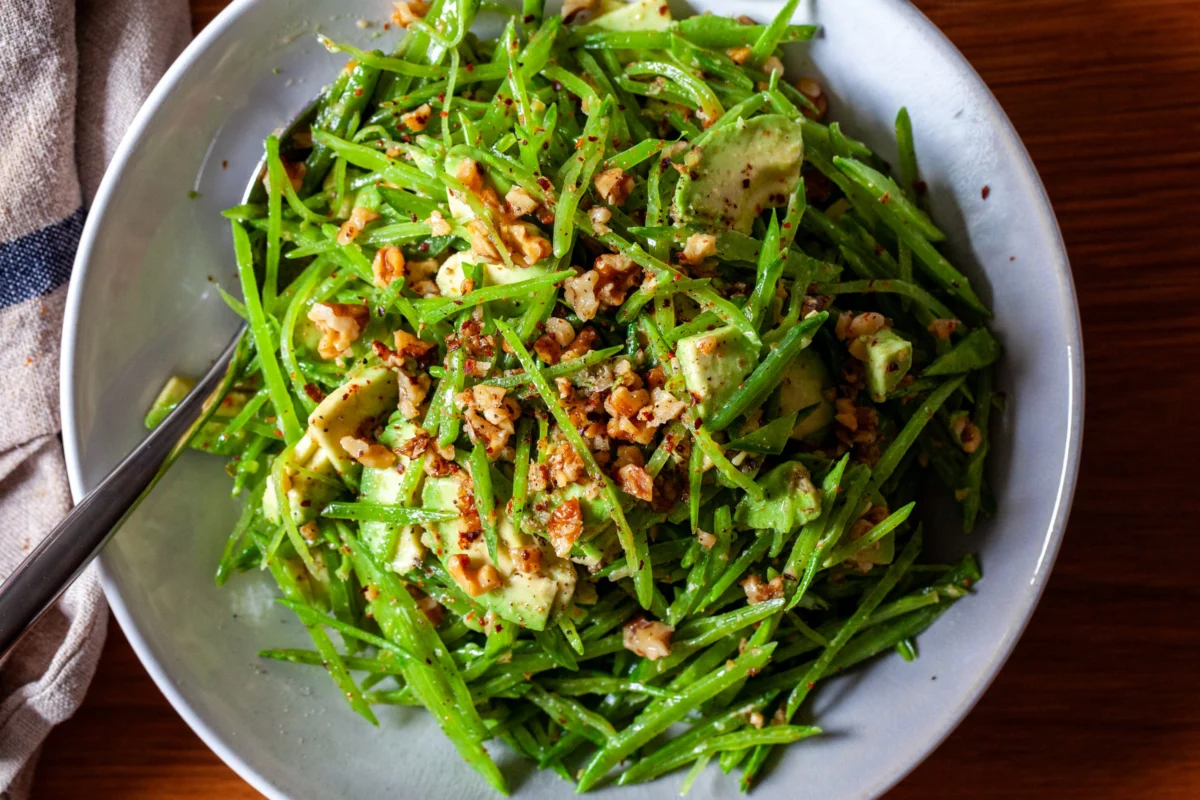
In the vast lexicon of home cooking, few vegetables are as pigeonholed as the snow pea. For decades, the flat, vibrant pods have been relegated to the periphery of the wok, serving as a secondary crunch in stir-fries or a fleeting garnish in Asian-inspired noodle dishes. However, a quiet movement in contemporary home kitchens is challenging this culinary orthodoxy. Led by proponents of "ingredient-first" preparation, the snow pea is shedding its reputation as a mere supporting character, emerging instead as the star of a sophisticated, raw, and remarkably simple summer salad.
This shift in perspective—viewing the snow pea not as a vegetable to be wilted by high heat, but as a crisp, structural element to be celebrated in its raw state—reflects a broader trend in home cooking: the pursuit of maximum impact with minimal exertion. As the summer months approach, bringing with them a desire for lighter, cooler fare, this evolution in preparation offers a compelling solution for the harried home cook.
The Core Concept: Redefining Texture and Flavor
The philosophy behind this culinary pivot is rooted in the interplay of texture. While traditional stir-frying softens the pod, stripping it of its inherent structural integrity, the raw approach preserves the "snap" that defines the snow pea.
The current iteration of this dish, which has gained traction among culinary enthusiasts, relies on a three-pronged textural profile: the "slaw-like" ribbons of raw snow peas, the brittle crunch of toasted walnuts, and the luxurious, buttery creaminess of ripe avocado. By stripping away the heavy sauces and complex aromatics often associated with the vegetable, the dish allows the natural, slightly grassy sweetness of the pea to serve as the foundation. The addition of a bright, acidic dressing—comprised of olive oil, lemon juice, and a subtle heat from chili flakes—acts as a catalyst, pulling these disparate elements into a cohesive, vibrant whole.
Chronology: From Restaurant Inspiration to Home Kitchen Staple
The journey of the raw snow pea salad from a niche restaurant menu to the home kitchen is a testament to the power of culinary memory. The inspiration can be traced back to the now-closed NoMad restaurant, an establishment celebrated for its elevated simplicity. It was there that the concept of the raw snow pea was first introduced to many diners as a revelation—a way to experience the vegetable with a clarity that cooking obscures.

In the years following, the idea underwent a process of iteration. In the 2022 release Smitten Kitchen Keepers, a version featuring pecorino cheese and walnuts was introduced, solidifying the dish’s status as a reliable, sophisticated side. However, culinary trends are rarely static. In recent months, as home cooks sought lighter, more plant-forward options, the recipe saw an update. By removing the cheese and intensifying the focus on the avocado-walnut pairing, the dish transitioned from a cheese-forward appetizer to a minimalist, plant-based salad designed for rapid assembly.
Supporting Data: The Mechanics of the Perfect Salad
The success of this dish is not merely a matter of aesthetic preference; it is grounded in specific, tested culinary techniques that maximize flavor extraction.
1. The Importance of the Ice Bath
The most critical preparatory step for a raw snow pea salad is the ice water soak. Immersing the peas for 10 to 20 minutes does more than clean them; it rehydrates the cellular structure of the pod, ensuring maximum crispness. This process is essential for achieving the "snap" that distinguishes a high-quality raw salad from a limp vegetable dish.
2. The Science of Toasting
The role of the walnut in this dish is to provide a deep, earthy contrast to the bright, fresh notes of the peas. Culinary data consistently suggests that the Maillard reaction—the chemical reaction between amino acids and reducing sugars that gives browned food its distinctive flavor—is essential here. Toasting walnuts at 350°F (175°C) for 6 to 10 minutes transforms the nut from a neutral crunch into a flavor-forward, aromatic element that elevates the entire profile of the dish.
3. The Dressing Ratio
The balance of the dressing is a study in equilibrium. A high-quality olive oil provides the fat necessary to coat the snow peas without making them greasy, while the acidity of fresh lemon juice is required to cut through the richness of the avocado. The addition of chili flakes introduces a mild, lingering heat that prevents the dish from feeling one-dimensional.

Official Perspectives: The Chef’s Rationale
The rise of this preparation method is largely attributed to the shift in how professional and home chefs view the "lazy" cooking movement. In an era where many cooks are facing "kitchen fatigue"—the exhaustion that sets in after months of complex meal planning—the appeal of a dish with fewer than five main ingredients cannot be overstated.
"There is a particular satisfaction in a recipe that doesn’t demand the entirety of your attention," notes one culinary commentator. "When you are running on fumes, particularly at the end of a long school year or during a heatwave, the ability to create something that feels ‘chef-y’ with minimal effort is a form of self-care."
The rationale is clear: the modern home cook is not looking to compromise on flavor, but they are looking to optimize their labor. By utilizing high-quality, raw ingredients that require nothing more than a sharp knife and a bit of technique, the home cook can achieve a result that feels intentional and indulgent, rather than rushed.
Implications for Future Culinary Trends
The popularity of the raw snow pea salad signals a wider, more enduring change in the culinary landscape. As food costs fluctuate and time becomes an increasingly scarce commodity, the "less is more" philosophy is likely to dominate home kitchens for the foreseeable future.
The Rise of "Minimalist Complexity"
This trend implies that future recipes will focus on "minimalist complexity"—the art of choosing two or three ingredients that possess profound flavor and structural differences, and allowing those ingredients to speak for themselves. We are moving away from the era of long, complex ingredient lists toward a culture that prizes the quality of the produce and the precision of the preparation.

Sustainability and Seasonal Eating
Furthermore, this trend aligns with a heightened awareness of seasonality. Using vegetables in their raw state encourages cooks to seek out the freshest produce, as there is no cooking method to mask a lack of quality. This naturally pushes consumers toward local farmers’ markets and seasonal eating habits, as the disparity between a fresh-picked, in-season snow pea and one that has traveled thousands of miles is impossible to ignore in a raw salad.
The "Do-Ahead" Challenge
Finally, the discussion surrounding the "do-ahead" nature of this salad highlights a common struggle in modern meal prep. The fact that lemon juice can discolor snow peas over time serves as a reminder that freshness is a demanding master. The implication is that we are returning to a model of cooking that prioritizes the moment of consumption. By requiring the dressing to be added just before serving, the dish demands a small but significant moment of mindfulness from the cook, effectively slowing down the pace of meal preparation.
Conclusion: A Simple Path Forward
The raw snow pea salad is more than just a recipe; it is a manifestation of the current culinary zeitgeist. It represents a pivot toward the raw, the crisp, and the refreshingly simple. By stripping away the artifice of heavy cooking, we are finding that the most profound flavors are often the ones we have been overlooking in our pursuit of complexity.
Whether it is for a summer gathering, a quick weeknight dinner, or a moment of quiet reprieve, the raw snow pea offers a crisp reminder that the best food is often the result of respecting the ingredient and trusting in the simplicity of the process. As we look toward the future of home cooking, the path forward appears clear: less heat, more focus, and a greater appreciation for the natural integrity of the harvest.

 Nana Muazin
 Evan Lee Salim