

 Lina Irawan
 Lina Hope
 Rifan Muazin
 Neng Nana
 Jia Lissa
 Evan Lee Salim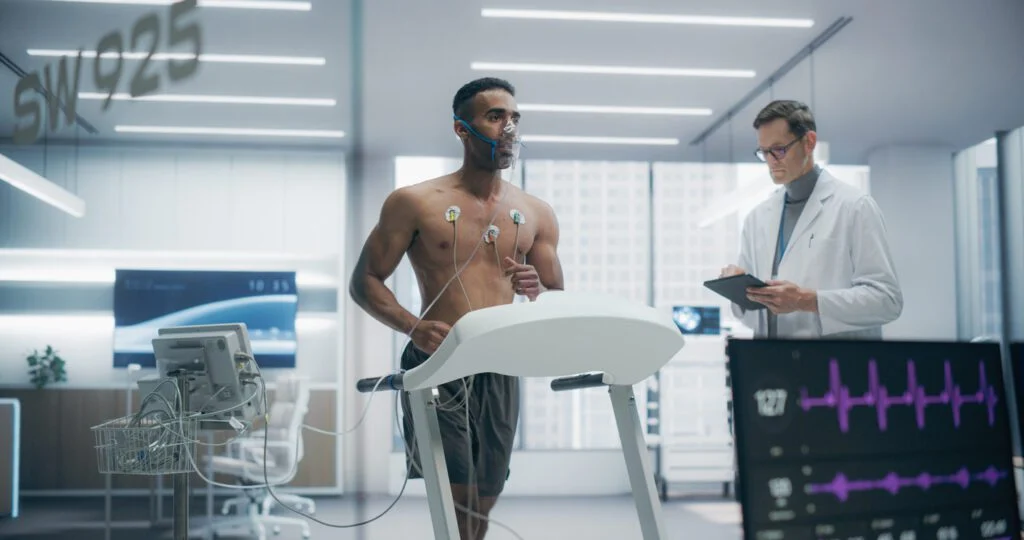
In the age of biohacking, the line between medical necessity and obsessive self-optimization has blurred. Billionaire Bryan Johnson, the central figure of the Netflix documentary Don’t Die, has become the poster child for this movement. His quest to reverse his "biological age"—the internal wear and tear on his cells compared to his chronological age—has captured global attention. By spending millions annually on hyperbaric oxygen therapy, weekly acid peels, and experimental plasma infusions, Johnson claims to have shaved 5.1 years off his biological clock.
However, the scientific community remains divided. While Johnson asserts he is "aging in reverse," high-profile investigations, including an exposé by The New York Times, have suggested that his markers may not be as favorable as he presents, with some analyses indicating his biological age may have actually increased by a decade. This discord highlights a growing tension: as "bio-age" testing becomes accessible to the masses, are we witnessing a breakthrough in personalized medicine, or simply a new frontier of wellness-industrial-complex marketing?
The Science of Bio-Age: Beyond the Birthday Cake
Chronological age is immutable—it is simply the time elapsed since birth. Biological age, or "bio-age," however, is a measurement of how your cells and organ systems are functioning. It is the difference between a "young" 50-year-old who maintains high physical function and a "chronologically older" 50-year-old suffering from metabolic dysfunction or cellular decay.
For example, consider two 50-year-olds: Chang, who leads a sedentary life in a highly polluted urban center, consumes a diet of processed snacks, and smokes; and Jabari, who resides in a clean environment, maintains a disciplined strength-training regimen, and eats a nutrient-dense, plant-forward diet. Despite sharing the same birth year, their cellular health, systemic inflammation levels, and risk profiles for age-related disease are likely worlds apart. Bio-age testing aims to quantify these differences.
Chronology of a Trend: How We Got Here
The interest in biological age is not new, but its commercialization is.
- The Early Research Phase: Scientists initially developed biomarkers—such as telomere length (the protective caps on chromosomes) and DNA methylation (a chemical process that acts as an "epigenetic clock")—to study population health and disease resistance.
- The Proliferation of Podcasting: The concept moved from academic journals to the mainstream via high-reach podcasts like those of Peter Attia, Joe Rogan, and Andrew Huberman. These platforms framed bio-age as a quantifiable, hackable metric.
- The Commercial Explosion: Today, a quick Google search yields dozens of mail-order kits promising to calculate one’s "pace of aging" through a simple blood or urine sample. As prices drop, the barrier to entry has vanished, turning a once-esoteric scientific pursuit into a consumer product.
Supporting Data: What Are We Actually Measuring?
When you purchase a bio-age test, you are generally paying to have your blood or saliva analyzed for specific biomarkers. These include:
1. DNA Methylation
This process involves chemical modifications to DNA that can speed up or slow down depending on environmental factors and lifestyle. The "Horvath Clock" and "DunedinPACE" are two of the most cited research methods used to estimate life expectancy and the speed at which a body is aging.
2. Telomere Analysis
Telomeres shorten with every cell division. While extremely short telomeres are associated with specific genetic disorders, the use of telomere length as a "general aging test" for healthy individuals remains controversial, as the test methods marketed to the public (qPCR) differ significantly from the rigorous standards used in clinical research (flow-FISH).
3. Functional Fitness Markers
Perhaps the most reliable, though least "high-tech," indicators of biological age are physical performance tests. These include VO2 Max (the body’s ability to utilize oxygen), grip strength, and balance. Research indicates that these metrics are highly correlated with all-cause mortality, often serving as better predictors of longevity than traditional cholesterol or blood pressure readings.
The "Free" Biomarker Toolkit
You do not need a million-dollar budget to assess your biological trajectory. Researchers have long utilized accessible, scientifically validated tests to determine physical function:
- The Sitting-Rising Test (SRT): A measure of strength, balance, and mobility. The ability to lower to the floor and rise without using limbs for leverage is a strong predictor of cardiovascular health.
- Grip Strength: Often called the "vital sign" of aging. Weak grip strength has been consistently linked to higher rates of frailty, cognitive decline, and cardiovascular disease.
- The One-Foot Balance Test: Requiring the coordination of the inner ear, eyes, and muscles, this test is a canary in the coal mine for neurological and musculoskeletal health.
- The Pittsburgh Fatigability Scale: A subjective but validated assessment of how easily one tires during daily activities, which can flag underlying health issues before they become clinical.
Official Perspectives and Medical Reality
Medical professionals generally caution against over-reliance on direct-to-consumer (DTC) tests. The primary concern is that a single snapshot of data—such as a DNA methylation result—lacks context.
"Biological age can vary significantly by organ," notes Dr. Elena Rossi, a specialist in geriatric medicine. "A patient might have a heart that is physiologically younger than their kidneys. Relying on a single test kit to dictate your health strategy is like trying to diagnose a car’s engine failure by only looking at the color of the paint."
Furthermore, there is the risk of the "hard sell." Many commercial companies pair test results with an aggressive push for proprietary, expensive supplements that lack peer-reviewed validation. Experts argue that if a test result is used as a marketing funnel rather than a diagnostic tool for a physician, it should be treated with extreme skepticism.
Implications: The Path Forward
The true value of bio-age testing lies not in the number itself, but in the action it inspires. Data without intervention is useless.
The "Big Rock" Strategy
The most significant mistake in the longevity space is ignoring "evergreen" health practices in favor of high-tech fads. The evidence is overwhelming: consistent sleep, resistance training, a fiber-rich diet, stress management, and the cessation of smoking provide more biological benefit than any current anti-aging supplement or infusion.
Transforming Data into Action
If you choose to track your biomarkers, view them as a baseline. Use them to quantify the efficacy of your lifestyle changes. If a test shows high inflammation (C-reactive protein), and you respond by improving your sleep and nutrition, a follow-up test showing a decrease in that marker is a valid use of the technology.
The Role of Professional Guidance
For those serious about longevity, the best approach involves a partnership with a healthcare provider. A physician can integrate blood panels (testing for Apo B, fasting glucose, and Hemoglobin A1c) with physical performance assessments. This creates a holistic picture that is far more actionable than a mail-order kit.
Conclusion
The pursuit of a lower biological age is a noble goal, provided it is grounded in reality rather than hype. We are in an era where we can quantify the impact of our lifestyle choices with unprecedented precision. However, the secret to longevity remains remarkably simple: the "boring" stuff—moving, eating well, sleeping, and managing stress—remains the most powerful intervention available.
Bio-age testing is a mirror. It can show you where you are, but it cannot fix the reflection. That responsibility remains, as it always has, in your own hands.
References
For further reading on the studies referenced, please visit the official scientific database portals associated with the following topics:
- Dunedin Study on Epigenetic Clocks and Aging.
- The Journal of Strength and Conditioning Research: Grip Strength as a Mortality Predictor.
- The Cooper Institute: VO2 Max and Longevity Outcomes.
- American Heart Association: Guidelines on Biomarkers in Cardiovascular Disease.
- University of Pittsburgh: The Development of the Pittsburgh Fatigability Scale.


 Ali Ikhwan
 Nila Kartika Wati