

 Raul Delapena Setiawan
 Ammar Sabilarrohman
 Lina Irawan
 Suro Senen
 Asep Darmawan
In the culinary world, few things signal the transition of seasons quite like the arrival of peak-market strawberries. For those who find themselves with an abundance of these crimson gems, the kitchen becomes a laboratory of preservation. Recently, a serendipitous surplus of strawberries—gifted by a long-time market vendor in a gesture akin to a Parisian carte de fidelité—provided the perfect impetus to revisit the fundamentals of jam-making. While many home cooks rely on store-bought preserves, the craft of turning fresh fruit into a shelf-stable delight remains a cornerstone of artisanal cooking.
Main Facts: The Anatomy of a Simple Jam
The philosophy behind a superior strawberry jam is rooted in simplicity: high-quality fruit, the precise application of heat, and a mindful approach to sugar. Unlike commercial jellies, which often rely on high-fructose corn syrup and synthetic stabilizers, a traditional homemade jam uses the natural chemistry between fruit acids, sugar, and pectin to achieve its signature set.
The core requirement for this craft is the understanding that sugar serves a dual purpose. Beyond providing sweetness, it acts as a hygroscopic agent—drawing moisture out of the fruit—and a preservative that inhibits the growth of microorganisms. When cooked down, the sugar, combined with the natural pectin found in the fruit, creates the gel-like consistency that defines a classic preserve.
Chronology: From Market Basket to Mason Jar
The process of crafting jam is a rhythmic, time-honored sequence that demands patience and sensory engagement.
1. The Preparation Phase
The journey begins with the selection and preparation of the fruit. After acquiring the strawberries, the immediate task involves washing and hulling. This is not merely a chore; it is an inspection. Every berry should be checked for ripeness and quality. The fruit is then sliced, creating the surface area necessary for the maceration process, where sugar begins to break down the cellular structure of the berries before the heat is even applied.
2. The Cooking Process
Jam-making is not a "set it and forget it" endeavor. It requires constant supervision. As the mixture hits the heat, the cook must monitor the boil. The goal is to reach the "gelling point"—the temperature at which the pectin networks tighten—without scorching the delicate fruit.
3. The Cooling and Sealing
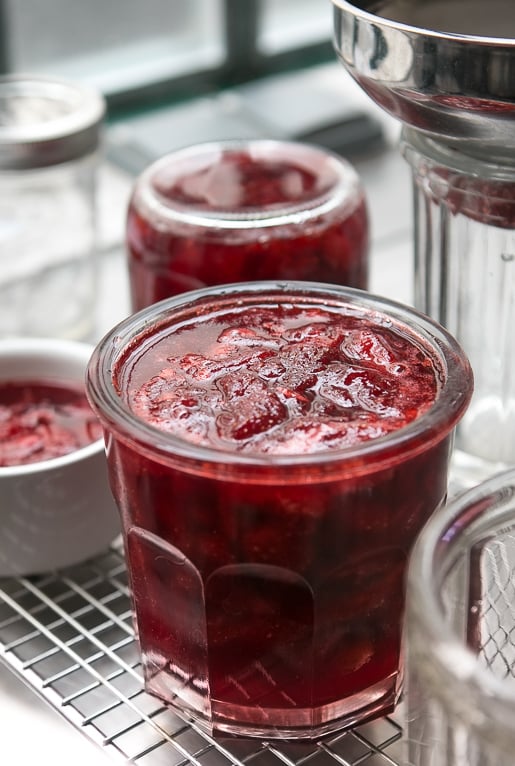
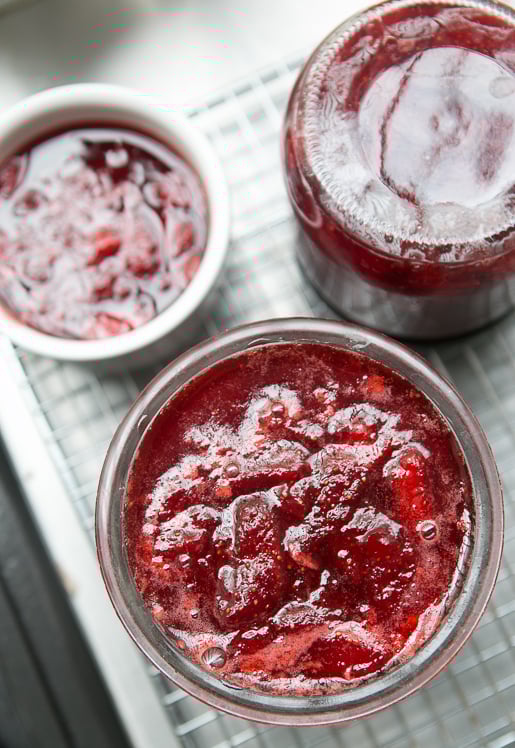
Once the jam reaches the desired viscosity, the transition to sterilized jars is critical. By pouring the hot mixture into prepared, sanitized glass vessels, the cook ensures that no external bacteria interfere with the shelf life. The traditional method of inverting the jars allows the heat of the jam to sterilize the lid, creating a vacuum seal as the contents cool.
Supporting Data: The Science of Small Batches
Why do culinary experts, including renowned pastry chefs, advocate for small-batch jam production? The answer lies in the physics of evaporation and flavor degradation.
The Flavor-Heat Paradox
In large-scale production, a massive pot of fruit takes significantly longer to reach the necessary boiling temperature to achieve a set. This extended exposure to high heat causes the volatile aromatic compounds in the strawberries—the very essence of their "fresh" flavor—to evaporate. Furthermore, prolonged cooking can cause the bright, vibrant red color of the berries to dull into a muddy brown, a process known as the Maillard reaction, which, while delicious in baking, is undesirable in a fruit preserve.
By limiting batches to roughly two pounds (900g) of fruit, the cook ensures a rapid boil. This speed preserves the integrity of the fruit’s flavor profile and maintains the vivid, jewel-toned aesthetics of the final product.
The Pectin Challenge
Pectin is a naturally occurring structural polysaccharide found in cell walls of plants. Some fruits, like apples or citrus, are rich in pectin, while strawberries are notoriously low in it. This is why "late-season" strawberries, which contain less natural pectin than their early-season counterparts, can result in a "runnier" jam.
To mitigate this without resorting to commercial powders, many traditionalists utilize a "green apple trick." By finely grating a tart, under-ripe green apple into the mix, the cook introduces a natural source of pectin that facilitates a firmer set without compromising the flavor.
Official Responses and Culinary Best Practices
While the home cook enjoys the freedom of the kitchen, food safety organizations provide essential guidelines for those looking to store their preserves long-term. The National Center for Home Food Preservation (NCHFP) remains the gold standard for those interested in water-bath canning.
"Preservation is a science, not just an art," notes the NCHFP. While many enthusiasts find that storing jam in the refrigerator is sufficient for short-term use, those looking to stock a pantry for a full year must adhere to strict processing times and acidification standards to prevent the growth of Clostridium botulinum.
For those who find themselves with a batch that refuses to set, there is no need for despair. Professional chefs suggest that a "runnier" jam is not a failure; it is an ingredient. Such preserves are often superior when drizzled over Greek yogurt, folded into muffin batter, or served alongside sharp goat cheese as a sophisticated dessert accompaniment.
Implications: The Cultural Value of Preservation
The act of making jam has profound implications in an era of mass-produced convenience. It represents a reconnection with the food cycle. By taking the time to process seasonal surpluses, the cook is engaging in a form of waste reduction—a practice that is increasingly vital as we look toward more sustainable consumption habits.
Furthermore, the "no-recipe" approach, or the willingness to adjust proportions based on the current yield of one’s market haul, fosters a deeper intuition for ingredients. Whether one is making apricot, cherry, or eggplant jam, the principles remain consistent: honor the fruit, respect the chemistry, and embrace the process.
In conclusion, while the recipe itself is a guide, the true mastery of jam-making lies in the ability to adapt. Whether you have a single basket or a full bushel, the process is a reminder that the most rewarding culinary experiences are those that require our full attention. As you stand over the stove, watching the steam rise and the fruit transform into a glossy, fragrant preserve, you are participating in a tradition that spans generations—turning the fleeting bounty of the summer sun into a jar of sweetness that can be enjoyed long after the season has passed.
Quick Reference: Troubleshooting Your Preserve
- If the jam is too thin: Consider the pectin content of the fruit. Incorporate grated green apple or consider a slightly longer boil, provided the color remains bright.
- If the jam is too dark: The heat was likely too high for too long. Reduce batch size to shorten the cooking time.
- If you want to scale up: Do not simply increase the pot size. Maintain the small-batch integrity by running two or three pots simultaneously, or process the fruit in distinct batches to ensure quality control.
- Safety Note: Always ensure jars are sterilized by boiling water. If you intend to store the jars at room temperature for extended periods, consult the NCHFP guidelines for water-bath processing to ensure total food safety.

 Evan Lee Salim
 Azzam Bilal Chamdy