
 Dwi Wanna
 Nana Wu
 Muslim
 Reynand Wu
 Ammar Sabilarrohman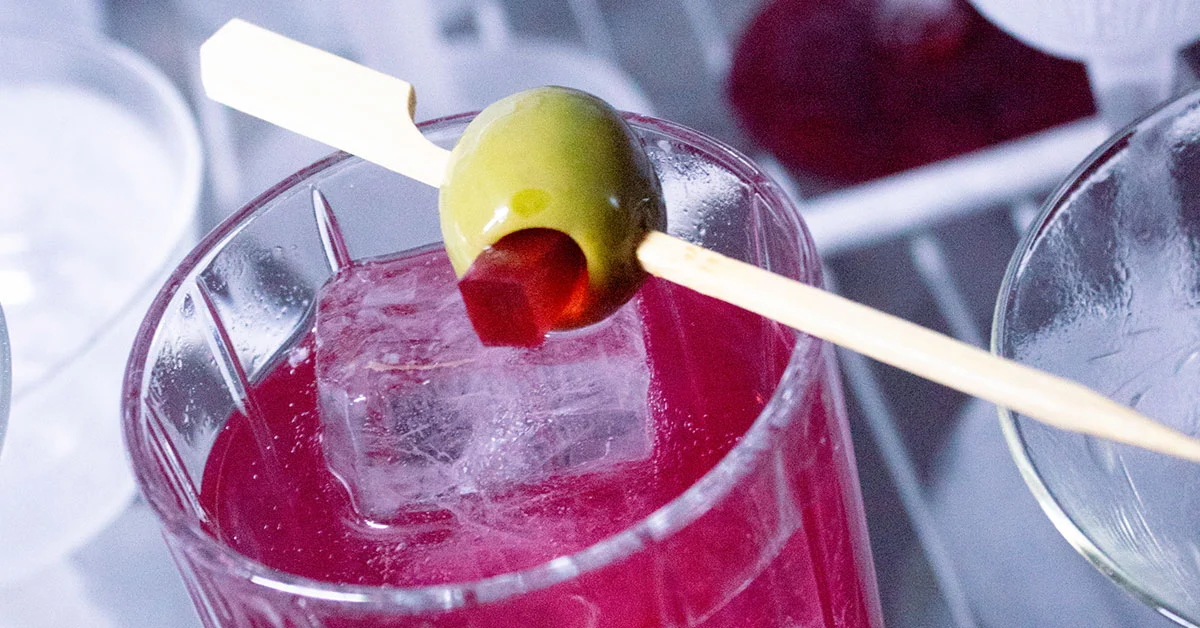
In the world of high-end mixology, the garnish has long been relegated to the status of an afterthought—a decorative flourish meant to provide a quick aesthetic pop before being discarded at the bottom of the glass. However, Jakob McCabe-Johnston, a standout talent recently named one of Punch’s Best New Bartenders of 2026, is challenging this paradigm. Working behind the stick at Atlanta’s acclaimed Kimball House, McCabe-Johnston has introduced a creation that bridges the gap between culinary innovation and liquid artistry: the "Elephino."
The Genesis of the "Elephino"
The name itself is a whimsical nod to a classic bar-room joke: "What do you get when you cross an elephant and a rhino?" The answer, "Elephino" (a phonetic play on "Hell if I know"), sets the stage for a drink that refuses to take itself too seriously while demanding absolute respect for its technical execution.
The "Elephino" is a reimagining of the classic Americano cocktail. Traditionally, the Americano is a simple, elegant balance of Campari, sweet vermouth, and soda water. McCabe-Johnston’s version, however, pushes the boundaries of the classic by introducing a beet-dyed hue and a structural innovation that defies convention: a Campari-jelly-stuffed olive.
"Sure, I thought it was hilarious, but it also makes sense in terms of how it is received on the palate," McCabe-Johnston says. The conceptual breakthrough came from London’s A Bar with Shapes for a Name, where he observed a unique application of Campari jelly. While the original inspiration was artistic, McCabe-Johnston saw an opportunity to integrate the jelly into the very heart of the drink’s garnish, effectively turning a savory vessel into a bitter, sweet, and salty flavor bomb.
The Chronology of a Culinary Cocktail
The development of the Elephino did not happen in a vacuum. It is the culmination of a lifelong immersion in the hospitality industry. As a third-generation bartender, McCabe-Johnston’s perspective is deeply influenced by his upbringing. His mother, Carrie McCabe-Johnston, and father, Jasha Johnston, are the proprietors of Nightingale in Minneapolis. Growing up, the boundaries between the kitchen and the bar were porous; he watched his mother operate within the culinary space, learning that a great cocktail requires the same level of intellectual rigor as a fine-dining dish.
The Technical Evolution
- Conceptualization: Inspired by the modernist techniques found in London’s craft cocktail scene, McCabe-Johnston sought a way to make the garnish as complex as the drink.
- R&D: Experimenting with various thickening agents, he landed on agar-agar as the ideal medium to stabilize Campari’s distinct flavor profile without masking its delicate aromatics.
- Refinement: Integrating the "seasoning" elements—specifically a sesame oil wash—to add texture and depth to the Americano base.
- Final Polish: The selection of an unconventional base spirit, aquavit, to provide a nuanced, savory backbone that complements the saltiness of the olive and the bitterness of the Campari.
Supporting Data: The Science of the Garnish
The brilliance of the Elephino lies in its structural integrity. To create the jelly, McCabe-Johnston brings Campari to a brief, controlled simmer. Speed is essential here; excessive heat would result in the loss of the volatile aromatics that define Campari’s profile. Once heated, it is whisked with agar-agar, a plant-based gelatin substitute that sets firmly at room temperature.
The result is a versatile ingredient that can be sliced into cubes, piped through a squeeze bottle, or used as a spread. For the Elephino Americano, these cubes are inserted into pitted green olives, mirroring the traditional pimento-stuffed olive but offering a profound sensory contrast. When the patron takes a sip of the drink, they encounter the initial hit of salt from the olive, followed immediately by the burst of bitter-sweet Campari jelly, creating a rhythmic progression of flavors that evolves with every sip.
Furthermore, the drink utilizes a sesame oil wash, a technique more commonly found in culinary emulsions. This provides a mouthfeel that coats the palate, allowing the complex notes of the aquavit—often characterized by caraway or dill—to linger longer. As McCabe-Johnston notes, "A bartender should be constantly thinking about balance of flavor. The best bartenders are thinking about drinks like chefs think about food."
Official Perspectives: The Chef-Bartender Ethos
McCabe-Johnston’s approach represents a growing movement in the industry. As the line between "bartender" and "chef" continues to blur, the bar is becoming a laboratory for modernist cuisine.
"I look at this as an exercise in composition," he explains. "The Americano is a perfect, time-tested template, but it’s also a canvas. By adding the aquavit as a seasoning rather than a primary spirit, I’m essentially adjusting the acidity and the savory profile of the drink in real-time."
His perspective is shared by an increasing number of professionals who believe that the future of cocktails lies in non-traditional ingredients. By utilizing agar-agar, hydrocolloids, and fat-washing techniques, modern mixologists are moving away from simple syrups and juices toward a more nuanced, flavor-first methodology.
Implications for the Future of Mixology
The success of the Elephino suggests several key shifts for the industry at large:
- The Rise of the "Culinary Garnish": We are moving away from the era of the decorative lemon twist. The garnish is becoming a functional component of the drink’s flavor profile.
- The Integration of Savory Profiles: With the success of ingredients like sesame oil and aquavit, the industry is seeing a move toward savory cocktails that are better suited for pre-dinner consumption, further elevating the role of the Americano and Negroni-style drinks.
- Technical Literacy: Bartenders are increasingly expected to have a working knowledge of food science. Understanding how temperature and binding agents like agar-agar work is no longer just a hobby; it is a professional necessity.
As consumers become more sophisticated, their expectations for the "bar experience" have skyrocketed. They are no longer content with a standard pour; they are looking for a narrative. The Elephino provides this in spades—a drink that has a punchline, a history, and a technical complexity that justifies its presence on a top-tier menu.
Ultimately, the Elephino is more than just a clever cocktail; it is a statement of intent. It proves that with the right combination of humor, technical prowess, and a deep-seated respect for the balance of flavor, a bartender can turn even the most simple ingredients into something extraordinary. Whether you are a seasoned mixologist or a curious enthusiast, the lesson of the Elephino is clear: never underestimate the power of a garnish to tell a story. As McCabe-Johnston continues to push the boundaries at Kimball House, one can only imagine what the next "nonsensical" idea will be—and how, like the Elephino, it will inevitably make perfect sense.

 Iffa Jayyana