
 Raul Delapena Setiawan

 Ammar Sabilarrohman
 Lina Irawan
 Suro Senen
 Layla Zulfa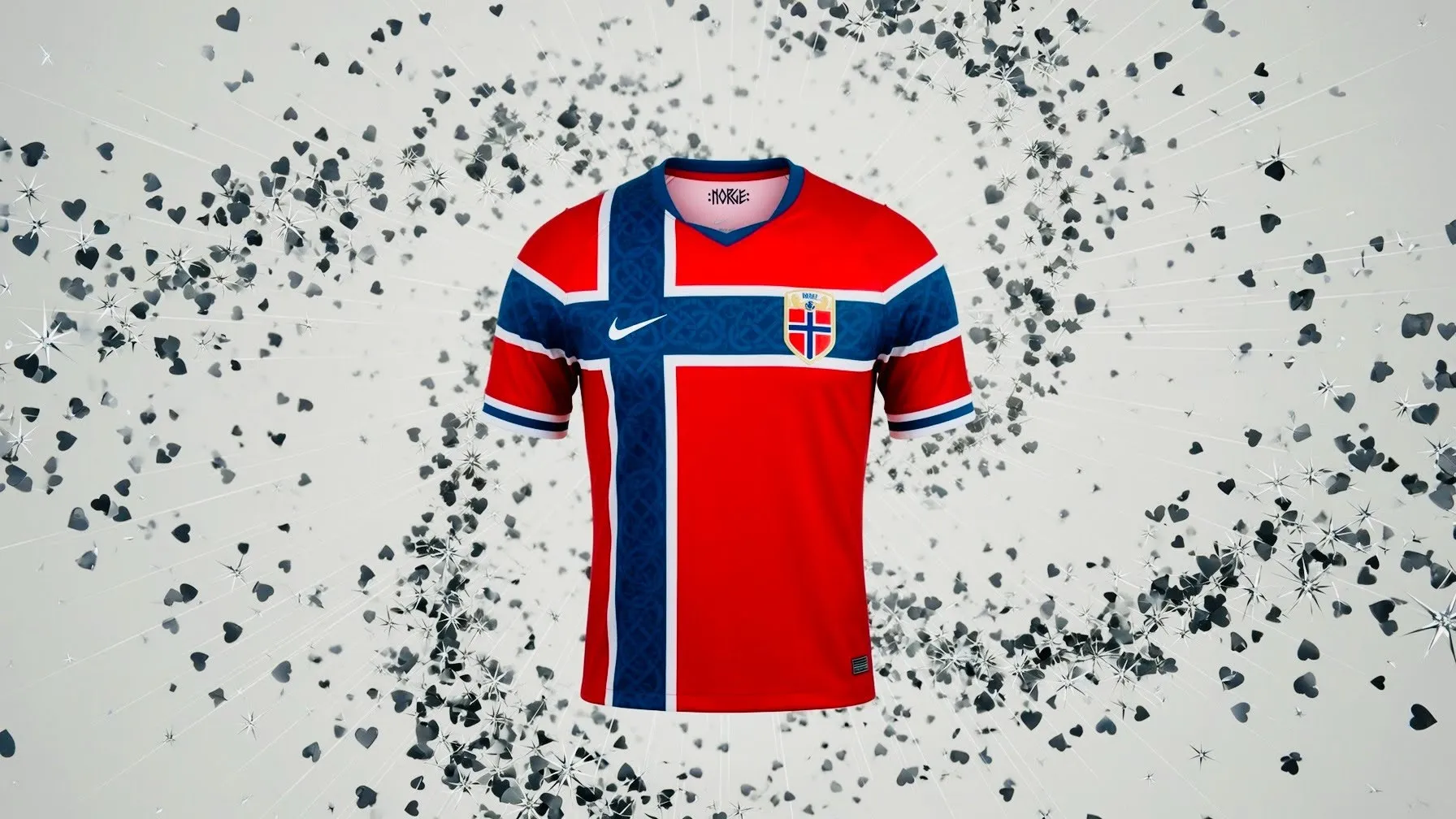
In the modern era of destination marketing, nations often bank on "soft power" to drive economic growth. From the "Lord of the Rings" effect in New Zealand to the Taylor Swift "Eras Tour" phenomenon, countries frequently leverage pop culture icons to bolster their tourism sectors. However, the ongoing global mania surrounding Norwegian football sensation Erling Haaland reveals a stark, uncomfortable truth for destination marketers: fame is not always synonymous with destination appeal.
While Haaland’s recent international exposure has generated one of the largest bursts of free media attention any country will likely receive this decade, industry experts suggest it will do almost nothing for Norwegian tourism. The reason is simple, if somewhat sobering: the attention is tethered exclusively to the individual, not the nation he represents.
Main Facts: The Disconnect Between Identity and Geography
Erling Haaland is arguably the most recognizable athlete on the planet. His goal-scoring prowess for Manchester City and his status as a global brand have turned him into a digital titan. During his recent travels—often coinciding with high-profile football events in the United States—his social media presence exploded, adding approximately 15 million followers in just a few weeks.
Yet, for Visit Norway and the nation’s broader tourism infrastructure, this surge in interest is a "hollow" victory. The core issue lies in the context of his engagement. Whether he is reviewing New York delis, posing in a cowboy hat in the Texas heat, or training in American stadiums, the "Norway" brand remains an abstract concept. He is a Norwegian playing for an English club, operating in an American environment. For the average fan in Tokyo, São Paulo, or London, the backdrop of Haaland’s life is not the Geirangerfjord or the streets of Bergen; it is the manicured pitch of the Etihad Stadium or the concrete sprawl of a U.S. metropolis.
Chronology of a Global Phenomenon
The trajectory of the "Haaland Effect" can be traced through several distinct phases:
Phase I: The Manchester City Ascendancy
Haaland’s move to Manchester City transformed him from a European standout into a global household name. As he broke Premier League scoring records, his visibility skyrocketed. During this period, marketing agencies briefly toyed with the idea of "The Haaland Effect," hoping that his success would naturally draw eyeballs toward his home country.
Phase II: The American Summer Tour
The recent international window saw Haaland spending significant time in the United States. His social media activity during this period was characterized by a distinct lack of Norwegian scenery. He leaned into American culture—sampling local cuisine and adopting Western fashion tropes. This period saw the most significant growth in his social media following, yet it was geographically detached from the Nordic region.
Phase III: The Market Disconnect
While his followers surged, search engine data showed a fragmented trend. "Haaland" searches spiked globally, but "Travel to Norway" or "Visit Norway" saw only marginal, localized fluctuations—mostly within established European football markets. The data suggests that his fans are interested in his lifestyle, his diet, and his fashion, but they are not internalizing the "Norwegian-ness" of his origins.
Supporting Data: Why "Attention" Does Not Equal "Conversion"
To understand why this digital explosion fails to convert into foot traffic, one must look at the mechanics of tourism conversion. Tourism marketing relies on "aspirational imagery"—the ability of a consumer to project themselves into a specific environment.
- The Backdrop Problem: Marketing research indicates that for a celebrity to boost tourism, the destination must be a featured character in the narrative. In Haaland’s current brand cycle, Norway is a secondary entity—a footnote in his biography rather than the setting of his content.
- Search Traffic vs. Bookings: While search traffic for "Norway" may experience brief, noise-level spikes following a viral Haaland post, the conversion rate into actual bookings remains negligible. The "football market" demographic—young, male, and urban—is statistically less likely to be the primary target for the high-end, nature-focused travel experiences that constitute the bulk of Norway’s tourism economy.
- The Digital Halo Effect: The "biggest gainer" in this scenario is not Norway, but the digital platforms themselves and the brands that sponsor Haaland. He has effectively decoupled his personal brand from his national identity, creating a "portable" persona that requires no physical location to function.
Official Responses and Industry Skepticism
Tourism boards and destination marketing organizations (DMOs) are often quick to capitalize on celebrity associations, but the response from the Norwegian travel sector has been one of quiet, professional caution.
"We are proud of Erling’s success," says a spokesperson for a leading Nordic tourism agency (speaking on condition of anonymity). "However, there is a fundamental difference between being a fan of a player and being a consumer of a destination. We cannot manufacture a connection where the content itself does not provide one. If the content doesn’t show the fjord, the fan doesn’t visualize the trip."
Marketing analysts argue that Norway’s tourism board is actually correct to avoid over-investing in the "Haaland narrative." Attempts to "force" the association—by paying for sponsored content or attempting to weave his brand into official tourism campaigns—would likely ring hollow to his audience, potentially damaging the authenticity of the brand.
Implications: The Future of Destination Marketing
The Haaland paradox poses a significant question for the future of the tourism industry: Can a nation rely on its global icons to drive economic growth in an age where influencers live in a "placeless" digital world?
The "Influencer Trap"
The primary implication is that the traditional "ambassador" model is changing. In the past, a famous face could make a destination look glamorous. Today, influencers are often more interested in their own personal brand equity than the destinations they visit. If an influencer is in Dubai, New York, or Oslo, the background is often irrelevant to the engagement metrics.
Shifting Focus to Niche Experiences
For Norway, the implications suggest a pivot away from "celebrity-driven" mass marketing toward more targeted, experience-based initiatives. Rather than relying on the "halo effect" of a global superstar, the country is better served by focusing on its unique selling propositions: the midnight sun, sustainable travel, and remote, high-end experiences that cannot be replicated in a football stadium.
The Geography of Fame
We are entering an era where fame is geographically agnostic. A superstar like Haaland is effectively a "global citizen" who operates in a network of elite sporting venues. For tourism boards, this means that the return on investment for celebrity endorsements is plummeting. Unless the celebrity is actively engaged in the act of promoting the landscape, culture, and experience of the country, the "attention" generated is essentially wasted on the tourism sector.
Conclusion: The Quiet Realism of Nordic Tourism
Ultimately, the Haaland mania is a fascinating case study in the limitations of digital influence. The country of Norway remains a stunning, rugged, and highly desirable destination, but its appeal is built on its own merit—its landscapes, its history, and its culture—not on the fleeting mentions of its most famous son.
Norway’s moment this summer is happening 4,000 miles away from its borders. While millions of fans are watching Haaland, they are not looking at Norway. They are looking at a man who has transcended his roots to become a global digital entity. For the tourism industry, the lesson is clear: true destination branding requires a connection that goes deeper than a name on a jersey. It requires a visual, emotional, and visceral invitation to arrive, to explore, and to experience. Until that connection is bridged, Erling Haaland will remain a global phenomenon, and Norway will remain what it has always been: a destination that must be sought out, rather than stumbled upon through the feed of a football star.


 Basiran