

 Azzam Bilal Chamdy
 Neng Nana
 Nana Muazin
 Dwi Wanna
 Raul Delapena Setiawan
 Nila Kartika Wati
In the rapidly evolving landscape of modern agriculture, the push for systemic change has moved from the fringes of environmental discourse to the center of global policy. For Patrick Holden, CEO and founder of the Sustainable Food Trust (SFT), the last month has served as a microcosm of this transition. From the rural classrooms of Ireland to the high-level policy summits of New York and the historic streets of Turin, Holden’s recent itinerary reflects a growing, urgent consensus: the way we produce our food must change, and the clock is ticking.
The Vanguard of a New Agricultural Era
The narrative of sustainable agriculture is no longer just about environmental stewardship; it is about economic survival, public health, and the restoration of a broken supply chain. Holden’s recent travels underscore that the movement is gaining momentum across generations and geographies. Whether he is addressing the next generation of farmers in Ballymaloe or consulting with global leaders in Scotland, the message remains consistent: we must bridge the gap between "nature-friendly" rhetoric and the harsh reality of industrial production.
Chronology of a Global Mission
Week 1: The Next Generation in Ireland
Holden’s journey began at the famed Ballymaloe Cookery School in Ireland. Invited by Darina Allen, a titan of the farm-to-table movement, Holden spoke to the inaugural cohort of the school’s six-week Food and Farming course.
The composition of the class—mostly individuals in their 20s and 30s—provided a striking data point for the industry. Despite the economic volatility that plagues modern farming, these young, motivated students represent a demographic shift: a "return to the land" driven by a desire for vocational purpose rather than mere employment. With a lengthy waiting list already forming for future iterations of the course, it is clear that the youth are not just interested in consuming food; they are eager to participate in its creation.
Week 2: Defining ‘Regenerative’ in Scotland
From Ireland, the focus shifted to Scotland, where the King’s Foundation hosted a high-level symposium on "Harmony in Food and Farming." The event convened a diverse coalition, including Defra Secretary of State Angela Eagle and author Chris van Tulleken, whose seminal work, Ultra-Processed People, has fundamentally altered the public’s understanding of the nutritional crisis.
The dialogue here turned toward the corporate sector. As major food retailers begin to adopt the terminology of "regenerative agriculture," a significant ambiguity has emerged. Holden notes that while the intent is promising, the execution is muddled. Many farms claiming the "regenerative" label continue to rely on synthetic fertilizers and pesticides, including routine applications of glyphosate. The industry faces a critical crossroads: will "regenerative" become a mere marketing buzzword, or will it be anchored by rigorous, transparent standards that consumers can trust?
Week 3: The Real Organic Debate in New York
Traversing the Atlantic, Holden joined a panel at the Real Organic conference in upstate New York alongside horticultural legend Eliot Coleman. The discussion centered on the perceived friction between the long-established organic movement and the emerging regenerative trend.
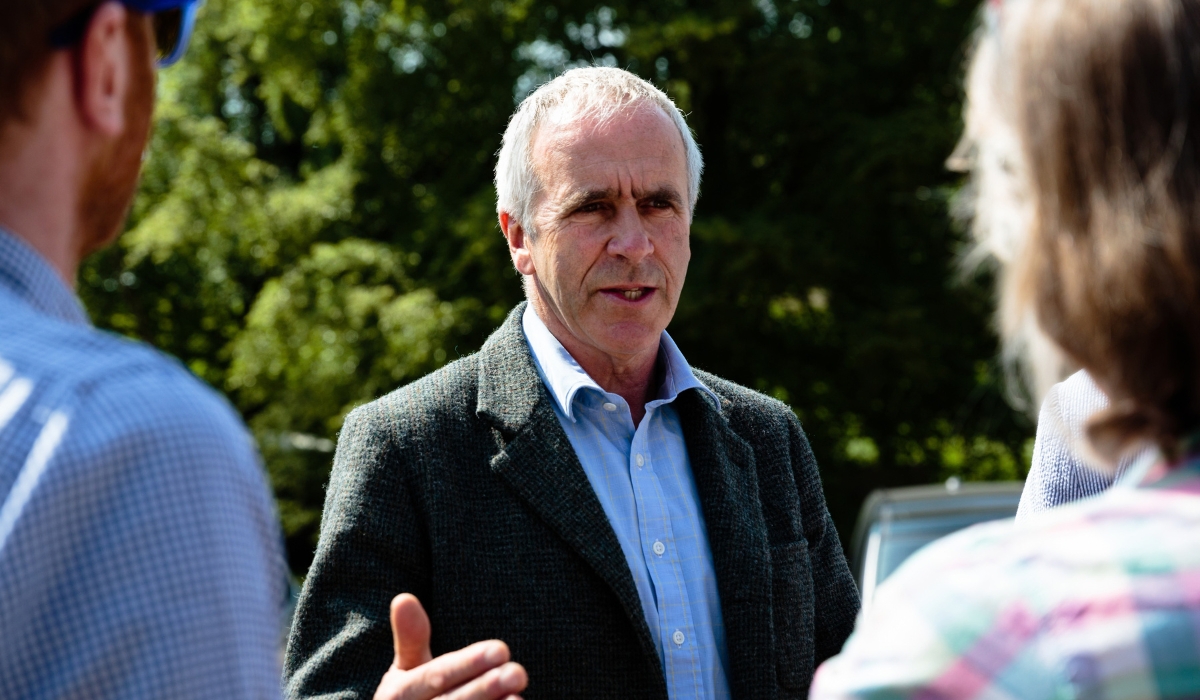
Holden’s intervention was clear: the threat of "greenwashing" is the greatest obstacle to progress. He argued that the only path forward is through standardized, scientific measurement. By adopting a common framework—such as the Global Farm Metric (GFM)—the industry can move beyond subjective claims and toward a shared language of impact, measuring outcomes for climate, biodiversity, and human health in a way that is verifiable for the end consumer.
Week 4: Scaling Up in the Big Apple
The final leg of the US trip saw Holden in New York for Climate Week, specifically for a convening by the Sustainable Markets Initiative (SMI). Here, the focus was on the expansion of the "Beacon Farms" project.
Beacon Farms serves as a physical manifestation of sustainable theory, proving that large-scale, nature-friendly production is not only viable but profitable. Following successful rollouts in the UK and Ireland, the project is now set to cross the Atlantic, partnering with US-based organizations to replicate the success of the European model. The expansion is a strategic move to codify regenerative practices across the American agricultural heartland.
Week 5: Solidarity in Turin
The journey concluded at Terra Madre in Turin, the global epicenter for the Slow Food movement. The gathering, which brought together hundreds of thousands of farmers and activists, served as a poignant tribute to the late Carlo Petrini, the founder of Slow Food. With a message of support from King Charles, the event underscored the global nature of the struggle for biodiversity and agricultural sovereignty.
Supporting Data: The Need for a Universal Metric
The current agricultural landscape is characterized by a "language barrier." Retailers, farmers, and consumers all use terms like "sustainable," "regenerative," and "organic," but these words lack universal definitions.
The SFT’s work on the Global Farm Metric (GFM) is designed to dissolve these barriers. By providing a holistic assessment of a farm’s impact—covering soil health, water usage, greenhouse gas emissions, and social equity—the GFM offers a pathway for transparency. Without such a framework, the industry risks a fragmentation of standards that could ultimately lead to consumer cynicism. The push for a standardized metric is not merely an administrative exercise; it is a prerequisite for a market-led transition to sustainable farming.
Official Responses and Strategic Alliances
The engagement of high-level figures such as the UK’s Defra Secretary of State and the support from the Sustainable Markets Initiative indicates that sustainable agriculture has moved from the periphery to the corridors of power. However, the presence of major food retailers at these events suggests that the corporate sector is also feeling the pressure.
The "Beacon Farms" initiative, in particular, represents a shift from abstract policy to practical, on-the-ground implementation. By demonstrating the efficacy of these methods, the SFT is attempting to prove that the transition to regenerative practices is an asset-building strategy for farmers, rather than a cost-cutting burden.
Implications for the Future
The implications of this month-long mission are twofold. First, there is a clear, growing, and sophisticated demand for transparency from the consumer base. People are no longer satisfied with vague labeling; they want to know the story behind their food.
Second, the agricultural sector is on the precipice of a standard-setting war. As "regenerative" gains popularity, the battle for the definition of the term will determine the future of global food systems. Will it remain a loose concept prone to corporate co-option, or will it be defined by the rigorous, measurable standards advocated by the Sustainable Food Trust?
As Holden’s travels demonstrate, the energy is present. From the young farmers in Ballymaloe to the massive crowds in the streets of Turin, the momentum for a radical shift in food production is undeniable. The task ahead is to translate this passion into a robust, global infrastructure that holds stakeholders accountable.
As the SFT looks toward the coming year, the focus will be on the US expansion of Beacon Farms and the continued push for the Global Farm Metric. The goal is no longer just to advocate for change, but to provide the tools necessary to make that change the new global standard. For those watching the industry closely, one thing is certain: the conversation has shifted from "why" we must change, to "how" we must execute that change before the ecological and economic thresholds of our food systems are irrevocably crossed.


 Iffa Jayyana
