

 Raul Delapena Setiawan

 Ammar Sabilarrohman
 Lina Irawan
 Suro Senen
 Siti Muinah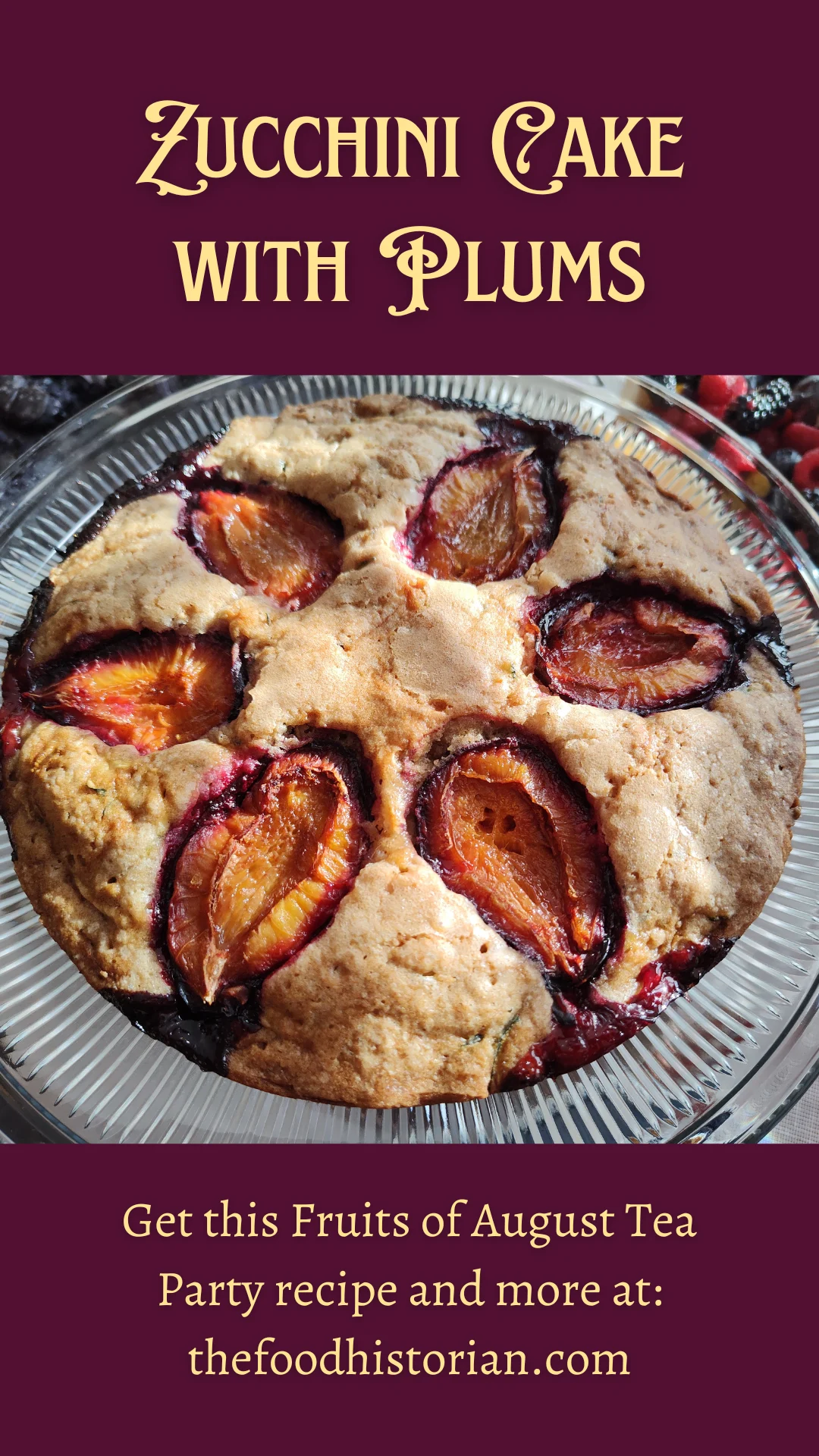
In the heart of the American Midwest, late August brings with it a phenomenon as predictable as the changing of the seasons: the "Zucchini Glut." It is a time when the vegetable patch, often planted with optimistic exuberance in the spring, turns into a relentless production line of summer squash. For the uninitiated, the Midwestern tradition of locking car doors—not to protect valuables, but to prevent neighbors from offloading surplus, baseball-bat-sized zucchini—is more than a cliché; it is a cultural rite of passage.
As we conclude our "Fruits of August Tea Party" series, we turn our attention to the pièce de résistance of this harvest: Zucchini Cake with Plums. This dish serves as a culinary bridge between the practical, resourceful cooking of the Heartland and the sophisticated, seasonal sensibilities of modern home baking.
The Cultural Context of the "Fly-Over" Kitchen
For decades, the culinary reputation of the Upper Midwest was unfairly maligned, often reduced to stereotypes of gelatin-based salads and over-processed comfort foods. However, as noted in the seminal 1994 cookbook Savoring the Seasons of the Northern Heartland: 200 Recipes Blending Bold New Flavors with the Traditional Foods of the Upper Midwest by Beth Dooley and Lucia Watson, this region has long possessed a robust and nuanced food culture.

The 1990s marked a pivotal shift in the American food narrative. As regional cookbooks gained traction, they highlighted the sophisticated use of locally sourced ingredients. Savoring the Seasons captured this ethos perfectly, organizing its contents by the natural lifecycle of the farm. Within its pages, the "Come for Coffee" chapter—a nod to the ubiquitous Midwestern social custom—features a Zucchini Bread recipe that serves as the foundation for our current culinary project.
Evolution of a Recipe: From Bread to Cake
The transformation of this recipe from a standard "quick bread" to a refined cake is a study in culinary adaptation. The original recipe, while structurally sound, leaned into the traditional "bread" categorization—a moniker often used in home baking to make dessert feel acceptable as a breakfast food.
By reclassifying the output as a cake, we shift the focus from a utilitarian snack to a deliberate, celebratory dessert. The adaptation process involved three key modifications:
- Form Factor: Shifting from loaf pans to round cake pans to ensure a more even bake and a more elegant presentation.
- Fruit Integration: Incorporating local Italian prune plums. This addition introduces a sweet-tart acidity that cuts through the density of the zucchini-based crumb.
- Ingredient Refinement: Removing the suggested chopped nuts to allow the delicate interplay between the spiced cake and the roasted plums to take center stage.
Chronology of the August Harvest
The journey from the garden to the tea table follows a distinct rhythm dictated by the late-summer climate.
- Early August: The first flush of zucchini arrives. Gardeners initially treat the squash with reverence, roasting or grilling it with balsamic vinaigrettes or integrating it into light tomato sauces.
- Mid-August: The "glut" phase. The plants reach peak productivity. Home cooks begin looking for preservation methods or recipes that can utilize large quantities of the vegetable in a single sitting.
- Late August: The "Tea Party" phase. This is when the culinary focus shifts toward baking. By now, the home gardener is seeking ways to elevate the zucchini into something that can be shared, frozen, or gifted to colleagues, marking the transition from summer’s frantic harvest to the preparation for early autumn.
Technical Analysis: Why the Zucchini-Plum Pairing Works
The science behind this cake is rooted in moisture content and sugar balance. Zucchini, being roughly 95% water, acts as an extraordinary leavening agent and moisturizer. When grated, the vegetable releases its liquid into the batter, ensuring that the cake remains dense and moist even after a long bake time—a necessity when dealing with a high-flour, heavy-batter structure.
The inclusion of the Italian prune plum is not merely an aesthetic choice. As the cake bakes at 350°F, the plums release their juices, creating pockets of intense, concentrated fruit flavor that act as a counterpoint to the warming notes of cinnamon and vanilla. The comparison to Marian Burros’ legendary New York Times Plum Torte is apt. Much like the famous Torte, which gained a cult following in the 1980s, this Zucchini Cake relies on a thick, substantial batter that holds the fruit in place, preventing it from sinking to the bottom of the pan.

Supporting Data: The Recipe Formulation
For those looking to replicate this balance of texture and flavor, the following ratios are recommended:
- Dry Base: 3 cups all-purpose flour, 1 tsp baking soda, 1/4 tsp baking powder, 3 tsp ground cinnamon, 1 tsp salt.
- Wet Base: 1 1/2 cups sugar (a reduction from the original 2 cups), 1 cup canola oil, 3 large eggs, 3 tsp high-quality vanilla extract.
- The Harvest: 3 cups unpeeled, grated zucchini and 6 large Italian prune plums.
Preparation Strategy:
The use of a rotary grater is highly recommended for the zucchini to ensure consistent shred size, which affects the distribution of moisture throughout the batter. After mixing the wet and dry ingredients, the batter will appear unnervingly thick; this is intentional. The addition of the grated zucchini serves to loosen the batter to the ideal consistency. The star-pattern placement of the plums is not just for visual appeal—it ensures that every slice contains a portion of the fruit.
Professional Perspectives on Culinary Evolution
Professional pastry chefs often advocate for the "customization" of heirloom recipes to suit modern palates. By reducing the sugar content from the 1994 original, the recipe allows the natural sweetness of the plums to shine, while the removal of nuts creates a "cleaner" palate.

The implications for home cooks are significant. The shift toward whole grains—such as substituting part of the all-purpose flour for spelt or whole wheat—offers a pathway to a sturdier crumb and a more complex, nutty profile. This is a common trend in professional kitchens, where the "white flour" standard of the mid-20th century is increasingly replaced by diverse grain profiles that provide better structural integrity for fruit-heavy cakes.
Implications for the Future of Home Baking
As we wrap up the "Fruits of August Tea Party," the success of the Zucchini Cake with Plums suggests a broader trend in home cooking: the "upcycling" of regional classics. We are seeing a move away from the rigid adherence to vintage recipes, favoring instead an iterative process where tradition serves as a framework rather than a rulebook.
The ease with which this cake can be frozen—thanks to its dense crumb and high oil content—makes it an ideal candidate for the modern, busy household. It challenges the stigma of the "garden glut" by reframing the over-abundance of produce as a resource rather than a burden.

Final Reflections
Whether you serve this cake plain, allowing the notes of cinnamon and the bright burst of plum to speak for themselves, or pair it with a dollop of whipped cream, the Zucchini Cake with Plums represents the pinnacle of late-summer resourcefulness.
As we look toward the transition into autumn, the lessons learned from this "Tea Party" series are clear: the most rewarding cooking comes from understanding the ingredients at hand, respecting the history of the regional recipes we inherit, and having the confidence to adapt them to the modern table.
For those who have followed along, we hope your late-summer kitchen has been as productive as ours. The Zucchini Cake with Plums is more than just a recipe; it is a celebration of the Heartland’s capacity for innovation, proving that even a humble vegetable can, with the right touch, become the centerpiece of the season. Until our next culinary gathering, may your pantries be full and your harvests plentiful.


 Lina Hope

