

 Raul Delapena Setiawan

 Ammar Sabilarrohman
 Lina Irawan
 Suro Senen
 Lina Hope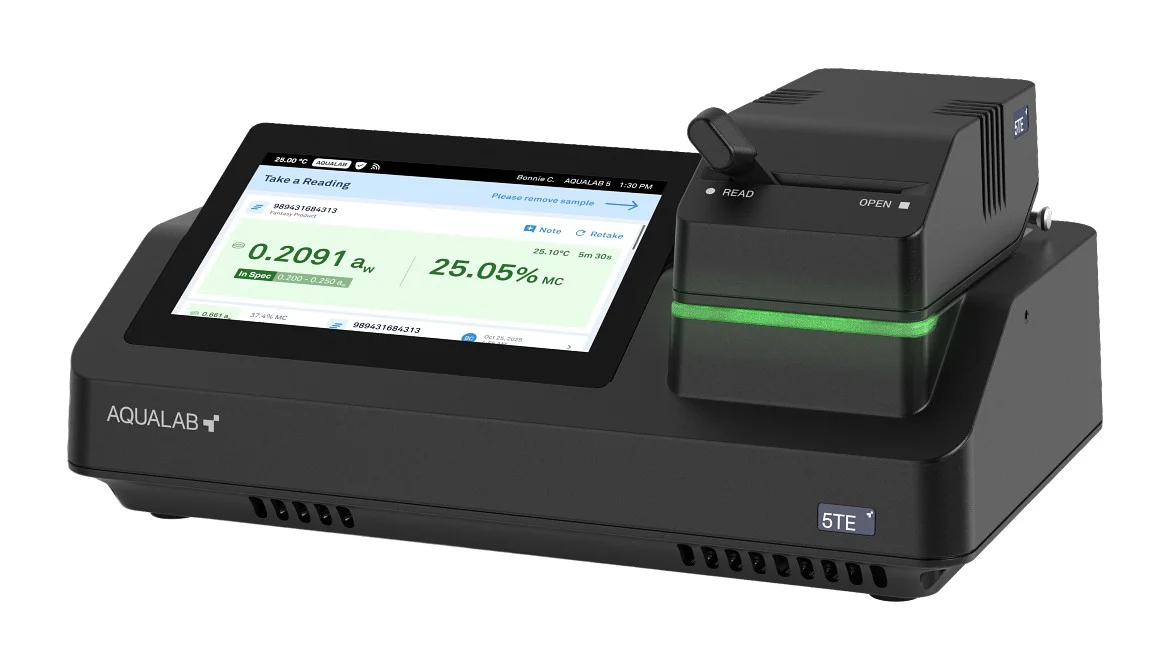
In a move that promises to redefine the landscape of food science and quality control, Addium—a long-standing titan in precision measurement technology—has officially launched the AQUALAB 5TE. This next-generation instrument marks a significant departure from traditional testing methodologies, positioning itself as the first device capable of delivering both water activity ($a_w$) and moisture content readings within a single, 60-second test cycle.
By consolidating two of the most critical metrics in food manufacturing into a unified platform, the AQUALAB 5TE aims to streamline workflows, eliminate human error, and provide an unprecedented level of data integration across the entire product lifecycle, from initial R&D to final Quality Assurance (QA) release.
The Core Innovation: Convergence of Metrics
For decades, food scientists and quality managers have operated within a fragmented testing environment. Traditionally, measuring moisture content—which dictates shelf life, texture, and weight—required time-consuming methods such as Loss-on-Drying (LOD) or Karl Fischer titration. Simultaneously, measuring water activity—the primary indicator of microbial growth and chemical stability—required separate, dedicated instrumentation.
The AQUALAB 5TE shatters this duality. By integrating these two critical measurements, Addium has created a "single-source-of-truth" instrument. A 60-second test cycle provides the operator with instantaneous, actionable data, effectively removing the need for parallel workflows that often introduce lag and complexity into high-speed manufacturing environments.
A Legacy of Precision: Chronology of the AQUALAB Evolution
To understand the magnitude of the 5TE launch, one must look at the historical trajectory of the AQUALAB brand. Addium’s dominance in the market is not a recent development; it is the result of four decades of iterative engineering.
The Foundation: The Early Years
In the late 20th century, the industry struggled with unreliable methods for determining food safety. Addium’s entry into the market brought the first reliable, portable water activity meters to the benchtop, setting the gold standard for how the food industry understood water mobility.
The AQUALAB 3 Era
The AQUALAB 3 served as the workhorse of the industry for over a decade. It was the instrument that normalized the use of dew-point sensors in food safety protocols, providing a level of repeatability that had previously been unattainable for mid-sized production facilities.
The 4TE Milestone
The introduction of the 4TE brought digital connectivity and sophisticated internal temperature control to the forefront. It allowed for the measurement of samples with high volatile content and provided a more intuitive interface for operators on the factory floor.
The 5TE Breakthrough
The AQUALAB 5TE represents the culmination of these lessons. It is not merely an incremental upgrade but a structural rethink of the testing process. By merging the logic of the 3 and 4TE into a singular, high-efficiency platform, Addium has created a device tailored for the modern, data-driven food pipeline.
Data Integrity and the Closing of the Quality Gap
One of the most persistent challenges in food production is the "disconnected data" problem. Quality failures are rarely the result of a single, catastrophic event; more often, they are the result of a chain of minor, unlinked lapses.
An R&D assumption might never be validated by the production team; a production adjustment might be made on the fly without being properly logged; or a QA flag might reach a manager only after a batch has already left the warehouse. The AQUALAB 5TE is specifically engineered to close these gaps.
The Shared Ecosystem
The 5TE is designed to act as a hub for data collection. Every reading taken—whether at the R&D stage, on the production line, or during the final QA release—is stored within a shared system. This data is intrinsically linked to:
- Product Profiles: Ensuring that every batch is measured against the exact specifications of its R&D origin.
- Batch Tracking: Creating a transparent trail of moisture and water activity history for every unit produced.
- Operator Logs: Providing accountability and clarity regarding who performed the test and when.
This centralized approach transforms the instrument from a mere sensor into a foundational component of a company’s Quality Management System (QMS). By ensuring that data is synchronized across the enterprise, the 5TE reduces the likelihood of "hidden" quality failures that often lead to expensive recalls and brand erosion.
Official Perspective: Leadership and Vision
The launch of the 5TE is not just a technological announcement; it is a strategic statement from Addium leadership.
"For 40 years, when food companies needed to be sure their products were safe and delicious, they’ve used our instruments," says Addium CEO Bob Agnes. "Today, AQUALAB instruments lead the market, and with the 5TE, we’ve applied our passion for precision and innovation to raise the standard again."
Agnes’s remarks highlight a core philosophy: that precision is the ultimate competitive advantage in the food industry. As global supply chains grow more complex and consumer expectations for safety and quality reach all-time highs, the ability to rely on robust, unified data becomes a non-negotiable asset for food manufacturers.
Implications for the Industry
The introduction of the AQUALAB 5TE is expected to have far-reaching implications for several key sectors within the food industry, including snacks, baked goods, confectionery, and pet food.
1. Enhanced Efficiency in Manufacturing
By cutting the testing time to 60 seconds and combining two tests into one, production lines can theoretically increase their throughput. The reduction in downtime for testing means that operators can make real-time adjustments to mixers, ovens, and dryers, resulting in less waste and more consistent product quality.
2. Streamlined R&D
For R&D teams, the ability to see both water activity and moisture content in one view allows for a deeper understanding of how ingredients interact. This "dual-lens" perspective can accelerate the development of new products, allowing scientists to pinpoint the exact moisture thresholds that optimize flavor and shelf stability.
3. Compliance and Regulatory Preparedness
With the tightening of food safety regulations globally (such as the FSMA in the United States), the burden of proof is increasingly on the manufacturer. The AQUALAB 5TE’s digital logging capabilities provide an audit-ready trail that makes regulatory compliance significantly more straightforward. Manufacturers can provide inspectors with comprehensive, timestamped reports that prove their products remained within safe parameters throughout the entire production cycle.
4. Sustainability and Waste Reduction
Food waste is a significant environmental and economic issue. By enabling more precise control over moisture levels, the AQUALAB 5TE helps companies hit the "sweet spot" of product quality more consistently. This leads to fewer batches being discarded due to deviations in texture or potential microbial risks, thereby improving the company’s bottom line while minimizing its environmental footprint.
Conclusion: The Future of Quality Assurance
The AQUALAB 5TE is a testament to the power of integration. By collapsing the barriers between moisture content and water activity, and by bridging the gap between R&D and QA, Addium has provided a tool that addresses the most fundamental needs of the modern food manufacturer: speed, accuracy, and data transparency.
As the industry moves toward a future defined by Industry 4.0—where machines communicate and data flows seamlessly across departments—the AQUALAB 5TE stands as an essential component of the digital factory. It is more than a piece of hardware; it is a strategic investment in safety, efficiency, and excellence. For those tasked with maintaining the integrity of the food supply, the 5TE is poised to become the new standard by which all other testing instruments are measured.
With its launch, Addium has reaffirmed its role not just as a provider of instruments, but as an architect of quality. As manufacturers begin to integrate the 5TE into their workflows, the ripple effects of this innovation—from safer food products to more efficient production lines—will likely be felt across the global market for years to come.


 Pevita Pearce
