

 Azzam Bilal Chamdy
 Neng Nana
 Nana Muazin
 Dwi Wanna
 Raul Delapena Setiawan
 Asep Darmawan
For decades, the standard nutrition panel on the back of food packaging has been the primary guide for health-conscious consumers. Yet, a groundbreaking report released by the Regenerative Organic Alliance (ROA) and the food-testing technology firm Edacious suggests that these labels may be masking a significant reality: not all food is created equal.
The report, representing the culmination of the first year of a four-year partnership, provides empirical evidence that food grown to Regenerative Organic Certified (ROC) standards is not only healthier for the planet but measurably more nutrient-dense than its conventional counterparts. As consumers increasingly scrutinize the quality of their food—driven by a growing interest in metabolic health and a shift toward whole-food nutrition—this data could fundamentally alter how brands market their products and how shoppers make decisions at the grocery store.
The Core Findings: Redefining Nutrient Density
The study involved laboratory analysis of dozens of ROC-certified products, benchmarking them against USDA reference values. The results were startling. By analyzing levels of essential fats, proteins, carbohydrates, vitamins, and minerals, researchers identified significant nutritional premiums in products produced through regenerative practices.
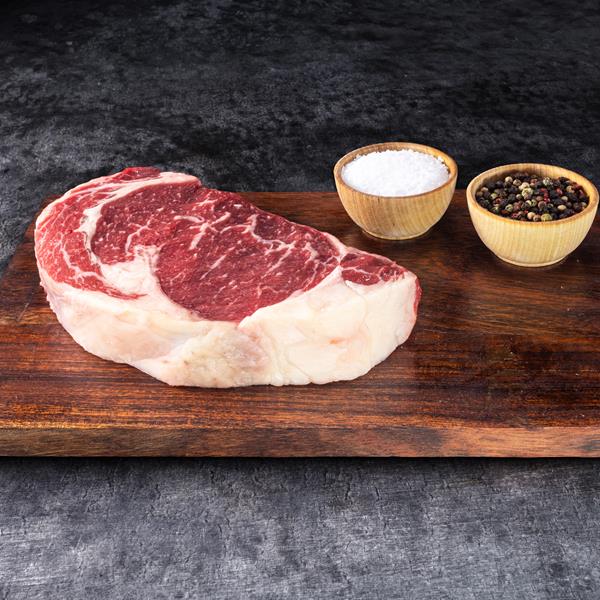
Perhaps the most notable finding concerned meat products. The analysis revealed that ROC-certified ground beef contained significantly higher levels of omega-3 fatty acids—ranging from 124% to 388% higher than USDA benchmarks. Furthermore, the ratio of omega-6 to omega-3 fatty acids in these products was vastly superior to conventional meat. While industrial meat production often yields a high omega-6 to omega-3 ratio—sometimes as high as 15:1, which is associated with increased inflammation—the ROC-certified meat consistently landed between 1:1 and 2.3:1.
This shift is attributed directly to the pasture- and forage-based feeding standards mandated by ROC certification. Because an animal’s fat profile is a direct reflection of its diet, the shift away from grain-based feed to natural, regenerative grazing allows for a healthier lipid profile that is ultimately passed on to the consumer.
Beyond animal proteins, the report highlighted significant nutritional gains in plant-based categories. All 10 legume varieties tested showed higher phosphorus content than their conventional counterparts, with increases ranging from 16% to 584%. Some samples even qualified as rich sources of selenium, a critical trace mineral often depleted in industrial agricultural soils.

A Chronological Journey: From Partnership to Proof
The road to these findings began in earnest in September 2025, when the ROA and Edacious officially launched a four-year initiative to quantify the link between soil health and human health. The partnership was born out of a shared belief that the "soil-to-plate" connection had been lost in the age of industrial commoditization.
Year One Milestones:
- September 2025: The ROA and Edacious partnership is formalized, aiming to move beyond subjective "sustainability" claims to objective, data-driven nutrient mapping.
- Late 2025 – Mid 2026: Seventeen brands—including industry leaders such as Niman Ranch, Patagonia Provisions, Lundberg Family Farms, and Charcutnuvo—submit their products for rigorous independent testing.
- October 2026: The inaugural report is published, showcasing data from 46 distinct products across grains, legumes, oils, animal proteins, and produce.
- The Future Outlook: With the successful completion of year one, the partners have set their sights on testing over 200 products by the end of the four-year cycle, with a specific focus on expanding into under-represented food categories.
Official Perspectives: Bridging the Gap Between Soil and Store
The leadership behind this project views the data as more than just a scientific curiosity; they see it as a business-critical tool for the future of the food industry.
Darcey Howard, Head of Marketing & Engagement at the ROA, notes that the findings exceeded even their internal expectations. "We knew that healthy soil would create healthy food, but I think what we were so surprised to see was just how much healthier," she said. Howard acknowledges that while soil health is a complex topic that may not always resonate with the average consumer, the promise of higher nutrient density is a language shoppers understand.
Eric J. Smith, CEO of Edacious, echoes this sentiment. For Smith, the goal is to break the "cycle of commoditization" that treats food as a uniform substance. "Nutrition is not fixed by the ingredient list," Smith asserts. "How food is grown and raised changes what ends up on the plate, and we can now measure it." By providing an independently verified layer of data regarding product safety—such as testing for heavy metals and glyphosate—Edacious is helping brands move beyond vague sustainability marketing and toward a transparent, quantifiable value proposition.
Implications for the Food Industry
The implications of this research are far-reaching for food producers, retailers, and the health-care sector.
1. Consumer Purchasing Journeys
Modern shoppers are overwhelmed by a "certification fatigue." From organic to non-GMO to fair trade, the labels on packaging are often confusing. The ROA and Edacious suggest that nutritional density could be the ultimate differentiator. As consumers become more aware of the role of food in chronic disease prevention, the ability to show that a product is not just "organic" but "nutrient-superior" creates a compelling reason to purchase.
2. The Rise of "Food as Medicine"
With the proliferation of GLP-1 medications and an increased public focus on metabolic health, the dietary choices of the average consumer are shifting. There is a growing movement that questions the efficacy of highly processed "standard" foods. The report provides a roadmap for this "food as medicine" approach, identifying whole, regeneratively grown foods as the "real heroes" of the diet.
3. A New Benchmark for Quality
By setting a new standard for what it means to be "nutrient-dense," this research could push the entire food industry to adopt more rigorous testing protocols. If companies can prove that their specific agricultural practices result in higher protein, fiber, or mineral content, they gain a competitive edge that is difficult to replicate through traditional manufacturing processes.
Moving Toward Year Two and Beyond
As the partnership moves into its second year, the focus will broaden. The expansion into under-represented food categories aims to create a more comprehensive database that covers the full spectrum of a healthy diet. The goal of reaching 200 tested products is not just a statistical target; it is a strategic effort to build a critical mass of evidence that can influence industry standards and, eventually, regulatory conversations.
For now, the message is clear: the health of our bodies is inextricably linked to the health of our soil. By moving from anecdotes to analytical data, the ROA and Edacious are providing the industry with the tools it needs to justify the cost of regenerative agriculture—not just as an environmental investment, but as an investment in human health.
As the industry looks forward, the hope is that these labels will eventually evolve. "I would love ultimately to see us finally get the nutrition panel to speak more about what’s actually in the food than how it plays to what the standard for nutrition panels is," says Howard. While that may be a long-term goal, the first year of this partnership has proven that we now have the technology to make that a reality, one test result at a time.


 Laily UPN
 Rifan Muazin
