Azzam Bilal Chamdy
 Neng Nana
 Nana Muazin
 Dwi Wanna
 Raul Delapena Setiawan
 Nila Kartika Wati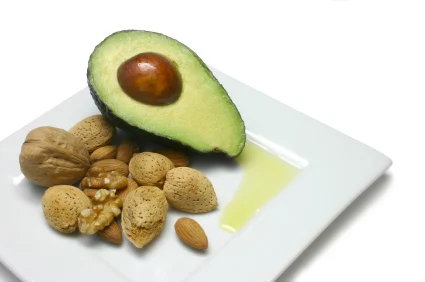
For decades, the public consciousness was gripped by a "low-fat" hysteria that labeled all lipids as the primary villain in the modern diet. However, nutritional science has evolved significantly, revealing that fats are not merely a dietary vice, but a fundamental cornerstone of human biological function. Understanding the delicate balance between beneficial fats and detrimental compounds is essential for managing long-term health, weight, and the prevention of chronic disease.
The Fundamentals of Dietary Lipids
At their chemical core, fats—or lipids—are complex organic compounds composed of carbon, hydrogen, and oxygen. Far from being a metabolic enemy, these molecules serve as one of the three primary macronutrients required for human survival. While they are often categorized by their physical state at room temperature—liquid oils or solid fats—their true significance lies in their biological utility.
The body utilizes fat as a primary energy reservoir. Gram for gram, fats provide nine calories, more than double the energy density of proteins or carbohydrates. Beyond mere fuel, lipids are structural architects. They form the membranes of every cell in the human body, support brain health, and act as a critical delivery system for fat-soluble vitamins, specifically Vitamins A, D, E, and K. Without dietary fats, the body cannot absorb these essential micronutrients, leading to deficiencies that can impair vision, immune function, and bone health.
Chronology of Nutritional Science: From Villain to Necessity
The scientific narrative surrounding fat has undergone a radical transformation over the last century.
- 1950s–1970s: The rise of the "diet-heart hypothesis" suggested that dietary fat—particularly saturated fat—was the primary driver of cardiovascular disease. This triggered a massive shift in the food industry toward low-fat and non-fat processed products.
- 1980s–1990s: The "Low-Fat Era" hit its zenith. However, as the food industry removed fat from products to appease public concern, they replaced it with refined sugars and carbohydrates to maintain palatability. This era correlates with the significant rise in obesity and type II diabetes rates.
- 2000s–Present: Modern clinical studies have nuanced the conversation. Researchers have shifted focus away from the total amount of fat consumed and toward the quality of the fat. The current scientific consensus highlights that while some fats remain detrimental, others are essential for cardiovascular and metabolic protection.
Categorizing the Lipid Profile: The Good, The Bad, and The Trans
To make informed nutritional choices, one must understand the distinct chemistry of dietary fats.
The Detrimental Fats: Saturated and Trans
Saturated fats are typically found in animal-derived foods such as fatty beef, pork, butter, and whole-milk dairy products. Chemically, these molecules are "saturated" with hydrogen atoms, causing them to remain solid at room temperature. Overconsumption of saturated fats is linked to elevated Low-Density Lipoprotein (LDL) cholesterol—often referred to as "bad" cholesterol—which can lead to arterial plaque buildup and an increased risk of cardiovascular events.
Even more concerning are trans fats. Often created through industrial hydrogenation—a process that turns liquid vegetable oils into solid fats to increase shelf life—trans fats are scientifically recognized as hazardous. They simultaneously raise LDL cholesterol and lower High-Density Lipoprotein (HDL) or "good" cholesterol. Global health organizations have largely pushed for the elimination of trans fats from the food supply due to their strong link to heart disease.
The Beneficial Fats: Monounsaturated and Polyunsaturated
On the other side of the spectrum are unsaturated fats, which are liquid at room temperature and generally heart-healthy.
- Monounsaturated Fats (MUFAs): Found abundantly in avocados, olive oil, sunflower oil, and various nuts, MUFAs are champions of heart health. They have been shown to help regulate blood glucose levels and improve the cholesterol profile by maintaining HDL levels.
- Polyunsaturated Fats (PUFAs): These include the essential Omega-3 and Omega-6 fatty acids. Because the human body cannot synthesize these on its own, they must be obtained through the diet. Sources like salmon, mackerel, trout, and flaxseeds provide these fats, which are vital for reducing systemic inflammation, lowering blood pressure, and supporting cognitive function.
Supporting Data: The Caloric Reality
While the distinction between healthy and unhealthy fats is vital, one fundamental rule of thermodynamics remains: all fats are energy-dense. Regardless of their health profile, every gram of fat contains nine calories.
The prevalence of obesity in the modern age is not exclusively a result of the type of fat consumed, but often the volume. Even "healthy" fats like extra virgin olive oil or almonds, if consumed in excess, contribute to a caloric surplus. This surplus is stored by the body as adipose tissue, eventually leading to metabolic syndrome, obesity, and an increased risk of developing type II diabetes. The challenge for the modern consumer is to integrate these necessary nutrients without exceeding daily caloric expenditure.
Official Recommendations and Nutritional Guidelines
Health authorities, including the American Heart Association and global health agencies, provide a roadmap for healthy fat intake. Generally, total fat consumption should account for 20% to 35% of an individual’s daily caloric intake.
The Recommended Distribution:
- Saturated Fats: Should be limited to less than 10% of total daily calories.
- Monounsaturated Fats: Should comprise the bulk of fat intake, ideally between 10% and 15%.
- Polyunsaturated Fats: Should make up the remainder, generally around 10% or less.
However, consumers must remain vigilant. When navigating the grocery store, "Trans Fat-Free" labels can be deceptive. Manufacturers are often permitted to round down, meaning a product might still contain small amounts of trans fats. Furthermore, products labeled as "low-fat" or "fat-free" often contain excessive added sugars or refined fillers to compensate for the loss of texture and flavor, which can be more detrimental to long-term health than the original fat content.
Implications for Public Health
The implications of these findings are profound. We are currently witnessing a shift toward "whole food" nutrition, where the focus is on unprocessed sources of lipids. By swapping butter for olive oil, or processed snacks for fatty fish and nuts, individuals can significantly alter their internal chemistry.
The public health goal is no longer the elimination of fat, but the cultivation of fat literacy. As researchers continue to study the role of specific fatty acids in neurological health and autoimmune regulation, it is becoming clear that our past avoidance of fats may have been a missed opportunity for better health.
Moving Forward
For the average individual, the strategy is simple but requires discipline:
- Prioritize Whole Sources: Focus on nuts, seeds, fatty fish, and plant oils.
- Audit the Labels: Do not be fooled by marketing claims on processed items. Look at the ingredient list for "partially hydrogenated oils."
- Practice Portion Control: Recognize that healthy fats are nutrient-dense, not calorie-free.
- Embrace Diversity: A diet rich in various healthy fats supports everything from skin integrity to hormonal balance.
By viewing fat as a nutrient-dense tool for bodily function rather than an enemy to be purged, individuals can reclaim their metabolic health. The future of nutrition is not found in deprivation, but in the intelligent, moderate selection of the building blocks that make human life possible.


 Evan Lee Salim