

 Azzam Bilal Chamdy
 Neng Nana
 Nana Muazin
 Dwi Wanna
 Raul Delapena Setiawan
 Jia Lissa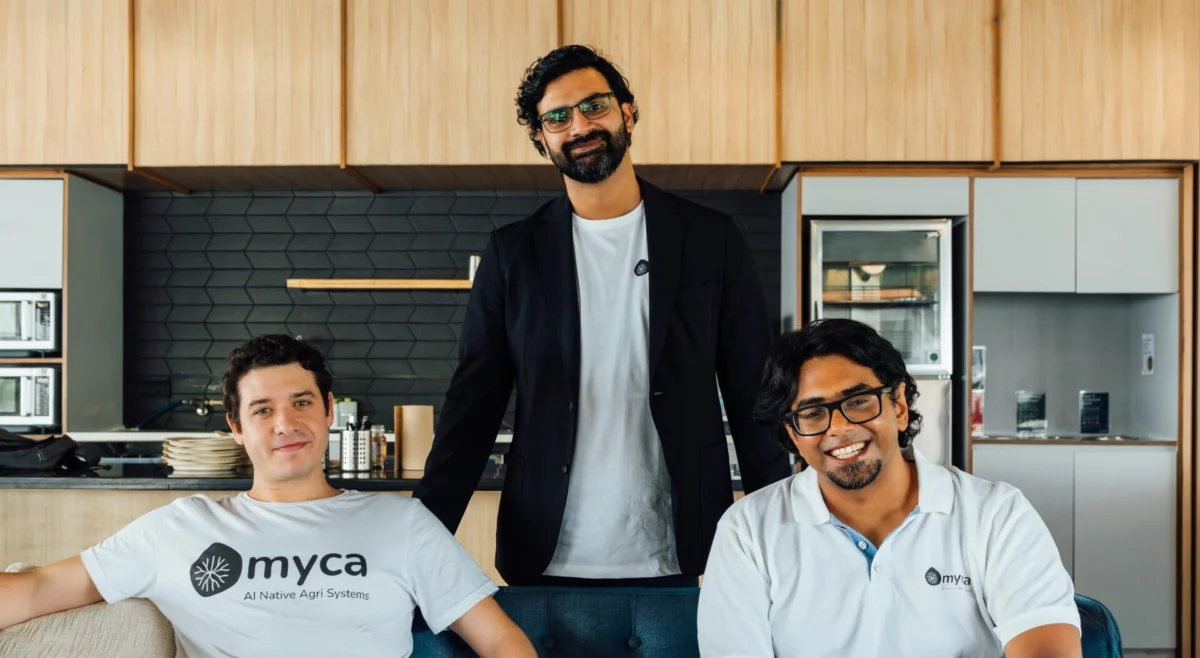
In the vast, sprawling landscapes of the Global South, the backbone of the world’s food supply—the smallholder farmer—often operates in a digital vacuum. While North American agribusinesses leverage sophisticated ERP (Enterprise Resource Planning) and CRM (Customer Relationship Management) suites to track every seed and tractor movement, agricultural giants operating in India, Southeast Asia, and Africa have historically relied on a fragmented ecosystem of WhatsApp messages, scattered phone calls, and manual spreadsheets.
This "analog" reality is now facing a significant disruption. Myca, an India-headquartered AI software firm, has announced a $1.3 million pre-seed funding round, signaling a turning point in how global agribusinesses bridge the gap between head office strategy and field-level execution.
The Main Facts: A New AI Layer for Agriculture
Myca’s platform acts as an intelligent abstraction layer that sits atop existing enterprise systems. Rather than forcing field agents—who may be managing teams of thousands—to adopt complex new software, Myca integrates into the communication channels they already use. By processing incoming messages, voice notes, and photographs from the field, the company’s AI agents convert unstructured data into structured, actionable insights.
The $1.3 million funding round was led by Kriscore Capital and Eximius Ventures, with strategic participation from the Indigram Labs Foundation and a consortium of angel investors with deep roots in the agricultural sector. The company plans to deploy this capital to accelerate product development, bolster its engineering talent, and expand its footprint across four key regions: Southeast Asia, Latin America, Africa, and India.
Chronology: Building the Foundation
The story of Myca is not one of greenhorn entrepreneurs, but of seasoned veterans returning to the fray. Founders Arnav Pandey (CEO), Tejas Dinkar (CTO), and Seamus Tardif (CRO) bring significant pedigree to the venture; the trio previously scaled an agritech company in Southeast Asia that generated over $100 million in top-line revenue.
- April 2026: Myca officially launches its product, debuting in the Indian and Indonesian markets.
- May–June 2026: After months of preliminary investor outreach and navigating a challenging funding climate, the team enters serious negotiations with prospective backers.
- Late 2026: The company secures $1.3 million in pre-seed funding, maintaining strict control over valuation and terms despite market headwinds.
- Present Day: Myca is now active in eight countries, boasting a client roster that includes industry titans such as Bayer, Olam Food Ingredients, ETG-Parrogate, BigHaat, and Dayatani.
Supporting Data: Why "Field Intelligence" Matters
The scale of the problem Myca is solving is staggering. In North America, a field team might consist of 10 to 20 people. In the context of smallholder-heavy markets in India or Africa, a single company might manage a field force of 5,000 agents. When that workforce relies on manual reporting, the "data lag" between a field event—such as a pest outbreak or a procurement delay—and executive decision-making can be measured in days, or even weeks.
Myca’s software addresses several critical agribusiness pain points:
- Field Sales & Procurement: Streamlining the interaction between distributors and farmers.
- Crop Surveys: Automating the collection of real-time crop health data.
- Credit Assessment: Providing accurate, ground-level data to enable rural lending.
- Logistics Tracking: Digitizing the movement of goods from remote warehouses to urban centers.
By automating the follow-up work that typically consumes a supervisor’s day, Myca allows human managers to focus on high-level strategy rather than administrative triage.
Official Responses and Strategic Vision
The founders are acutely aware of the skepticism surrounding "agritech" as an investment category. CEO Arnav Pandey notes that the current investment climate is particularly cooling toward the Global South.
"Investors today are not really keen on investing in agri, at least in this part of the world," Pandey told AgFunderNews. "The moment you add North America to the picture, things become a little easier. But the Global South is not the most sought-after place to invest in."
This sentiment is echoed by CRO Seamus Tardif, who emphasizes that the "hype cycle" of 2020 and 2021 has been replaced by a rigorous, metric-driven reality. "In 2020, 2021, people just wanted to know you’ve got a great deck and a good team. Now it’s, ‘OK, but where’s the pathway to a million?’"
Despite pressure to diversify, the team remains steadfast in their commitment to the $6 trillion agribusiness sector. While acknowledging that there are "natural extensions" for their AI technology into the Fast-Moving Consumer Goods (FMCG) sector, Pandey insists that focus is the key to their survival. "It’s a $6 trillion industry. There are so many things to solve right in here," he says.
The Fundraising Hurdle: A Lesson in Founder Discipline
The journey to this pre-seed round serves as a masterclass in founder discipline. Throughout the process, the team walked away from several offers, refusing to compromise on valuation or terms.
Pandey describes the internal "stress test" they applied to every term sheet: "Assume we don’t get a good valuation, and assume we don’t make any revenue. Would this be the paper we’d be willing to sign in that case? If the answer is no, you don’t need to sign it."
Tardif echoes this, offering advice to other founders currently navigating the rocky venture capital landscape: "As founders, you have to remember that investors are buying your product. They’re not there to dictate the terms." He suggests that founders keep their target lists short, ensure the business is truly "ready" for scale before approaching serious institutional investors, and maintain the courage to walk away from bad deals.
Implications: The Future of AI in the Global South
Myca’s success suggests that the next generation of "AI unicorns" may not emerge from the high-tech hubs of Silicon Valley, but from the messy, complex, and vital infrastructure of the global agricultural supply chain.
By refusing to force users to abandon their current workflows, Myca has bypassed the biggest barrier to entry for B2B software in emerging markets: user adoption. If they can successfully prove that their AI agents can handle the complexity of a 5,000-person field team, the implications for food security and supply chain efficiency in the Global South are profound.
The company expects to return to the market for further fundraising in the "not-so-distant future." As they scale, their trajectory will likely serve as a litmus test for the viability of AI-driven B2B solutions in non-Western markets. For now, the team is busy proving that the most effective AI isn’t the one that builds a new world from scratch, but the one that understands the world exactly as it is—and makes it work just a little bit better.


 Laily UPN
 Rifan Muazin
